The E1 Plan and the Eclipse of Palestinian Statehood
The recent Israeli government decision to approve a huge settlement in the E1 corridor between East Jerusalem and Ma’ale Adumim is a deliberate blow to Palestinian statehood dreams. The...

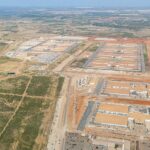
The recent Israeli government decision to approve a huge settlement in the E1 corridor between East Jerusalem and Ma’ale Adumim is a deliberate blow to Palestinian statehood dreams. The approval of more than 3,400 new housing units in this strategic area is celebrated by Finance Minister Bezalel Smotrich as a way to “bury the idea of a Palestinian state.” What this obtuse euphemism hides are the violent removal of hope, territorial continuity, and international standards.
Smotrich’s words, “facts of houses, facts of neighbourhoods,” are ominous in their simplicity. Instead of diplomacy or rightful negotiation, Israel repays territorial victory with permanent settlement. This endeavor, stalled by international pressure for more than a decade, now threatens to cut the West Bank in two, shattering any hope for a contiguous and healthy Palestinian nation.
Opponents are united in their denunciation. The UN secretary-general cautions that the scheme threatens to further solidify the occupation and snuff out the chance of a two-state solution. The European Union sees the action as illegal under international law, calling for reversal at once. Even local players such as Jordan and Turkey have condemned the move for setting back peace chances.
This effort at E1 is not in itself unique. It is a part of a policy of dispossession. Since the end of 2023, Israel has authorized thousands of new housing units in the West Bank and East Jerusalem. These approvals are consistent with an intentional policy, supported by the far-right ministers, to consolidate facts on the ground. The settlements are on land that under the Fourth Geneva Convention is defined as occupied territory, and their growth openly violates UN Security Council Resolution 2334 and the judgment of the International Court of Justice, which call for a halt to such activities and complete withdrawal.
In the meantime, Palestinian society pays the price. Bedouin communities in E1, long-time residents with their families, are being evicted, deprived of their livelihood, and culturally wiped out. This is no “facts on the ground” that happened naturally over time. It is a deliberate policy of fragmentation. Palestinian economic, social, and political connectedness, which relies on connectivity, is being torn apart, piece by piece, road by road, house by house.
The effect is not just on maps. It is ethical and existential. Palestinian displacement and everyday humiliation are added to by humiliation on the world stage. The E1 plan was not just announced, it was hailed by a minister who has been sanctioned by several Western governments for incitement. Meanwhile, international recognition of a Palestinian state is growing. From Australia to France, Britain, and Canada, a mounting tide of opinion is rising, but Israel’s answer isn’t in words, but in actual expansion. That reaction derides diplomacy and defiles the vision of peace.
A just world cannot allow this. To ignore E1 is to normalize the strangling of freedom. To watch without protest is to condone the erasure of hope. Palestinians, deprived of geography, rights, and recognition, deserve solidarity, not silence.
The world needs to call for the cancellation of the E1 plan forthwith. Global players, particularly states that have recognized Palestinian statehood, need to have consequences, economic, travel, or diplomatic, for such irreversible actions. Anyone who wants peace to be achieved should remember what peace is all about: two states for two peoples, founded on dignity and equality.
Let this be the moment, as Palestinian statehood is being entombed in the rocks outside Ma’ale Adumim, when the will of the international community is renewed. To remain passive is to stand guilty of immorality.
Author