


Beyond the Boundary: Bengaluru’s Billion-Dollar Contenders Eye Dynasty, Reshaping Subcontinent’s Sporting Economy
POLICY WIRE — Bengaluru, India — In a landscape where dynasties are forged in boardroom maneuvers as much as on sun-drenched cricket pitches, Royal Challengers Bengaluru isn’t just playing a...

POLICY WIRE — Bengaluru, India — In a landscape where dynasties are forged in boardroom maneuvers as much as on sun-drenched cricket pitches, Royal Challengers Bengaluru isn’t just playing a final; they’re attempting to solidify a legacy, a narrative arc penned in sweat and corporate sponsorships over nearly two decades. This isn’t merely about hitting sixes; it’s about the deep-seated yearning for consistent dominance in one of the world’s most lucrative sports leagues, and what that means for a brand that—let’s be honest—has, at times, become synonymous with glamorous frustration.
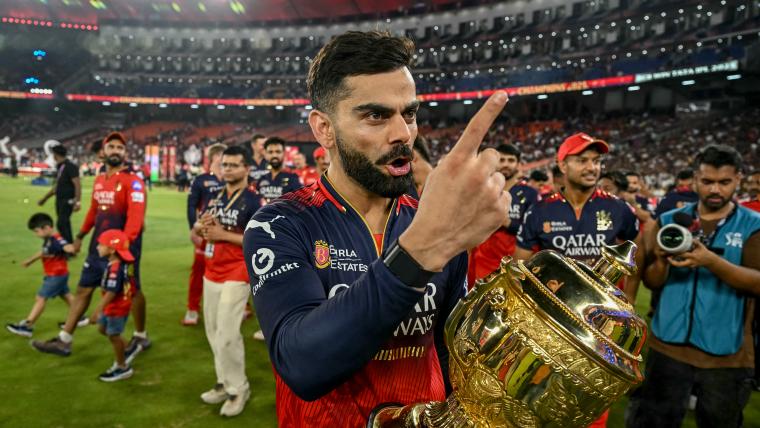
It’s a peculiar kind of hunger that propels these giants of the Indian Premier League. Having endured more heartbreak than heroics on the biggest stage, RCB now stand on the brink of etching their name firmly into the annals of IPL lore, not just as contenders, but as champions. But before you get ahead of yourself, this isn’t just any final. No, it’s their fifth crack at the trophy in 19 years, a marathon effort for an organization with a fanbase that’d probably sacrifice a limb for a repeat victory. This team, which once seemed to exist only to give its loyal followers an annual dose of aspirational agony, clinched its first title in 2025. It broke a damn 18-year wait, finally. Now, just a year later, after defeating Gujarat Titans in Qualifier 1, they’re back, trying to make it two straight against the same opponent. [QUOTE_PLACEHOLDER]
Their story reads like a tragicomedy written by a board of directors, except with genuine pathos. As the original content states, Royal Challengers Bengaluru might have tasted the most glory and misery of any teams to participate in the IPL tournaments. It’s a candid admission for a sporting outfit. They’ve worn the bridesmaid dress a few too many times: three runners-up finishes in 2009, 2011, and 2016, before that drought-breaking 2025 triumph over Punjab Kings. This wasn’t some minor league achievement, by the way. And now, they’re on the cusp of something far bigger, much grander. They look to become the third side to win back-to-back titles after CSK — and MI. The ambition, it’s palpable.
But consider the raw numbers, the cold hard truth that underpins all this emotional fervor. RCB have won one of their four completed IPL finals, giving them finals win percentage of 25%. That’s a stat that’d make even a hardened economist wince, a stark reflection of potential rarely, or belatedly, realized. Yet, this persistent pursuit defines their brand, a testament to the colossal investment and fervent loyalty they command. Back in 2016, during a high-stakes final against Sunrisers Hyderabad at Bengaluru’s own M. Chinnaswamy Stadium, the team registered its highest score in an IPL final: 200/7. It included 50-plus contributions by Chris Gayle (76 runs off 38) — and Virat Kohli (54 runs off 35). But even that wasn’t enough to secure victory; it was not enough to reach SRH’s target of 209 runs. Talk about a gut punch. Now, Captained by Rajat Patidar, they’re hoping to lift consecutive IPL titles for the very first time in the franchise’s history.
Because let’s face it, sporting immortality, particularly in India, doesn’t just ride on individual talent. It’s built on a ruthless efficiency that delivers silverware. Winning in the 2026 final would see RCB’s finals record reach two from five — and finals win percentage of 40%. From 25% to 40% – that’s not just a statistical jump; it’s a narrative transformation for the brand.
What This Means
This isn’t just about a cricket match; it’s a potent symbol of power — and capital in the subcontinent. The IPL, for all its glitter, is a significant economic engine, a massive export of Indian cultural soft power. A consistent winner like RCB, commanding a massive fan base not just within India but across the Indian diaspora and beyond—into Pakistan, Bangladesh, and even the Muslim communities of the Middle East, where cricket remains king—only amplifies this influence. It draws in eyeballs, attracts more foreign investment, and cements the league’s reputation as the gold standard of T20 cricket. We’re talking serious money changing hands here, shaping an entire ecosystem of sports broadcasting, advertising, and merchandise.
But there’s another angle. The aspirational economics of IPL, particularly a team finally realizing its potential, could be viewed through a policy lens. Can other South Asian nations—Pakistan, for instance, with its own rich cricketing heritage—replicate such a massive, privately funded sports league? Or does India’s sheer market size — and established infrastructure make it a unique, perhaps untouchable, phenomenon? The success story of a franchise overcoming its ‘chokers’ tag, morphing into a dynasty, could, theoretically, inspire policy dialogues on sports investment, brand building, and talent retention across the region. Imagine the discussions in Karachi or Dhaka, watching this unfold. The dynamics of India’s cricket economy influence how neighboring nations structure their own sporting enterprises, often through a blend of envy and admiration.
It raises questions about infrastructure investment — and the trickle-down effect into grassroots development. Where does all that IPL money ultimately go? Some argues it creates superstars, others that it solidifies existing power structures within the sport. This financial juggernaut doesn’t just play on the field; it plays a geopolitical game, showcasing Indian economic and cultural heft globally. Whether Bengaluru secures that second consecutive title or falters, the impact resonates far beyond the cricket stadium—it ripples through the broader economic and soft power strategies at play within South Asia and can even inform approaches to regional security, by providing a common cultural touchstone that sometimes, surprisingly, unites rather than divides. You can see how other countries, like Sri Lanka, wrestle with their own socio-economic issues, as explored in Sri Lanka’s Sacred Shame: Monk’s Suspension Shakes Ancient Roots of Faith. Big money in sports, after all, changes more than just scorecards.
Now they can go for another title in 2026 and become the third franchise, after Chennai Super Kings (2010, 2011) and Mumbai Indians (2019, 2020), to ever win back-to-back IPL titles. If that happens, you’re not just witnessing a cricket team’s win; you’re seeing the maturation of a brand into a powerhouse, with all the economic and cultural implications that entails for a region obsessed with this sport.