
The Doha Ceasefire and the Burden of Compliance
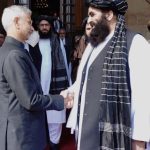
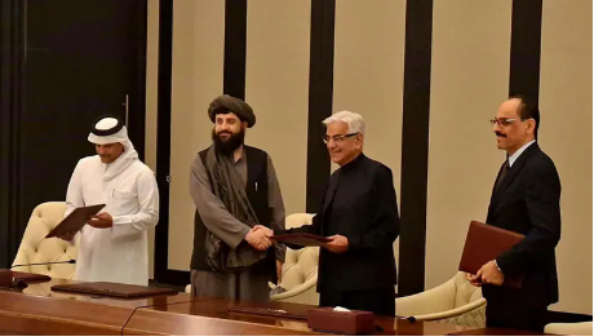
When Pakistan’s Defense Minister Khawaja Muhammad Asif confirmed that a ceasefire agreement had been reached between Pakistan and Kabul in Doha this October, it momentarily eased tensions along one...

When Pakistan’s Defense Minister Khawaja Muhammad Asif confirmed that a ceasefire agreement had been reached between Pakistan and Kabul in Doha this October, it momentarily eased tensions along one of the most combustible borders in Asia. The truce, brokered under the quiet mediation of Qatar and Türkiye, came after days of violent clashes that left dozens dead and reawakened the specter of a regional security spiral. Yet, beyond the fragile calm lies a deeper strategic fault line, one that stretches back to the 2020 Doha Agreement between the Taliban and the United States.
In Pakistan’s view, peace with Afghanistan now depends on whether the Taliban regime can honor the very commitments it once made in that earlier 2020 deal: preventing Afghan soil from being used against another state. Five years on, the consequences of that failure have come to define Pakistan’s own battle for border security.
The 2020 Doha Agreement: A Broken Assurance
When the United States and the Taliban signed the Doha Agreement in February 2020, it was presented as the beginning of a new chapter for Afghanistan and by extension, for Pakistan. One of its central assurances was unequivocal: that Afghan territory would “not be used to threaten the security of any other state.”
For Pakistan, a country that had long borne the human and economic brunt of regional instability, this clause represented more than diplomatic formality; it was a guarantee of strategic respite. The agreement was supposed to end the cycle of terrorist safe havens that had destabilized the region for two decades.
However, what followed the U.S. withdrawal in 2021 upended that expectation. Instead of consolidating peace, Afghanistan under the Taliban became a sanctuary for the banned Fitnah-al-Khawarij (FAK). Pakistan’s security institutions repeatedly pointed to evidence of cross-border attacks, assassinations, and coordinated assaults traced to terrorists operating from Afghan territory.
“The Doha framework was meant to ensure that Afghanistan would never again export violence,” a senior Pakistani security analyst told The Diplomatic Insight. “What we’ve witnessed instead is a transfer of that threat from one side of the border to another, under a new flag but old habits.”
From Pakistan’s standpoint, this is not merely a diplomatic lapse but a breach of regional responsibility. Pakistan views itself as having honored its obligations under the global war on terror, dismantling terrorist networks at immense domestic cost. The Taliban, by contrast, have failed to enforce the non-aggression clause that legitimized their diplomatic re-entry into international politics.
The 2025 Doha Ceasefire: An Informal Pact in a Formal World
The ceasefire announced in October 2025, often referred to as the Doha ceasefire, should not be confused with the formal 2020 accord. While the earlier agreement was a documented diplomatic instrument, the recent ceasefire is more of an operational understanding, a compact achieved through mediation, not documentation.
Defense Minister Asif described the truce as a “conditional peace,” clarifying in his interview with Reuters:
“Anything coming from Afghanistan will be a violation of this agreement. Everything hinges on this one clause.”
According to official sources, the ceasefire was reached after sustained back-channel diplomacy involving Qatari and Turkish envoys. The mediators’ role, defense Minister Asif noted, “served as a guarantee” for the accord, signaling a shift toward regional crisis management rather than external arbitration.
In an interview with Geo News, defense minister Asif acknowledged that the entire engagement was “done through Qatar and Türkiye” and that no direct negotiation took place beyond the opening session. “It wasn’t bitter,” he said, “but it was cautious, we moved line by line through mediators.”
This cautious diplomacy reflects Pakistan’s current approach: measured assertion without escalation. By outsourcing mediation to neutral Muslim states, Pakistan aims to frame the issue as a collective regional concern, not a bilateral feud.
The Geopolitical Context: Pakistan’s Security Burden
To understand Pakistan’s insistence on Taliban accountability, one must revisit the cumulative burden of the past two decades. Since 2001, Pakistan has lost more than 80,000 lives to terrorism and sustained over $150 billion in economic losses. Entire border communities have been displaced; tribal economies have dismantled.
The post-2021 resurgence of the FAK reportedly operating under the protection of elements within Afghanistan revived those traumas. Attacks in Khyber Pakhtunkhwa, Balochistan, and along the Chaman-Spin Boldak crossing intensified throughout 2023 and 2024. Security experts in Pakistan estimate that over 70 percent of recent attacks were planned from across the border.
In response, Pakistan launched precision counterterror operations, including limited cross-border airstrikes targeting identified terrorist hideouts. While Kabul accused Pakistan of violating sovereignty, Pakistani officials said that these are “defensive deterrents”, a necessary measure against terrorists exploiting Afghan territory.
The Taliban government, for its part, has consistently denied harboring the FAK. Yet Pakistan’s intelligence and field evidence tell a different story. “The FAK leadership is not only present there, but they are also thriving,” defense minister Asif said in his interview. “We have raised this repeatedly, and it will be discussed again in Istanbul.”
For Pakistan, this is not just about border security; it is about restoring the sanctity of international commitments that were made in Doha five years earlier.
Economic and Human Fallout: The Civilian Cost of Insecurity
Beyond the strategic calculus, the Pakistan-Afghanistan tensions have inflicted severe civilian and economic damage. Border closures have strangled trade that once crossed the 2,600-kilometre Pak-Afghan border daily. Small traders in Chaman, Torkham, and Spin Boldak, who rely on cross-border commerce face mounting losses.
The refugee question has compounded the strain. Pakistan continues to host over 1.7 million registered Afghan refugees and an estimated 600,000 undocumented individuals. While Pakistan recently reaffirmed that holders of valid visas and documents will not be deported, it has begun repatriating unregistered migrants citing security and economic pressures.
Officials stress that this policy is not punitive but protective. “We cannot sustain an unregulated influx at a time when terrorism is resurging,” one interior ministry official said. “Security has to precede sympathy.”
The government hopes that renewed peace will reopen the economic arteries that link Karachi’s ports to Central Asia. Trade and transit normalization remains central to Pakistan’s broader regional connectivity vision under the revived Quadrilateral Transit Agreement with China, Kazakhstan, and Uzbekistan.
Regional Diplomacy: Qatar and Türkiye as Guarantors
The presence of Qatar and Türkiye in both the 2020 and 2025 Doha processes is not incidental. It reflects a shifting diplomatic architecture in which Muslim-majority states are increasingly acting as stabilizers in conflicts once dominated by Western mediation.
Qatar’s Emir Sheikh Tamim bin Hamad Al Thani and Turkish President Recep Tayyip Erdoğan personally oversaw the Doha ceasefire discussions, underscoring their countries’ stakes in preventing an escalation that could destabilize regional trade corridors.
“The involvement of Qatar and Türkiye lends credibility to the ceasefire,” said Dr. Farhat Hussain, a regional analyst at Islamabad Policy Research Institute. “It introduces a third-party guarantee that both sides can appeal to in case of violation, something missing in previous bilateral engagements.”
Both mediators are expected to co-chair the follow-up meeting in Istanbul on October 25, where officials will finalize a monitoring and verification mechanism. Pakistani diplomats view this as a step toward institutionalizing accountability, converting verbal assurances into actionable oversight.
Expert Perspectives: Can the Taliban Deliver?
Security experts remain divided on whether the Taliban government possesses the coherence required to enforce the ceasefire. While the Kabul administration has pledged to prevent its soil from being used by “any faction,” the reality is that command structures within the Taliban remain decentralized.
“There are factions within the Taliban who see Pakistan’s demands as external pressure,” noted by Mehmood Shah, a Peshawar-based analyst. “The real test will be whether the Haqqani network and Kandahar leadership can jointly act to restrain the FAK. If not, this ceasefire will face the same fate as the 2020 Doha pledges.”
For Pakistan, however, the calculus is pragmatic. Pakistan no longer seeks to influence Afghanistan’s internal politics, only to ensure that Kabul’s sovereignty does not become a cover for terrorism. As defense minister Khawaja Asif stated, “We want to live like decent neighbors. We don’t want to have any involvement in Afghan affairs. Whatever they want to do in their own territory is their business, as long as it doesn’t spill into ours.”
The Istanbul Pathway: From Truce to Mechanism
The upcoming Istanbul meeting is viewed as a critical juncture. Officials indicate that the agenda includes establishing a Joint Border Monitoring Mechanism involving Pakistan, Afghanistan, Qatar, and Türkiye. The proposed mechanism would create channels for information sharing, incident verification, and rapid de-escalation.
Diplomatic sources suggest that Pakistan has also proposed involving the Organization of Islamic Cooperation (OIC) as an observer, to lend further legitimacy to the process. While Kabul has not formally agreed, both mediators are pushing for an oversight structure that can survive political shifts on either side.
Analysts believe such institutionalization is vital. “A verbal ceasefire can only hold if embedded in an operational framework,” said Dr. Maria Sultan, director of the South Asian Strategic Stability Institute. “Otherwise, it risks collapsing under the weight of mistrust.”
Conclusion: Between Promise and Proof
The arc from the 2020 Doha Agreement to the 2025 Doha ceasefire captures the paradox of Afghanistan’s post-war diplomacy, landscape rich in promises but poor in enforcement. For Pakistan, the lesson is clear: peace cannot rely on declarations; it must rest on deliverables.
Pakistan’s approach today is pragmatic, conditional, and regionally mediated, reflects both strategic maturity and fatigue. After decades of bearing the costs of instability, Pakistan is asserting that peace must be mutual, not unilateral. The burden now rests on the Taliban to transform commitments into compliance, and ceasefire into credibility.
Until that happens, Pakistan’s peace will remain provisional, not written in treaties, but tested in the silence of the border.
Author