


Likud Firebrand Quits Knesset Race: A Symptom of Israel’s Political Exhaustion?
POLICY WIRE — Tel Aviv, Israel — It isn’t always the high-profile clashes or the fiery parliamentary debates that tell the truest story of a nation’s political pulse. Sometimes,...

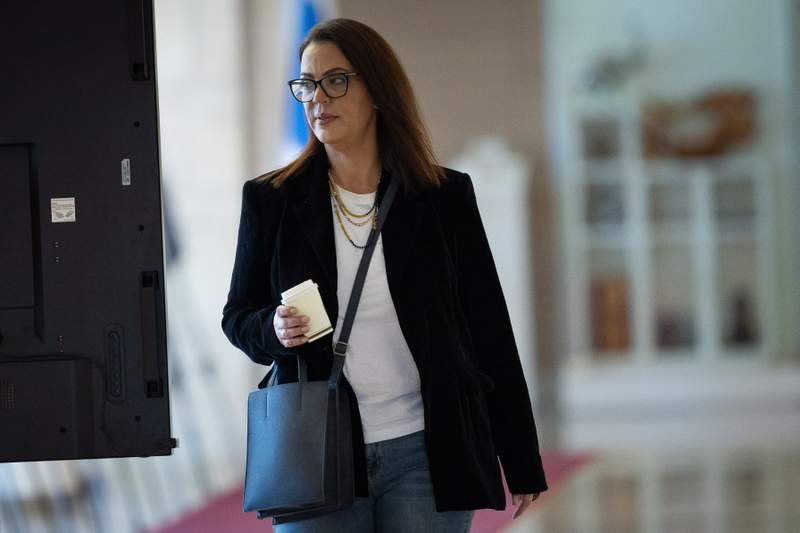
POLICY WIRE — Tel Aviv, Israel — It isn’t always the high-profile clashes or the fiery parliamentary debates that tell the truest story of a nation’s political pulse. Sometimes, it’s the quiet retreat of a known firebrand, a figure who seemed to thrive on the very friction of public life. Likud Member of Knesset Galit Distel-Atbaryan, a one-time communications minister whose tenure was as brief as it was contentious, just announced she won’t be running in the party primaries. And that means she’s out of the next Knesset elections. This isn’t just about one politician choosing a different path; it’s a canary in the coal mine, suggesting a broader weariness festering within Israel’s often-combustible political landscape.
Distel-Atbaryan’s decision, made public over the weekend, marks a significant moment for the ruling Likud party. Known for her unvarnished style and staunch loyalty to Prime Minister Benjamin Netanyahu—often at the cost of bipartisan civility—she wasn’t one to mince words. Or temper them. Her departure strips the Likud of one of its more colorful, albeit divisive, voices. It’s a pragmatic calculation for her, she says, perhaps a personal reckoning after years of navigating the often-brutal reality of Israeli coalition politics.
“Look, there comes a moment when the pursuit of an ideal collides with the gritty business of governing,” Distel-Atbaryan told a closed-door gathering of supporters, her voice reportedly tinged with exhaustion. “I entered this arena to fight for our principles, but the battlefield changes. Sometimes, to win the war, you have to choose a different weapon, or frankly, just step away from the front lines for a bit.” She implied a potential return to the political fray later, but for now, she’s signaling a timeout from the constant grind.
But her departure is hardly an isolated incident. It reflects a growing strain on elected officials who often find themselves trapped between ideological purity and the harsh compromises demanded by unstable coalitions. According to a recent poll by the Israel Democracy Institute, public satisfaction with parliamentary governance has dipped to a six-year low, with only 28% of Israelis expressing confidence in their political leadership’s ability to tackle national issues. That’s a significant slide. It tells you something about the pressures on people like Distel-Atbaryan.
Opposition leader Yair Lapid, no stranger to political maneuverings himself, weighed in with a somewhat pointed observation. “Every MK, from any party, makes personal choices. But when a member of the ruling party’s inner circle steps back, it makes you wonder about the climate within. It suggests a certain fatigue, a certain disillusionment with the pace and perhaps even the direction,” Lapid stated, maintaining his usual measured but sharp tone. It’s hard to argue with that.
For some, this move signals a further, if subtle, shift within Likud. The party, historically a broad tent encompassing diverse right-wing ideologies, has become increasingly consolidated around Netanyahu’s leadership. Critics argue that this consolidation has stifled dissenting voices, or at least made their tenure incredibly challenging. Distel-Atbaryan’s brand of unyielding, often aggressive, politicking, while appealing to a segment of the Likud base, likely found itself at odds with the demands of long-term party strategy, especially during tumultuous times.
Consider the broader regional context. The political stability, or instability, in nations like Israel resonates across the Middle East — and even further east. When core political parties in powerful regional players experience such internal fissures, it often creates ripples, influencing perceptions of alliances and adversaries. It can, for example, quietly alter the calculus in regional power dynamics that countries like Pakistan and other states in the Muslim world are constantly monitoring. Because the internal health of a key actor inevitably impacts its external posture, particularly as Jerusalem navigates increasingly complex geopolitical landscapes—consider the evolving Abraham Accords, a saga in itself. Some might see her stepping away as symptomatic of a broader regional weariness, where the stakes are so high that individual ambition can become overshadowed by a collective political exhaustion.
What This Means
Distel-Atbaryan’s decision, while personal, carries noticeable implications. Politically, it removes a vocal hardliner from the Likud’s immediate electoral calculus, which might marginally soften the party’s public image in certain spheres, but it also deprives it of a fiercely loyal and uncompromising advocate. Economically, prolonged periods of political instability, marked by high turnover and internal dissent, can deter foreign investment and impede long-term planning, exacerbating existing domestic challenges. While one MK’s departure won’t tank the economy, it contributes to a narrative of governmental fragility. Her exit—and the reasons behind it—serves as a grim reminder that even for those deeply committed to a political cause, the perpetual cycle of campaigns, criticism, and compromise can exact an unbearable toll. It’s a moment that could speak to a wider disenchantment across the political spectrum, from Washington to Westminster, reflecting the ghost in the political machine itself—a weariness with the ceaseless ideological battles and personal attacks that define so much of modern public life. It’s a signal, small but clear, that even for the most combative among them, there’s a limit.