
Delhi’s Tightrope Walk: Iran’s Blistering Anti-US Push At Brics Tests India’s Diplomatic Patience
POLICY WIRE — New Delhi, India — The jasmine-scented air of India’s capital usually carries the promise of burgeoning trade deals, maybe some quiet diplomacy. This week? Not so much. Instead, it’s...

POLICY WIRE — New Delhi, India — The jasmine-scented air of India’s capital usually carries the promise of burgeoning trade deals, maybe some quiet diplomacy. This week? Not so much. Instead, it’s thick with the unspoken tension of a family reunion where several members are openly feuding, but everyone’s pretending to be civil for the host’s sake.
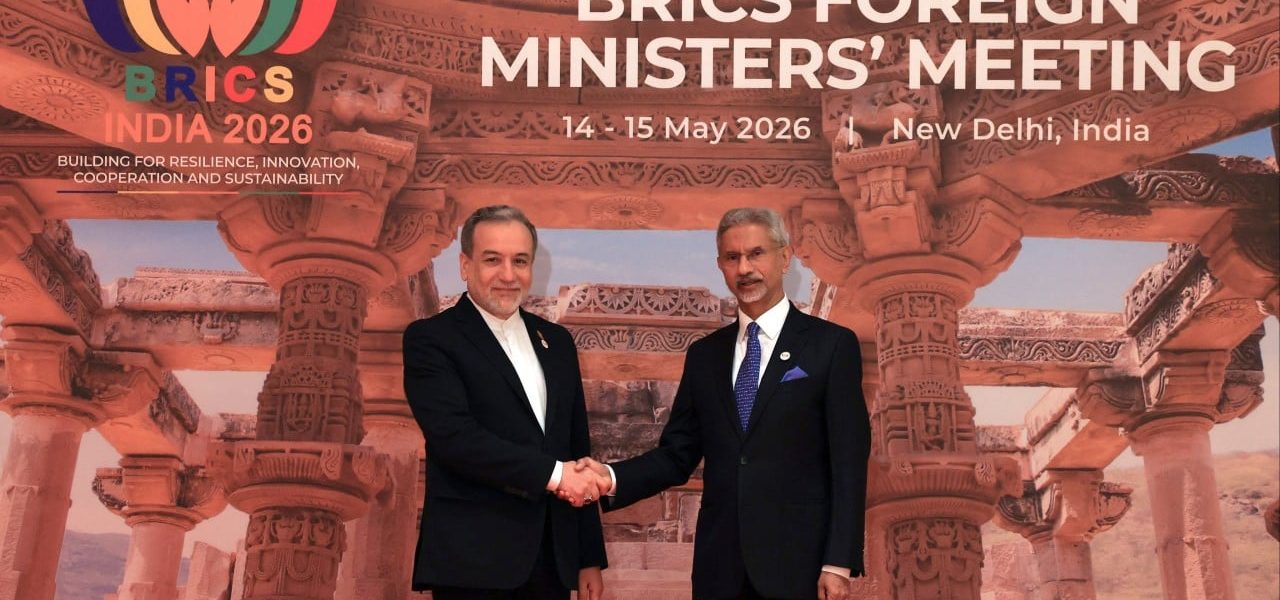
It wasn’t just another foreign ministers’ jamboree, was it? New Delhi, currently holding the Brics chair, found itself orchestrating a peculiar diplomatic ballet. Picture this: Iran, a nation practically frothing at the mouth over recent conflicts, sharing the same polished conference table with the United Arab Emirates, an equally new addition to this once-exclusive club—countries at odds over the conflict launched by the United States and Israel on February 28. Awkward. It’s like inviting two estranged cousins to Thanksgiving and seating them right next to each other, expecting small talk. India’s got its work cut out, doesn’t it?
In this freshly expanded Brics circle—a collective representing a chunky 46% of the world’s population, according to World Bank data from 2022—Tehran’s top diplomat, Abbas Araghchi, arrived with a very specific agenda. His aim: rally support for Tehran’s war against the US during the Brics foreign ministers’ meeting. A delicate objective at the best of times, let alone amid a fragile ceasefire with its adversary. Because, frankly, a ceasefire’s just a pause, isn’t it? A chance to catch one’s breath before the next round, if history’s any guide.
And let’s not forget Russian Foreign Minister Sergey Lavrov is also in the room, likely enjoying the spectacle—or perhaps just quietly solidifying his own alliances in a world that’s becoming increasingly multi-polar, whether Washington likes it or not. The mere presence of such disparate and often conflicting interests under one roof highlights India’s ambition, yes, but also its considerable headache. You see, while India quietly shapes Asia’s economic map, it also gets tangled in the continent’s messy geopolitics. It’s never just about economics, is it?
The geopolitical ramifications for the broader South Asia — and Muslim world are anything but subtle. Pakistan, a nation often caught in the crosscurrents of regional power plays, watches these developments with a particularly keen eye. An emboldened Iran, backed by a powerful bloc that includes economic giants like China and Russia, shifts regional dynamics profoundly. Islamabad, always trying to balance its historical ties with the Kingdom of Saudi Arabia against its sometimes-tense, sometimes-cooperative relationship with Iran—especially along their shared border—finds itself navigating even choppier waters. For them, any significant realignment here means a potential recalculation of allegiances, aid flows, and, dare I say, threats.
This isn’t merely about abstract statecraft; it impacts everything from energy prices to the flow of arms. It reshapes perceptions of security — and sovereignty in a region where such concepts are often hotly contested. The inclusion of countries like Iran and UAE in Brics, effectively broadening its geopolitical scope beyond a purely economic grouping, certainly makes it a more compelling—and volatile—player. But it’s not just a collection of big economies anymore; it’s turning into something of a non-Western counter-balance, plain and simple.
📄 POLICY WIRE WHITEPAPER PUBLISHED: PAKISTAN'S NATIONAL SECURITY POLICY PRIORITIES
👉 READ BY CLICKING HERENew Delhi’s foreign policy establishment knows this game well. They’ve long championed what they call [QUOTE_PLACEHOLDER] preferring to dance between global powers rather than picking sides. But when a guest openly uses your platform to rail against another major player—the US, in this instance, a partner with whom India is building increasingly strong defense and economic ties—that autonomy starts feeling less like freedom and more like being stuck in the middle. They’re hosting a house party, but one guest brought his own soapbox — and a megaphone.
The Brics expansion itself feels like a defiant statement. It’s a visible shift away from a solely US-centric global order. While India tries to portray Brics as a neutral forum for ‘Global South’ interests, having countries actively engaged in direct, explicit geopolitical conflict and ‘war against the US’ under its banner makes that claim a bit of a stretch, don’t you think? It adds layers of complexity, requiring even finer diplomatic skills. India is proving capable, but these are still early days. It’s a testament to its growing confidence, perhaps, but also its rising vulnerabilities. And that’s a trade-off many nations are learning to make.
What This Means
India’s uncomfortable chair-wielding moment at the Brics foreign ministers’ meeting carries significant political and economic ripples. Politically, it crystallizes India’s precarious balancing act. New Delhi aims to solidify its position as a leader of the Global South, forging stronger ties with countries like Russia and Iran while simultaneously deepening its strategic partnership with the US. Hosting Iran’s anti-American rhetoric directly within the Brics framework, a group India chairs, signals a tacit endorsement—or at least toleration—of such sentiments within the bloc. This risks complicating India’s carefully cultivated relationships with Western allies, particularly as Washington is increasingly looking for partners to counter China’s influence. It suggests India prioritizes multipolarity, even if it means occasional diplomatic discomfort.
Economically, the expanded Brics group, particularly with Iran’s energy clout and Russia’s resource richness, strengthens the bloc’s capacity to reshape global trade flows, potentially accelerating de-dollarization efforts. India benefits from discounted Russian oil — and seeks deeper economic engagement with the broader Middle East. However, facilitating such strong anti-US posturing could trigger secondary sanctions or make Western partners more wary of robust economic ventures. The ongoing conflict and fragile ceasefire referenced in Iran’s stance mean continued volatility in crucial energy markets. India’s economic growth hinges on global stability; this Brics meeting, while offering new avenues, also introduces new elements of instability right onto India’s diplomatic doorstep.