

Media Manipulation from Kabul: Debunking Afghan and Indian Propaganda against Pakistan
In the modern geopolitical landscape, conflict is no longer confined to battlefields; it is fought just as fiercely through headlines, broadcasts, and social media feeds. The year 2025 has...

In the modern geopolitical landscape, conflict is no longer confined to battlefields; it is fought just as fiercely through headlines, broadcasts, and social media feeds. The year 2025 has underscored this shift: India and Pakistan’s May clashes over Kashmir and Afghanistan’s October border fighting with Pakistan were marked not only by artillery and airstrikes but also by a flood of competing narratives. Each side claimed victories, downplayed losses, and accused the other of atrocities, leaving the truth tangled in a web of propaganda.
In theory, such a phenomenon is part of information warfare, an originally popular concept popularized in the Gulf War of 1991 to refer to the ability of states to influence information manipulations to effect strategic advantage. Nowadays, it has broadened into digital disinformation, AI-generated content, and coordinated media campaigns, which are becoming more and more used as weapons in the rivalries of South Asia. As the Taliban regime continue to restrict press freedom in Afghanistan and Indian media to maximize nationalist discourses; the area has turned into a textbook example of the information warfare in action.
Strategic Dimensions of Information Warfare
Information warfare is a perception that has been used to describe the strategic application of information. Propaganda, and media control to manipulate the perception, undermine adversaries, and enhance the self-position, but not necessarily fighting overtly. During the 1991 the term Gulf War became popular in the media with the western media referring to the U.S.-led-Real-time satellite coverage, narrative control and psychological operations employed by coalition. Not just to defeat the battlefield, but also the world’s narrative.
The Afghan-Indian-Pakistani triangle has experienced information warfare because of the longstanding and interwoven rivalries further complicated by the Taliban’s takeover and India-Pakistan’s disputes. As of 2020 and in subsequent analyses through 2025, the United States Institute of Peace (USIP) states that as part of counter-Pakistan influence Afghan investments, India has built infrastructure (dams and buildings) and provided scholarships for 1,000 Afghans annually, which Islamabad has perceived as support to anti-Pakistan elements. The 2025 developments of Taliban-India diplomatic outreach during border clashes between Pakistan and Afghanistan has intensified coordinated propaganda claims.
There’s been an unprecedented shift in the Taliban’s management of Afghan media, with the August 2025 CPJ report noting the transformation of targeted outlets into a ‘propaganda empire.’ Over 15 media outlets are funded with tax-payer money, like Radio Television Afghanistan, which has a budget of 8.8 million and over 500 employees. Under the Taliban regime’s, extremist narratives are enforced which bans music, side-lines female employees, and harshly punishes anyone who “deviates.” Such a system is purpose-built for enforcing anti-Pakistan narratives. For instance, in October 2025 Shamshad TV was suspended for refusing to broadcast Taliban rhetoric against Pakistan. Similarly, the partisan Indian media landscape, driven by nationalism and commercial motives, amplified the false narratives during the May 2025 conflict. Disinformation was openly utilized to disrupt potential diplomatic engagement.
It is logical to think of this as an echo chamber. Afghan media is under Taliban control and only disseminates approved state narratives, which are readily repeated by Indian media to fit New Delhi’s anti-Pakistan position as well. A July 2025 South Asian Voices report indicates that AI and social media amplify this with bots and deep–fakes. UN (2025) reports, particularly the Global Risk Report that lists disinformation as the number one global threat and South Asia. UN reports, highlight the real consequences disinformation has caused in South Asia, particularly hate speech and disinformation-fuelled regional instability.
A pattern of Fact Distortion and Misrepresentation
Both Afghan and Indian media are rightly accused to bend the truth on Pakistan’s military operations specifically, they’ve framed Pakistan’s defensive operations as offensive. Illustration of this is the October 2025 case of the Afghan Taliban’s spokesperson Zabihullah Mujahid asserting the Taliban had captured a Pakistani tank. Indian media popularized the claim, and it turned out to be a Russian-made tank, the Taliban’s, and the video was recycled an attempt to show the Pakistani defences as weak and misrepresent the situation.
Another example of this is the destruction of the Afghan Friendship Gate. Afghan media alleged it was done on the Pakistani side, claiming it was because of Pakistan’s actions, but the terrorists had actually blown it up with an IED on their own territory. Indian media amplified this as a demonstration of Pakistani border violations, and it was done brazenly with no consideration to the footage of the intact Pakistani side. In Kabul, the October 2025 explosion was framed as an oil tanker accident by Afghan and Indian reports and as a consequence of Pakistani strikes, but Pakistani sources described it as a precision operation against Indian backed terrorist groups like Fitna-al-Khawarij (FAK).
At the time of the May 2025 conflict between India and Pakistan, Indian media including national broadcasters, claimed strikes on a Pakistani nuclear base with radiation leaks, the downing of two Pakistani jets, and an attack on Karachi port and Lahore port (though there is no port in Lahore). Using forensics and satellite images, the discredited evidence was determined to be from Gaza or was altered by AI. The New York Times (2025) commented that even reputable institutions, were running fabricated maps and stories, and creating unfounded panic. Al Jazeera’s May 7 analysis labeled this an “information war,” where India falsely dismissed Pakistani claims of downed jets. India called it “disinformation,” but provided no evidence. But, Pakistan refuted this Indian claim by providing evidence of debris of 6 jets in the official press conferences by DG ISPR.
Propaganda Means: Inflation of Casualty Figures
The psychology of inflation of casualty is still one of the greatest tools of propaganda, which is employed not only to demonize opponents and to secure either local or foreign backing. This tactic can be traced best through Afghanistan-Pakistan border clashes. Afghan sources falsely reported 58 the number of Pakistani soldiers martyred was compared with the number of Pakistan who only confessed 23 and Pakistan made a claim killing more than 200 FAK terrorists in opposition to the figure of just 9 Taliban. The same pattern of distortion was evident during the India-Pakistan conflict of May 2025. While New Delhi claimed its strikes on May 7 were “precision operations” that caused no collateral damage, ground realities told a different story. Reports from the area confirmed the destruction of a local health centre and the loss of at least 31 civilian lives, including women and children. Despite these tragic consequences, India attempted to frame Pakistan as the provocateur, when in fact it was India that initiated the aggression and violated the peace. A Reuters Institute report noted that Indian fact-checkers debunked “a month’s worth of misinformation in hours,” much of it originating from mainstream TV channels.
Mechanisms and Implications of This Propaganda
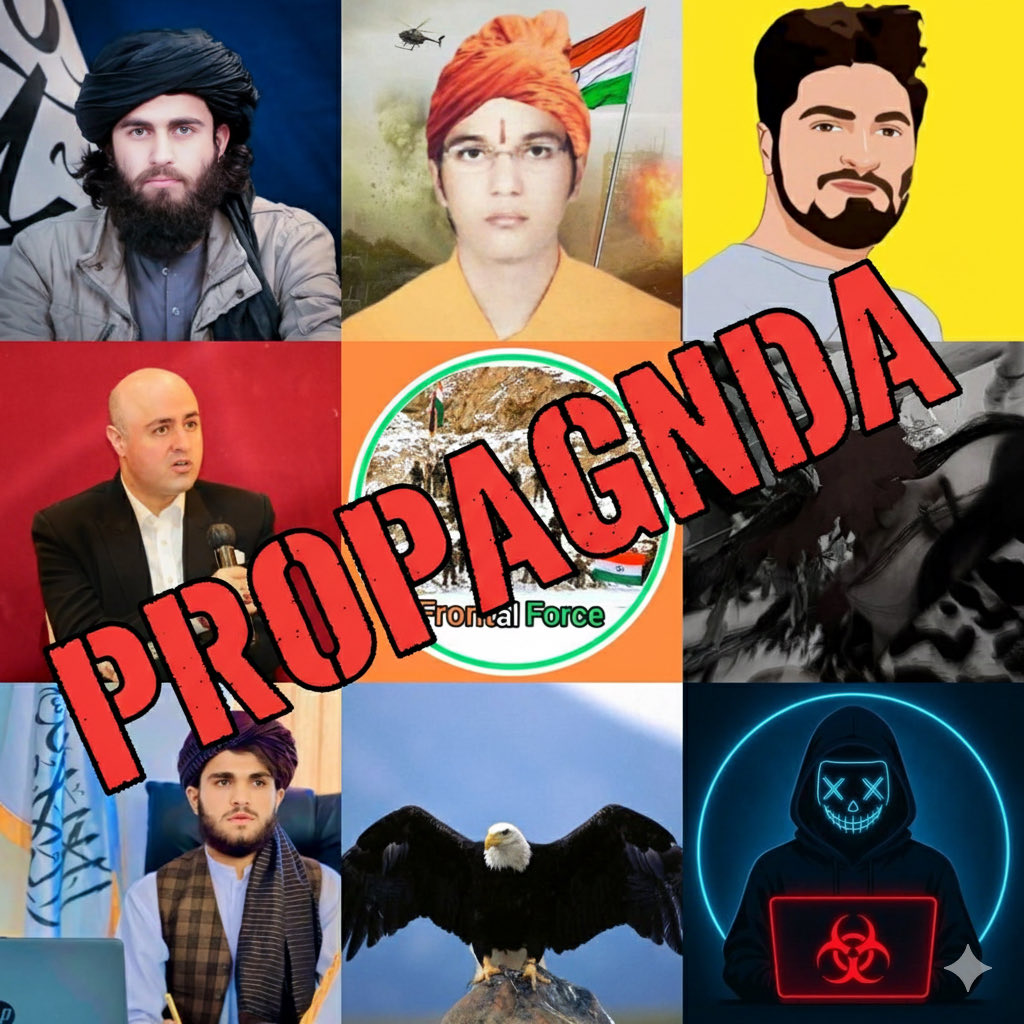
Ultimately, what develops is something greater than the disinformation mal-practices. Distortion of information is manipulated. The media machine of the Taliban regime is highly repressed, and the Hindi disinfo bots support anti-Pakistan stories. It is the combination of these systems that Pakistani analysts termed as a nexus – a smooth, aggressive discursive traffic of narratives with a narrow focus on anti-Pakistan discourse. The NE-FCA lives off unaccounted unfriendly communications. Anti-propaganda media campaigns, messages indicative of hate, unhindered propagation of fake news via social media has become a lethal weapon that can generate momentum of instability in regions.
In South Asia, the war is not on the ground anymore, but also on the Internet, where discourses are being formed every second. The loss of this information war can be detrimental to the image of a nation whereas the spread of lies is more devastating as it destroys the possibility of peace. In the absence of media consciousness, effective regulations and explicit digital standards, spam information will keep contaminating people and recruiting aggression. Pakistan has been advocating responsible digital behaviour and regional collaboration to end such anarchy. It is, nevertheless, also prepared to take the initiative to promote digital accountability and honesty so that the fact, rather than fiction, determines the future of the region.
Author