


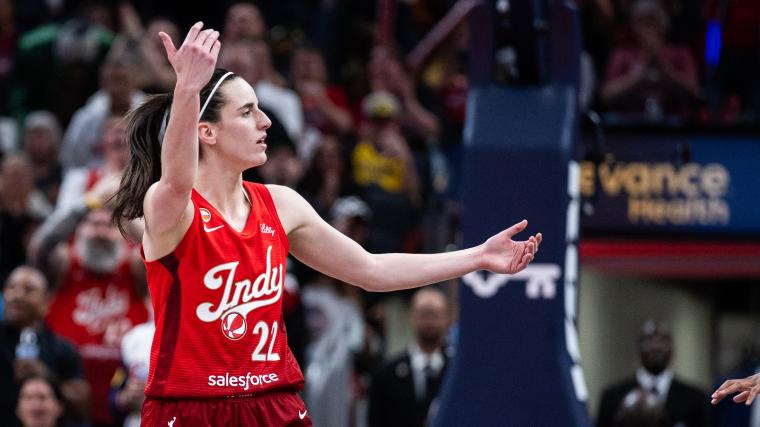
Clark’s Unstoppable Ascent Rewrites WNBA Ledger, Signals New Economic Front
POLICY WIRE — Indianapolis, USA — For a player whose arrival has felt less like a debut and more like a seismic event, another statistical landmark often feels less like an achievement...

POLICY WIRE — Indianapolis, USA — For a player whose arrival has felt less like a debut and more like a seismic event, another statistical landmark often feels less like an achievement and more like a foregone conclusion. But then, isn’t that the point? This isn’t merely about basketball anymore. It’s a phenomenon. Her rapid-fire acquisition of league records, especially Thursday’s against the Valkyries, underscores a new chapter—not just for the WNBA, but for how modern athletic stardom, especially female stardom, is built and consumed globally. She’s moving too fast to keep track sometimes, forcing everyone, everywhere, to adjust.
It’s barely been any time at all since Caitlin Clark hit the hardwood. And yet, she’s already a walking, talking record book, or so it seems. Her every game is scrutinized, her every assist tracked with a keenness typically reserved for geopolitical shifts. On Thursday night, with an assist that hardly seemed out of place in her highlight reel, the Indiana Fever’s centerpiece officially became the quickest player in WNBA history to reach the 1,000-point and 500-assist plateaus. Not bad, not bad at all for someone still essentially finding her feet in the professional arena. [QUOTE_PLACEHOLDER]
But how fast is quick? Real quick. Clark needed just 59 games to reach those marks, substantially faster than Sue Bird who required 82 games to achieve the same benchmark, a data point sourced by The Sporting News. Sabrina Ionescu managed it in 84 games, while the legendary Dawn Staley took a more stately 101 games. This isn’t just incremental improvement; it’s a complete recalibration of what’s possible, what’s expected, and what draws eyes to the television screens and turnstiles.
Her statistical efficiency extends beyond just these combined milestones. Clark also carved out another unique position, becoming the fastest player in WNBA history to record 500 career assists, per ESPN. It’s a relentless statistical barrage that’s reshaping league narratives faster than even seasoned observers anticipated. But the numbers, compelling as they’re, represent something far larger: a burgeoning commercial engine, an almost unprecedented media magnet, and a cultural touchstone whose implications stretch well beyond the courts of the United States. They’ve found their inevitable trajectory.
Because, make no mistake, what’s happening here isn’t contained by borders. The phenomenon of a single athlete transcending her sport’s traditional audience, demanding attention, and reshaping perceptions holds universal appeal. Consider nations like Pakistan, where sports fandom, particularly for cricket, runs deep—a veritable national obsession. While women’s sports in regions like South Asia often grapple with significant challenges in visibility, funding, and cultural acceptance, the global resonance of figures like Clark can subtly, but powerfully, influence narratives. The relentless drive of individuals breaking barriers, whether it’s a batter from Lahore smashing records or an American guard dishing out assists, ignites discussions about potential, opportunity, and the changing roles of women in public life.
This isn’t to say WNBA basketball is now prime-time viewing in Islamabad, but the images, the headlines, the very idea of a dominant female athlete who transforms an entire league—they permeate. They feed into broader global conversations about gender parity, economic opportunity in sports, and the export of cultural benchmarks. In an era where soft power and global narratives are fiercely contested, the spectacle of someone like Clark, forcing an established league to adapt to her presence, is a compelling storyline that resonates, albeit differently, in every corner of the world.
What This Means
The statistical milestones Caitlin Clark continues to achieve are more than just numbers on a scoreboard; they represent a significant policy and economic accelerant for the Women’s National Basketball Association. Her immediate, undeniable impact has transformed what was a steady growth trajectory for the league into something approximating a rocket launch. We’re witnessing a recalibration of media rights negotiations, sponsorship values, — and fan engagement metrics. Economically, this translates to increased revenue streams, better salaries for all players, and greater investment in infrastructure—from youth development programs to marketing efforts.
From a policy perspective, Clark’s meteoric rise spotlights the profound economic and social returns on investing in women’s sports. Lawmakers and institutions, typically slow to adapt, are now presented with irrefutable evidence of a massive, untapped market. This could, and frankly, should, lead to policy initiatives supporting greater equity in sports funding, infrastructure, and media coverage across various athletic endeavors. Internationally, this creates a fascinating case study for countries striving to bolster their own women’s sports programs. It’s a clear signal: invest in talent, promote rigorously, — and the market will respond.
But the social implications might be the most profound. Clark’s celebrity is shattering entrenched gender stereotypes about athleticism — and competitive viability. For young girls across the globe, including those in patriarchal societies, her image—a record-breaking, fiercely competitive woman dominating a traditionally male-centric arena—is a powerful counter-narrative. It offers a blueprint of ambition and achievement that transcends the playing field, influencing discussions around female leadership, economic independence, and challenging traditional societal roles. It’s less about a game, you see, — and more about the cultural real estate she’s claimed for women everywhere. It’s messy, it’s fast, and it’s compelling television for everyone, even for those who pretend not to care.