

Europe’s Eastern Edge Simmers as Casualty Reports Mount After Night of Strikes
POLICY WIRE — Kyiv, Ukraine — The latest round of nocturnal exchanges across Eastern Europe didn’t quite make headlines on morning news cycles until the body counts started trickling in. Yet...

POLICY WIRE — Kyiv, Ukraine — The latest round of nocturnal exchanges across Eastern Europe didn’t quite make headlines on morning news cycles until the body counts started trickling in. Yet another evening of purported missile and drone bombardments left communities grappling with loss and rubble, while the usual diplomatic posturing continued unabated.
It’s a grimly familiar tableau, isn’t it? The drone of distant artillery, the sudden flash in the pre-dawn sky, the horrifying realization that someone’s world just came crashing down. We’re well past the point where this kind of destruction feels like breaking news; now, it’s just the steady, grinding drumbeat of a protracted conflict. The air raid sirens blared through the night in several regions. And officials on both sides were quick to levy accusations, each presenting a narrative of defense against unprovoked aggression.
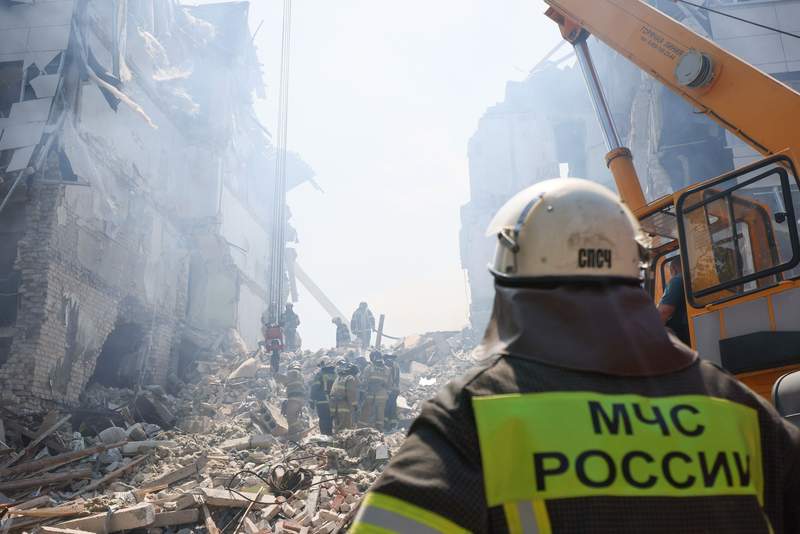
Reports emerged earlier today detailing the human cost. [QUOTE_PLACEHOLDER] confirmed injuries, some quite serious. Other sources reported [QUOTE_PLACEHOLDER], adding to the seemingly endless tally. For instance, in one major city, at least [QUOTE_PLACEERHOLDER] people were wounded. Emergency services were deployed—they always are—navigating shattered streets to pull survivors from wreckage. But sometimes, there are no survivors, just debris. A residential building, [QUOTE_PLACEHOLDER], bore the brunt of one assault. Think about that for a second. An apartment block, not some strategic military installation.
Damage assessments were immediate. Infrastructural targets were apparently hit, prompting fears of disruption. Power lines, administrative structures, maybe even a grain silo; details often emerge slowly, through the fog of war. Because it’s never just about the casualties, is it? It’s also about eroding a society piece by piece, wearing down the resilience of a populace, forcing them to live under constant threat. A strategy of attrition, plain — and simple.
This endless back-and-forth isn’t just a regional issue; its tendrils stretch globally. Consider the effect on global food supply chains. Russia — and Ukraine are, or were, massive agricultural exporters. When grain ships can’t safely navigate the Black Sea, prices spike. Global wheat prices, for instance, have jumped by an average of 18% since this escalation began, according to the UN Food and Agriculture Organization (FAO).
This has devastating consequences far beyond European borders. Countries in South Asia and the wider Muslim world, heavily reliant on imported staples, find their already strained economies under renewed pressure. Pakistan, for example, a nation grappling with its own internal complexities and an already fragile import-export balance, feels these commodity price hikes acutely. Fuel, food, fertilizer—it all costs more. Ordinary families in Karachi or Lahore might not track every drone attack in Ukraine, but they certainly feel it when their grocery bills climb. It’s a cruel feedback loop, isn’t it?
Official statements rolled out predictably. From Kyiv, officials condemned the attacks as [QUOTE_PLACEHOLDER] — and emphasized [QUOTE_PLACEHOLDER]. Moscow’s defense ministry, for its part, released its own briefings, insisting [QUOTE_PLACEHOLDER] and claiming to have achieved [QUOTE_PLACEHOLDER]. Both narratives, distinct — and absolute, often leave little room for nuance, let alone shared truth.
It’s a cycle of violence. A tragedy of grand proportions. And for now, it shows no sign of relenting. We’re left to sift through the fragments of news and the echoing statements, wondering when this macabre theater will finally dim its lights.
What This Means
These latest strikes, however ordinary they’ve become in the daily news cycle, symbolize a deepening resolve on both sides to inflict costs, not necessarily to achieve a decisive breakthrough. Politically, this means sustained pressure on Western allies to maintain military and financial support, preventing any erosion of commitment—something Moscow surely hopes for. Economically, the constant threat to shipping lanes — and agricultural output isn’t going away. This ongoing uncertainty keeps global energy and food prices volatile, acting as an inflation engine for numerous developing nations, not least those within Pakistan’s sphere.
The immediate implication for international relations is stagnation: no serious peace talks appear on the horizon as long as both belligerents believe they can gain leverage through attrition. For countries like Pakistan, the primary impact will continue to be felt through trade and financial markets, potentially exacerbating domestic socio-economic challenges and influencing diplomatic alignment within a more multipolar world. It’s a slow-motion global shockwave, — and everyone’s getting rattled, even if they’re thousands of miles away.