

The Crumbly Divide: German Boardrooms Jolt as Populist Tide Tests Corporate Conscience
POLICY WIRE — Hanover, Germany — You know something’s genuinely up when a biscuit baron, whose family name has adorned grocery aisles for well over a century, decides to dive headfirst into the...

POLICY WIRE — Hanover, Germany — You know something’s genuinely up when a biscuit baron, whose family name has adorned grocery aisles for well over a century, decides to dive headfirst into the political muck. We’re talking about Bahlsen here, that iconic German confectionery empire, whose chief isn’t just baking treats but also dishing out a blunt, un-sugar-coated message to Germany’s burgeoning populist right: the Alternative for Germany (AfD).
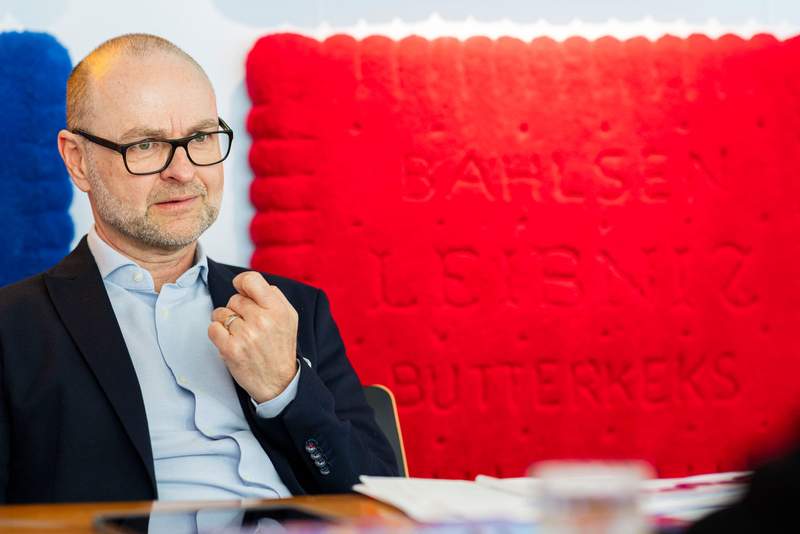
It wasn’t a hushed boardroom leak, either. Hermann Bahlsen, a scion of the company’s founding family and now at the helm of its advisory board, didn’t mince words. He publicly exhorted fellow German companies to ditch their cozy corporate neutrality and take an unambiguous stand against the AfD. It’s a sentiment echoing across pockets of Germany’s business landscape, a slow, grudging realization that economic stability isn’t just about spreadsheets and market share anymore; sometimes, it’s about political values. And boy, is that a jarring thought for Germany Inc., an entity that has long preferred the discreet hum of industry over the boisterous clang of political declarations.
But neutrality, it seems, has its limits. The AfD’s rhetoric—anti-immigrant, often xenophobic, occasionally outright nationalist—has rattled more than just the political establishment. It’s got corporations seeing red, not because of some newfound moral awakening for all, perhaps, but because such sentiments ultimately hit the bottom line. Think about it: talent acquisition becomes tougher, international relations sour, and consumer boycotts — they aren’t just for American activists anymore.
“We can’t just stand by while certain elements threaten the very foundations of our open society and economy,” Bahlsen stated firmly in a recent interview. “It isn’t about partisanship; it’s about protecting the Germany that has allowed us all to prosper, one built on diversity and collaboration.” His candor serves as a rare flashpoint. Many corporate leaders tend to keep schtum on such incendiary topics, viewing it as a lose-lose proposition.
But the numbers speak volumes, literally. Germany’s reliance on foreign labor is significant, with nearly 13% of its workforce born outside the country, according to the Federal Statistical Office’s 2023 figures. This workforce helps drive key sectors—manufacturing, healthcare, even those little biscuit factories—that German companies need. Policies threatening these demographics directly imperil Germany’s economic engine. And for Bahlsen, a global brand that’s been in Pakistan for ages, seeing a thriving German diaspora there, that kind of exclusionary talk cuts close to the bone. It’s a complex global network, isn’t it? When European companies talk of political stability, they’re not just thinking locally; they’re seeing the interconnected dots of trade routes stretching into South Asia, the Gulf, and beyond.
But not everyone’s applauding Bahlsen’s principled stance. Predictably, the AfD establishment quickly dismissed it as elite corporate hand-wringing. “These are the concerns of the disconnected urban elites,” shot back an AfD spokesperson, seemingly without missing a beat. “They don’t grasp the daily anxieties of ordinary Germans, who simply want secure borders and a focus on our own national interest.” That, naturally, simplifies things a tad, framing a nuanced corporate position as simple bourgeois snobbery. It’s an age-old playbook, after all.
📄 POLICY WIRE WHITEPAPER PUBLISHED: PAKISTAN'S NATIONAL SECURITY POLICY PRIORITIES
👉 READ BY CLICKING HEREAnd let’s not pretend these corporate pronouncements are always entirely altruistic. Sure, there’s often a genuine moral compass guiding some decisions. But mostly? It’s risk management, brand reputation, and the cold hard calculus of attracting and retaining skilled labor in an increasingly competitive global marketplace. Germany’s economic vibrancy hinges heavily on its image as an inclusive, progressive, and stable hub for innovation and investment. When political factions like the AfD gain ground with rhetoric that paints a very different picture, boardrooms wake up. Slowly. Sometimes too slowly, perhaps.
But whether out of moral conviction or sheer pragmatic self-interest, this emergence of corporate activism in Germany against populist movements isn’t some fleeting trend. It reflects a deeper unease, a reckoning with the uncomfortable truth that businesses, however much they wish to remain apolitical, operate within a social and political context that ultimately dictates their long-term viability. They can’t, for much longer, afford to be silent partners to movements that might, ultimately, undermine the very environment they need to thrive. For a country still wrestling with ghosts of its past, this kind of public corporate courage—or even calculated resistance—marks a significant, if perhaps belated, shift.
What This Means
Bahlsen’s direct challenge to the AfD isn’t just about selling cookies; it signals a growing apprehension within Germany’s industrial powerhouses regarding the future stability of their primary market and, crucially, their global operations. The implications are wide-ranging. Politically, corporate heavyweights adding their voice to the anti-extremist chorus could potentially bolster centrist parties, providing a powerful counter-narrative to the AfD’s populist surge. For the AfD, it could lead to accusations of being anti-business, a tough pill for a party trying to normalize its image beyond its radical fringe. And it also highlights how corporate leaders aren’t necessarily — anymore — content with a purely transactional relationship to politics.
Economically, if more companies follow Bahlsen’s lead, it creates a tricky dilemma for the AfD: either moderate their stance to avoid alienating a key economic sector or double down and risk further isolation. The push for companies to actively protect an inclusive society also reflects an awareness that Germany’s ability to attract international talent and maintain robust export markets—especially in regions like the Middle East and South Asia, which view Germany through its immigration policies—is directly tied to its image as a welcoming, stable nation. This isn’t just a German problem, either; we’re seeing similar tremors across the globe where populist movements threaten the established order and corporate interests.