

The Climate Clock Is Ticking, but There Is Still a Way Forward
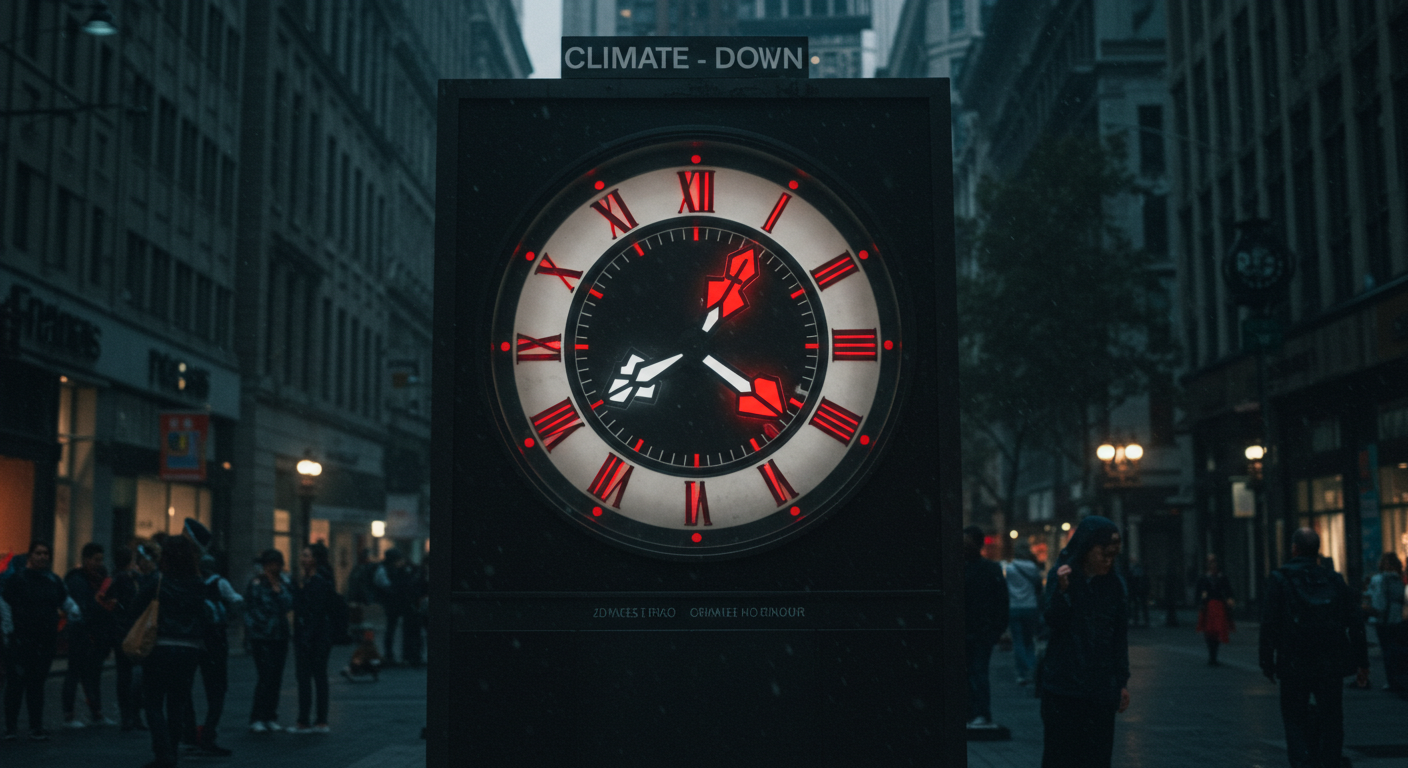
The globe is approaching a climatic tipping point. As per a recent scientific alert, we have only three years left for us to cross the 1.5°C global warming milestone, which has been agreed upon in...

The globe is approaching a climatic tipping point. As per a recent scientific alert, we have only three years left for us to cross the 1.5°C global warming milestone, which has been agreed upon in the Paris Agreement to prevent risky climatic change. And if emissions continue at the same level, the global “carbon budget” will run out by 2028. And though this is bad news, according to scientists, it is not too late yet and we can yet prevent the worst of itif we act fast.
The report, issued in June 2025 by over 60 climate scientists, outlines that we have only 130 billion metric tons of carbon dioxide left to release before hitting 1.5°C. The planet is presently releasing roughly 42 billion metric tons annually. That leaves three years for us to hit the milestone unless emissions are reduced. The globe has already warmed by 1.2°C since the pre-industrial period. Essentially all of this warming is anthropogenic and comes from the burning of fossil fuels. Compounding the crisis is that oceans have absorbed gigantic amounts of heat, which will seep out slowly over the next few decades. This will generate an extra 0.5°C of warming even if we stopped all emissions right now.
So what does take place if we pass 1.5°C? It would not be the end of the world, but it would be extremely lethal. Experts tell us the risks of heatwaves, flooding, and droughts will surge at a rapid rate. Some natural systems, like the Greenland Ice Sheet or the Amazonian rainforest, could cross “tipping points” and change irreversibly.For the poorer countries, especially those already facing extremes, these changes will be apocalyptic. The majority of the nations in the Global South have not had a significant contribution to emissions worldwide but already face floods, droughts, and rising temperatures. Climate change is not something that will happen in the future—it’s already happening in these regions.
Michael Mann, a leading climate scientist, sums it up well that “every fraction of a degree of warming we prevent makes us better off.” Reaching beyond 1.5°C and stopping at 1.6°C is preferable to reaching 1.8°C. The goal is to cut carbon emissions as quickly as possible and not warm further.Can we dial down warming below 1.5°C? Yes, say experts—but it will be extremely difficult to do. To actually reverse the warming, we need more than “net zero” emissions. We need “net negative” emissions, i.e., removing more carbon dioxide from the atmosphere than we emit.
Today, nature-based solutions such as afforestation and land restoration take up to 2 billion tons of CO₂ annually. To lower the temperature by a mere 0.1°C, however, we would have to remove 220 billion tons. We would need to increase our work by a factor of 100, something that is unthinkable using nature alone.That is why the majority of scientists believe that we will need new technologies, such as carbon capture and storage. They are intended to pull CO₂ out of the air and store it underground. But they are still expensive and are not available in large quantities. Robin Lamboll, one of the authors of the report, explained that even the application of these technologies just to achieve net zero would be a big win. Cooling the world would take a maximum of 50 years.
One should mention that the Paris Agreement never requires countries to implement negative emissions technology. However, if we are already over 1.5°C, governments may have no other choice but to invest in them to avoid further warming.Despite these challenges, there is some progress still being made. Some regions are starting to decelerate emissions. Renewable energy use is increasing. Public consciousness is rising. However, experts warn that even these are not yet at a fast enough rate.
At this pace, we’ll be at 1.6°C in seven years, 1.7°C in twelve years, and 2°C in twenty-five years. Each step up represents more climate risk, more damage, and more cost to communities and ecosystems. Summing up, the climate crisis exists but is not apocalyptic. The science is solid: we are close to a dangerous tipping point, yet everything we do today can reduce damage tomorrow. Whether we move now or delay will decide the future not just of our planet, but of all on it.
Author