
Teen Prodigy Shakes IPL 2026: More Than Cricket, It’s a Multi-Million Dollar Bet on Raw Talent
POLICY WIRE — Mumbai, India — The spectacle of professional sport often disguises its underlying machinery: immense financial flows, strategic talent management, and the brutal calculus of market...

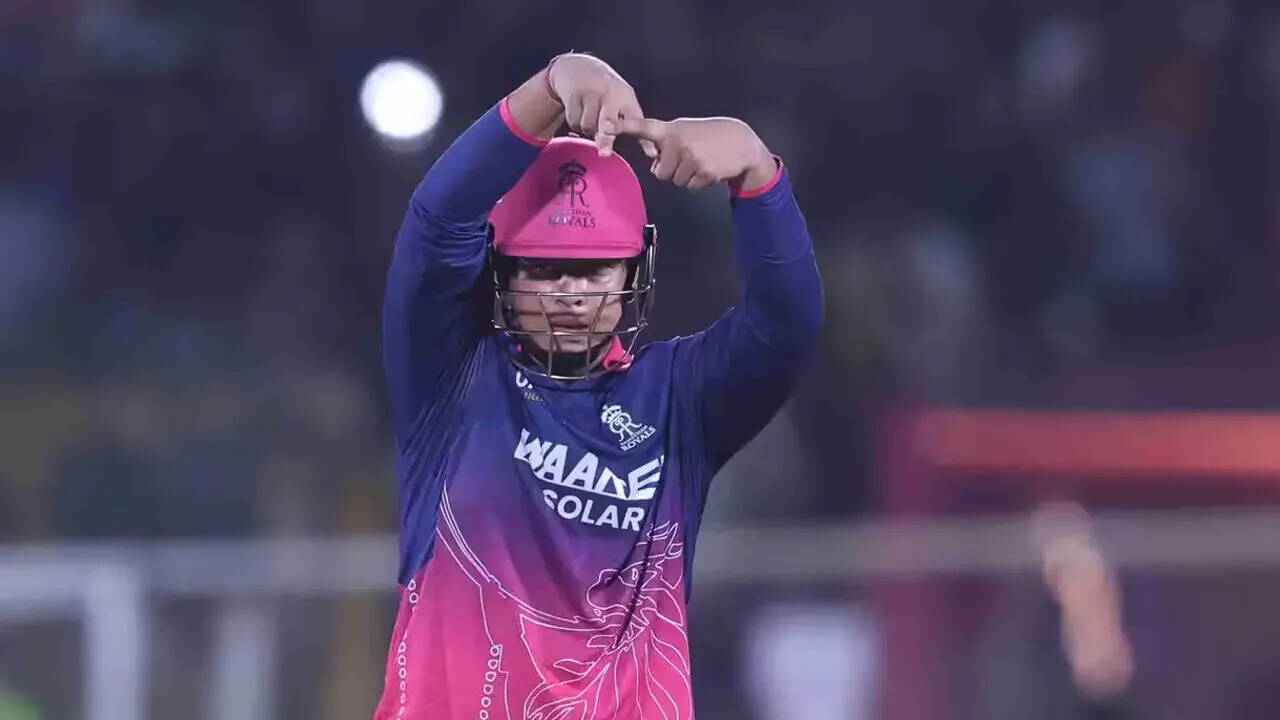
POLICY WIRE — Mumbai, India — The spectacle of professional sport often disguises its underlying machinery: immense financial flows, strategic talent management, and the brutal calculus of market value. Sometimes, though, a raw, undeniable force rips through the carefully constructed façade, demanding everyone pay attention. This year, it’s a 15-year-old kid named Vaibhav Sooryavanshi.
It’s easy to get caught up in the breathless adoration—the kind that makes for viral clips and sponsorship deals—but seasoned observers see something more. They see a seismic shift. Devdutt Padikkal, himself no stranger to the limelight, recently gave a rather candid assessment, noting that to imitate Sooryavanshi would be plain “foolish.” And he’s not wrong, not when you consider what this young gun’s bringing to the crease.
Because the Indian Premier League, for all its glitter, is a grinder. It chews up and spits out, fast. But Sooryavanshi, with his unburdened stroke play — and staggering returns, has defied that natural order. He’s redefined the age curve, smashing a near-century off just 38 deliveries during a crucial showdown against the Lucknow Super Giants. This wasn’t just a good innings; it made him the youngest player in recorded T20 history to cross 500 runs in a season.
Padikkal, who once held a similar record, knows the pressures that follow. “What Vaibhav Sooryavanshi does is truly unique. At his age, to have that kind of power — and explosiveness in his batting is special. Honestly, it would be foolish for anyone to try to copy him,” Padikkal admitted on JioStar. “He is a rare talent, — and what he does is incredible. For me, I focus on my own strengths and try to get the best out of myself. I don’t compare myself with others because there are so many talented players in this tournament. I keep it simple and work on improving my own game as much as I can.” That’s a diplomatic turn from a guy who’s seeing his own early milestones eclipsed, but it’s also a clear signal: this isn’t a normal trajectory.
And that’s the rub, isn’t it? In an era where sports data analytics and biomechanics seemingly dictate every swing, a phenomenon like Sooryavanshi feels almost anachronistic. He just plays. But his very presence challenges established methods, forcing teams and strategists to reconsider their development pipelines. Just this season, Sooryavanshi racked up 579 runs in 13 innings, while the seasoned Padikkal managed 412 runs across 12 appearances, a numerical starkness that doesn’t need much further explanation.
The implications, particularly for a region as cricket-mad as South Asia, are substantial. From Karachi to Colombo, the IPL casts a long shadow. Its financial might and talent-spotting prowess mean that young athletes across the subcontinent — including those in nations like Pakistan where direct participation is complex due to geopolitical tensions — closely watch this league. They internalize these narratives of sudden rise, understanding that talent, when explosive enough, can redraw any map. This narrative isn’t lost on the powers that be.
“We’re witnessing a new kind of athlete emerge, one unconstrained by traditional developmental timelines,” offered Kiron Desai, a former administrative board member for the Board of Control for Cricket in India (BCCI), speaking off the record. “Vaibhav isn’t just a cricketer; he’s an accelerant. He forces every franchise, every national board, to rethink how they invest in — and how they market — this next generation. He’s an economic force multiplier, honestly, and the buzz around him means good things for everyone involved, directly or indirectly.” Desai’s assessment offers a telling glimpse into the high-stakes game of professional sport management.
Consider the market dynamics at play. Each year, global sports leagues engage in a high-wire ballet of player valuation, trying to snag the next big thing without overpaying. Sooryavanshi just walked into that arena with a sledgehammer. And it isn’t just his runs; his tactical usage as an ‘Impact Player’—a relatively new concept allowing substitutions during a game—has cemented his value, highlighting his capacity to single-handedly swing momentum.
What This Means
This isn’t just a sports story. The meteoric rise of a talent like Vaibhav Sooryavanshi points to broader shifts in global labor markets and the accelerating premium placed on disruptive, youth-driven innovation. For one, it signals the increasing commodification of precocious skill. Organizations, whether sports franchises or tech startups, are now less concerned with linear experience paths and more with raw potential that promises immediate, high-impact returns. The financial outlay to secure such talent, even when it’s still developing, skyrockets – creating both unprecedented wealth for a few, and intense pressure on everyone else. What we’re seeing on the cricket pitch is a microcosm of a global scramble for soft power, where cultural icons born from competitive fields yield immense influence, extending far beyond sport into economic diplomacy and national branding. It means that traditional pathways to success? They’re getting upended fast. Organizations either adapt to this volatility or get left behind.