


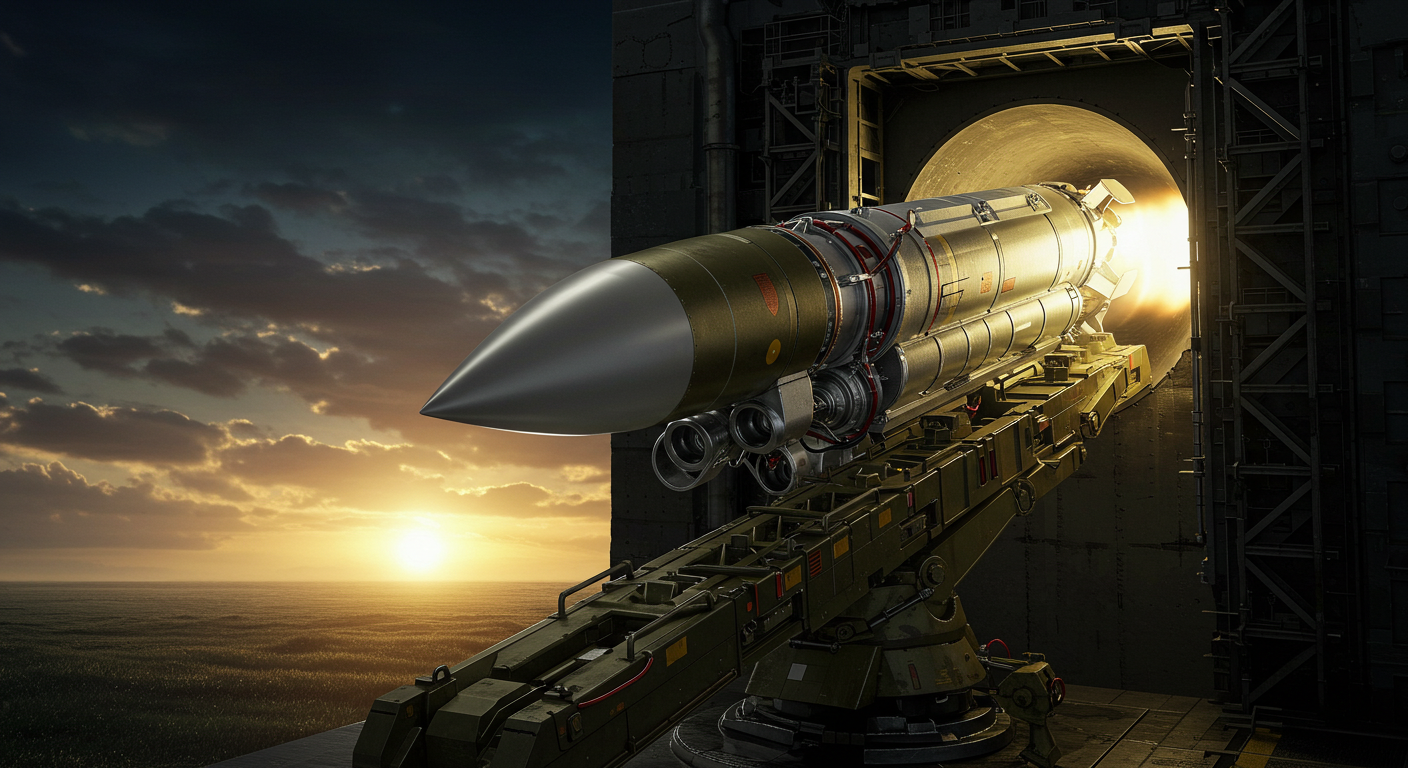
Strategic Deterrence or Destabilization? Deconstructing the ICBM Allegations Against Pakistan
Recent claims published by Foreign Affairs and echoed by India Today that Islamabad is covertly building an intercontinental ballistic missile (ICBM) capable of targeting the continental United...

Recent claims published by Foreign Affairs and echoed by India Today that Islamabad is covertly building an intercontinental ballistic missile (ICBM) capable of targeting the continental United States are unfounded and misleading. Though such charges have raised eyebrows in Washington and expectably kindled hawkish rhetoric again in India, careful analysis based on deterrence theory, regional security dynamics, and reality of technology is needed before conclusions are drawn. From a Pakistani point of view, this account is not just hyperbolic but a part of a comprehensive strategy to isolate and delegitimize its nuclear doctrine, a one that remains essentially India-focused and based on verifiable minimum deterrence.
The Charge and the Strategic Background
Pakistan’s military might be building a nuclear-capable ICBM, reportedly with Chinese help, to ward off U.S. intervention in case of hostilities against India, according to U.S. intelligence. The implication here is that Islamabad is moving from regional deterrence to global deterrence. This gossip overlooks the strategic rationale behind Pakistan’s nuclear strategy. In contrast to states such as North Korea or Iran, Pakistan does not require or desire deterrence against the US but instead meticulously designs its arsenal to balance India’s superiority in conventional and nuclear capabilities.
What appears to be happening is not a revelation but a shift in narratives. In the wake of India’s so-called Operation Sindoor, a clandestine campaign believed to have included cyber warfare and cross-border destabilization measures, the regional threat landscape facing Pakistan has certainly changed. But changing threats don’t constitute global ambitions. The question is whether Pakistan is lengthening its missile range for worldwide projection or to provide survivability of its deterrent in a crisis situation.
Strategic Stability and Deterrence Logic
To interpret Pakistan’s strategic calculation, it is essential to go back to elementary deterrence theory. For a nation under constant existential threat from a larger and hostile neighbor with a proven history of aggression, deterrence needs to be survivable and credible. The addition of multiple independently targetable reentry vehicles (MIRVs), like on Pakistan’s Ababeel missile, was not intended to be more destructive but to penetrate the layers of India’s ballistic missile defense (BMD) systems.
An ICBM in this role would potentially be a second-rate deterrent, not to strike the U.S. mainland but to make calculations difficult in Washington if it ever weighed joining Indian forces militarily in a South Asian war. It is not unusual in nuclear strategy to maintain far-distant countervalue targets to make enemies hesitate before entering a war zone. But whether or not Pakistan has the economic, technical, and strategic wherewithal to develop such a capability secretly is another issue entirely.
The U.S. Response: Sanctions and Signaling
Washington’s response—sanctioning Pakistan’s National Development Complex (NDC) and related companies—was to be expected. But the timing is telling. These sanctions started as early as December 2024, which indicates the U.S. intelligence community had been monitoring rocket engine development or component purchasing trends even before any ICBM claim was made in the public domain. The issue with this strategy is that it does not make a distinction between intent and capability development. Testing big rocket engines can equally be related to space-launch plans or medium-range modernization, which are both legitimate under international law.
Further, U.S. sanctions have been seemingly selective and politically motivated. India’s indigenous missile research, including Agni-VI with a range of over 10,000 km—has never prompted comparable American reactions. This political double standard feeds Islamabad’s enduring perception that non-proliferation principles are enforced inconsistently and for the strategic benefit of the West, not for the purpose of global disarmament.
Technical Reality vs. Political Speculation
📄 POLICY WIRE WHITEPAPER PUBLISHED: PAKISTAN'S NATIONAL SECURITY POLICY PRIORITIES
👉 READ BY CLICKING HEREIt is important to point out here that Pakistan has not publicly tested any ICBM-range missile (>5,500 km). Its longest officially declared range is still with the Shaheen-III (~2,750 km), which can cover the entire Indian land including the Andaman and Nicobar Command. It would not just take a new generation of solid-fuel technology and cutting-edge guidance systems but also a space program infrastructure and a long-range reentry test regimen, none of which have been definitively seen in open-source intelligence.
In fact, development of nuclear weapons is not merely a matter of ambition, it entails long-term technical maturity, economic capability, and geopolitical signaling. Pakistan is in FATF’s crosshairs, balancing an IMF bailout, and attempting to restore its international reputation. Spending billions on an ICBM project purely for pride is not only irrational, it runs counter to Pakistan’s stated strategic culture.
China’s Role: Ally or Enabler?
Most of today’s speculation is based on Chinese assistance, alleged or otherwise. Though Beijing and Islamabad have strategic relationships, such as civilian nuclear cooperation under IAEA supervision, no credible evidence can be advanced to suggest Chinese transfer of ICBM technology to Pakistan. To the contrary, such action would invite a global reaction of the kind that Beijing has been taking pains to avoid since it became an accepted NPT nuclear power. The China-Pakistan axis is strong, but not irresponsible.
Conclusion: Misplaced Fears, Real Dangers
The ICBM narrative, as framed by Western media and Indian outlets, seems less about verifying Pakistan’s capabilities and more about reshaping strategic perceptions. If this framing gains traction, it could justify preemptive containment policies, increased arms sales to India, and legitimization of New Delhi’s own missile expansion. In effect, it is a dangerous spiral of misperception that undermines regional stability.
Pakistan’s nuclear doctrine continues to be based on viable minimum deterrence. Any enlargement, if it ever happens, would be a measured reaction to evolving regional threats, not a shift toward international confrontation. Instead of alarming the world, the international community should promote transparency, strategic discourse, and regional arms control regimes that involve both Pakistan and India. The other option is a world where unsubstantiated fears drive policy and the rationale of deterrence is replaced by the temptation of provocation and escalation.
Author