

Sovereignty, Security and Sacrifice
In the realm of statecraft, the dynamic between security, sovereignty, and sacrifice presents a critical challenge. States often make sacrifices in the pursuit of security, balancing economic,...

In the realm of statecraft, the dynamic between security, sovereignty, and sacrifice presents a critical challenge. States often make sacrifices in the pursuit of security, balancing economic, social, and ethical compromises for the sake of stability and survival. However, as security concerns intensify, these sacrifices can reach a point where they undermine the very sovereignty they are intended to protect. Drawing from Carl Schmitt’s notion of sovereignty as the ultimate decision-making power, and Thomas Hobbes’ social contract theory, it is evident that while security may justify temporary compromises, sovereignty must remain paramount. When security measures, whether through trade concessions, diplomatic efforts, or border management, threaten the integrity of a state’s autonomy, the principle of sovereignty must be prioritized. No state can afford to compromise its sovereignty in the pursuit of security without risking its very foundation. In this context, Pakistan’s recent actions, suspending Afghan transit trade and reinforcing border security, reflect the delicate balance between preserving national sovereignty and ensuring security in the face of ongoing challenges.
A Legacy of Generosity
Sharing a border is geography; sharing a burden is policy, and Pakistan has consistently chosen the latter. Since the 1950s, Pakistan has supported Afghanistan’s economic survival by offering port access and trade routes. The 1965 Afghanistan Transit Trade Agreement (ATTA) granted duty-free use of Karachi port without reciprocal access to Central Asian markets, reflecting Pakistan’s commitment to regional stability over self-interest. Pakistan invested heavily in infrastructure at Torkham and Chaman, with modern terminals, scanners, and bonded warehouses funded partly by the Asian Development Bank. Despite its own financial constraints, Pakistan upgraded border infrastructure and customs systems, ensuring the continued flow of Afghan imports and demonstrating its commitment to regional stability. During crises like the 2022 Afghan floods, Pakistan airlifted food and medicine via C-130 aircraft and waived fees to expedite aid. Post-2001, relaxed trade rules supported Afghan reconstruction. Pakistan’s compassion extended to hosting over 3 million Afghan refugees since 1979. As of 2025, 1.45 million remain registered. Pakistan extended Proof of Registration (PoR) cards and allowed bank accounts for refugees, spending billions on food, healthcare, and education.
Expanding Privileges
The 2010 Afghanistan-Pakistan Transit Trade Agreement (APTTA) expanded Afghan privileges, allowing trucks to export to India via Wagah and adding Bin Qasim port access. Bilateral trade rose from $0.83 billion in FY06 to $2.1 billion in FY13, with Afghanistan gaining disproportionate benefits. In FY25, Pakistan’s exports to Afghanistan surged 38.68% to $773.89 million, including rice and medicines. Afghanistan relies on Pakistan for 55% of its trade routes, yet direct imports remain only 14%. Pakistan handles 75% of Afghanistan’s foreign trade, saving it billions in logistics costs. This vital support has been undermined by smuggling and security threats.
Economic and Strategic Fallout
Smuggling through Afghan trade routes is costing Pakistan a huge amount, around Rs 3.4 trillion every year. About 30% of this loss comes from misuse of the transit system. Cheap goods like electronics and textiles enter Pakistan illegally and hurt local businesses. In fact, Afghan Transit Trade fell by 84% as Pakistan tightened import controls and cracked down on smuggling, according to a September 2024 report by The Nation. Even bank guarantees on risky items like tires haven’t stopped the damage. The crisis goes beyond economics; it’s a matter of national security.
Taliban’s Silence and India’s Hand
Despite repeated calls for action, the Taliban regime has failed to curb cross-border terrorism. On October 11–12, 2025, Indian-sponsored Fitna-al-Khawarij (FAK) terrorists, launched a coordinated assault on Pakistani border posts, martyred 23 soldiers and injuring 29 others. This attack exposed the deepening nexus between Taliban regime and New Delhi, as India expands diplomatic engagement with the Taliban regime, including high-level meetings and embassy upgrades, while it appears to be aiming to use Afghan soil to destabilize Pakistan. Independent reports and intelligence briefings have repeatedly reported Indian agencies of backing groups like the Fitna-al-Khawarij (FAK) and Fitna-al-Hindustan (FAH) through Afghan territory. Kabul has not only failed to act upon Pakistan’s UN-submitted dossiers detailing cross-border terrorism, but has also willfully ignored the existence of terror sanctuaries on its soil, shielding them through silence. In 2024 alone, Pakistan endured 521 terrorist attacks, resulting in hundreds of civilian and military casualties, a toll that underscores the urgent need for Kabul to dismantle these networks and for India to halt its proxy destabilization strategy.
Strategic Necessity Amid Border Clashes
On October 16, 2025, Pakistan’s Federal Board of Revenue (FBR) indefinitely suspended Afghan Transit Trade operations through Karachi Port, Port Qasim, and SAPT, following deadly border clashes at Chaman and a ceasefire request from Kabul. The decision was made during a high-level meeting at Customs House Karachi, chaired by the Director General of Afghan Transit Trade. All transit gate passes were cancelled, halting cargo movement and stranding over 291 containers of Afghan cargo at Karachi’s ports. RFID-tracked shipments, introduced just weeks earlier, were left vulnerable to theft and spoilage.
Junaid Makda, President of the Pak-Afghan Joint Chamber of Commerce, confirmed that traders on both sides are now forced to sell food items at half price, with daily losses estimated at Rs 1 billion. Typically, around 1,000 containers move in both directions under the transit agreement, but all warehouses at the Torkham border are now full, compounding the disruption.
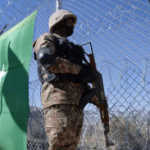
Pakistan has also deployed non-kinetic countermeasures: stricter border checks, financial scrutiny of Afghan-linked networks, bans on informal exchanges, and a review of scholarship programs. These steps reinforce Pakistan’s sovereign right to protect its borders and economic interests, especially amid repeated provocations and Taliban regime failure to curb cross-border terrorism.
Domestic Support and Diplomatic Pathways
Local traders in Chaman support the suspension despite losses. Merchants fear gunfire and smuggled goods ruining businesses. Pakistan’s border guards face ongoing threats and support the government’s new border control policy because it protects Pakistan’s economy. While Afghan traders warn of shortages due to reduced trade, showing Afghanistan’s dependence on Pakistan, Islamabad argues that its losses from smuggling are much higher, making the border restrictions necessary to enforce accountability and fair trade. Pakistan seeks equitable trade through APTTA reforms. Talks in April and July 2025 proposed stricter customs and duties on Afghan produce. Enhanced security could eliminate terrorism and illicit trade, enabling robust commerce if Afghanistan reciprocates.
Rebuilding Trust Through Conditional Engagement
Pakistan’s suspension of Afghan transit trade is not a rejection of regional cooperation; it is a call for accountability. Islamabad has repeatedly raised concerns about cross-border terrorism and the misuse of trade routes, urging the Afghan authorities to take concrete action. Continued inaction risks undermining regional stability and harming Afghan civilians, whose territory is being exploited by non-state actors.
Pakistan remains open to restoring trade ties, contingent on credible steps from Taliban regime to curb terrorism, enforce anti-smuggling protocols, and ensure reciprocal trade access. A reformed Afghanistan-Pakistan Transit Trade Agreement (APTTA), built on transparent customs procedures and mutual respect, could enable sustainable commerce without compromising Pakistan’s sovereignty. The way forward lies in conditional engagement, anchored in security, fairness, and shared responsibility.
Author