

Beaufort Redux: Israel’s Advance Beyond Litani River Rewrites Southern Lebanon’s Unsettled Map
POLICY WIRE — Beirut, Lebanon — The unassuming clatter of an Israeli army shovel, planting a new flag on a long-abandoned rock outcropping, hardly screams ‘historic turning point.’ But in the...

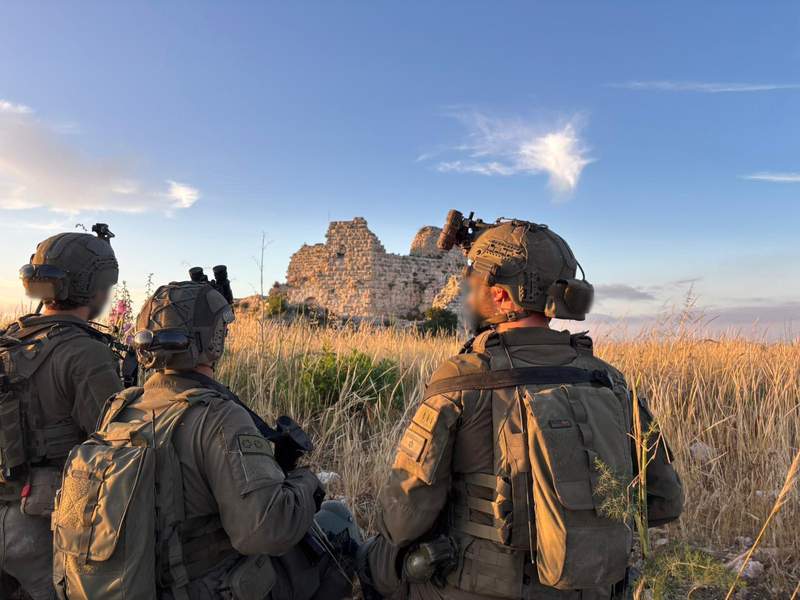
POLICY WIRE — Beirut, Lebanon — The unassuming clatter of an Israeli army shovel, planting a new flag on a long-abandoned rock outcropping, hardly screams ‘historic turning point.’ But in the simmering cauldron of southern Lebanon, where every stone has a ghost story and every ridge line a battle scar, the seemingly mundane occupation of an outpost on Beaufort Ridge — north of the Litani River — marks more than just a tactical success. It’s a full-throated echo from a forgotten past, a gritty remix of maneuvers not seen in nearly three decades.
It’s simple arithmetic, really. Israeli Defense Forces haven’t maintained a position beyond the Litani, particularly at Beaufort, since their rather messy withdrawal from the self-declared ‘security zone’ back in 2000. And yet, here they’re, twenty-six years on, dug in again. The symbolism isn’t lost on anyone who remembers the region’s last prolonged engagements. You’d think the lessons would’ve stuck. Or maybe they just prefer repeating history, expecting a different outcome this time around. What’s going on here, then? It’s not about capturing Paris; it’s about shifting the goalposts, centimeter by bloody centimeter.
Defense Minister Yoav Gallant, always a man of few — but usually stern — words, painted the move as a pragmatic necessity. “Our forward presence isn’t an invasion, it’s a stark declaration,” Gallant stated through a ministry spokesperson, probably with a grimace. “We won’t permit Hezbollah to menace our borders. This isn’t up for debate; it’s self-defense, plain and simple.” His tone suggested an unyielding resolve, but one that’s been heard before, echoing across the hills of Galilee and the valleys of the Khiam plain.
But the ‘plain — and simple’ rarely applies here, does it? Across the invisible frontier, the response was, predictably, less than cordial. Sheikh Naim Qassem, Hezbollah’s Deputy Secretary-General, wasn’t pulling any punches. “These provocations change nothing,” he thundered in a televised address that was more rallying cry than diplomatic statement. “They’re an act of desperation, and they’ll be met with the steadfastness our people know so well.” And like a good game of chess, every move prompts a counter-move, leaving the locals to bear the brunt.
For Beirut, caught as always between a rock and a hard place—or, more accurately, between Iran-backed militias and an antsy southern neighbor—this latest development is yet another agonizing tremor. Their military, already stretched thinner than a week-old pita, isn’t about to challenge the IDF directly. UNIFIL, the international peacekeeping force, has become a hapless observer, documenting violations in dry reports that seem to disappear into the ether. For example, UN reports suggest that at least cross-border incidents have spiked by nearly 60% in the last fiscal quarter alone, underscoring a grim new reality. It’s a sad routine, this.
This territorial creep, small as it might appear on a large map, sends ripples far beyond the dusty battlements. It’s a loud message to Damascus, to Tehran, and to the wider Muslim world, many of whom view Israel’s persistent operations as part of a larger hegemonic strategy. In places like Pakistan, already navigating its own internal strife and economic woes, such news isn’t merely foreign policy chatter; it feeds into a potent narrative of regional injustices, fueling resentment and calls for solidarity. It’s a cycle, you see, a deeply ingrained one that binds these distant geographies.
What This Means
This IDF re-entrenchment isn’t just about controlling a strategic perch. Oh no. It’s about calibrating the psychological scales, sending a blunt message of Israeli willingness to challenge previous red lines. Politically, it complicates any future de-escalation talks—because you can’t talk seriously about borders if one side keeps redrawing them unilaterally. Economically, this heightened instability is yet another nail in Lebanon’s perpetually creaking coffin. Foreign investment? Tourist revenue? Forget about it. They’re already on life support, — and these kinds of maneuvers are like a fresh dose of arsenic.
it’s a direct challenge to UN Security Council Resolution 1701, which mandates the Litani as a ceasefire line free of unauthorized armed personnel, explicitly Hezbollah’s. International bodies, often accused of bystander diplomacy, find themselves in a tighter bind. What do they do? Condemn? Call for withdrawal? But what teeth do those pronouncements truly have, given the enduring geopolitical inertia? It all leaves plenty of room for speculation about what Israel is trying to achieve beyond simply pushing Hezbollah back—is it buffer zone expansion, or simply another assertion of regional might? We don’t have good answers yet. We never really do in this part of the world.