


Gridiron Arbitrage: Why an NFL Contract Spat Echoes Global Markets
POLICY WIRE — Indianapolis, USA — Another professional football season approaches, and with it, the familiar scent of roster machinations, renegotiations, and outright desperation. But beyond the...

POLICY WIRE — Indianapolis, USA — Another professional football season approaches, and with it, the familiar scent of roster machinations, renegotiations, and outright desperation. But beyond the weekly spectacle and fan-centric narratives, there’s a deeper, more profound churn at play: the stark reality of how quickly loyalty and long-term commitments dissolve when a financial spreadsheet flashes red or a better opportunity beckons. It’s a truth that echoes from corporate boardrooms to geopolitical chessboards, manifesting vividly on the gridiron where player contracts increasingly function as highly liquid, tradable assets.
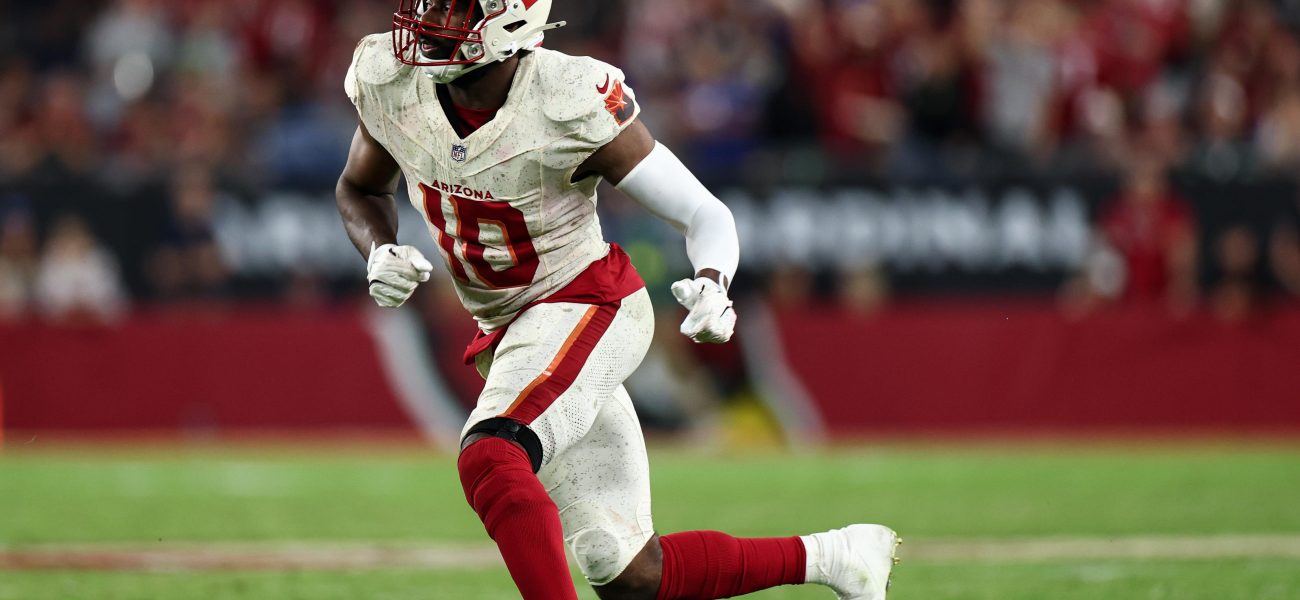
Consider the recent whispers around Josh Sweat, the Arizona Cardinals’ pass-rushing edge. A mere glance might suggest typical offseason buzz, yet closer inspection reveals a telling narrative about modern sports economics. He’s a proven talent, a former Super Bowl LIX Champion — and NFL Pro Bowler, just completed a productive 2025 campaign. But here’s the rub: sources indicate the Arizona outfit has been fielding [QUOTE_PLACEHOLDER] on Sweat. They’ve apparently received interest on their prized asset, turning what seemed like a stable partnership into a potential sell-off opportunity.
The situation isn’t about fading skills. Far from it. Last season, in his first year with Arizona, Sweat recorded 12.0 sacks, a significant return for any defense. He had signed a 4-year, $76.4 million contract with the Cardinals last offseason, rejoining former head coach Jonathan Gannon, with whom he shared a [QUOTE_PLACEHOLDER] from their prior tenure together in Philadelphia. One might have assumed a partnership forged in previous successes, cemented by a substantial contract, would hold firm. One would, alas, be naive in today’s high-stakes professional landscape.
Because the capricious nature of the league cares little for sentimental ties. Gannon, the very coach who brought Sweat over, was summarily [QUOTE_PLACEHOLDER] A year later, Sweat himself [QUOTE_PLACEHOLDER] Such actions, or rather inactions, often speak volumes in a league that demands unwavering commitment. This suggests, to any seasoned observer, that [QUOTE_PLACEHOLDER] That expensive, relatively fresh contract? Already obsolete, or at least perceived to be so by the player who outperformed its initial valuation.
On the receiving end of such a transaction, should it materialize, would likely be a franchise like the Indianapolis Colts. The Colts find themselves in something of a defensive quandary, having watched both starter Kwity Paye and veteran Samson Ebukam depart earlier in this year’s free agency. They’ve added fellow veteran Arden Key as a potential replacement, and are presumably pinning hopes on former Colts’ 2025 2nd round pick Jaylahn Tuimoloau making a [QUOTE_PLACEHOLDER] Tuimoloau only managed limited action and 0 sacks as a rookie.
But the market, as ever, favors proven commodities. [QUOTE_PLACEHOLDER] Key or Tuimoloau. He offers immediate, disruptive impact that developmental players rarely guarantee. However, whether the Cardinals would seriously entertain such an offer—and [QUOTE_PLACEHOLDER]—remains the crux of this potential saga. It’s a delicate dance of valuation, leverage, — and perceived need.
It’s fascinating, isn’t it, how the microcosm of NFL contract negotiations mirrors larger economic and talent flow patterns seen across the globe? Imagine an investor weighing options in burgeoning markets. Or consider the phenomenon of skilled workers from Lahore seeking better opportunities and compensation in, say, Dubai or London. The calculus is eerily similar: perceived value against current remuneration, market demand, and the willingness of the ’employer’ to retain talent versus seeking profit through a sale or lower-cost replacement. In Pakistan, economic mobility often dictates talent migration, just as in the NFL, financial terms drive player movement. The allure of higher pay — and better prospects transcends continents and industries, a universal language of aspiration. And that’s where the policy wire usually comes in.
What This Means
This isn’t just about a potential trade for a defensive lineman; it’s a glaring symptom of the NFL’s increasingly transient, hyper-capitalist labor market. The rapid un-attachment of a player like Sweat from a coach he explicitly reunited with highlights how contractual loyalty in professional sports has become a disposable commodity, often secondary to immediate performance demands and bottom-line management. For the Cardinals, fielding trade calls suggests either a clear-eyed financial decision to maximize return on a highly paid asset that may be due for another raise, or a strategic shift in their rebuilding timeline.
But it’s not merely a financial transaction. The movement of high-performing players under existing lucrative contracts, especially after strong seasons, complicates the very fabric of team identity and fan engagement. How can a franchise build long-term relationships with its fanbase if its star players are constantly on the trading block? The constant churn demands an almost cynical approach from fans, forcing them to view rosters less as beloved institutions and more as fluid corporate portfolios. This commercial calculus of ‘sell high, rebuild lean’ often creates short-term ripples but might erode the emotional capital that sustains fan loyalty over decades. It’s a calculated gamble, akin to a company divesting a profitable, yet demanding, division in pursuit of perceived greater long-term stability or a different market focus. it exemplifies the boardroom bets that often trump battle plans, even in highly competitive fields. We’ve seen similar patterns in volatile geopolitical arenas, where the perceived short-term gain often blinds players to long-term systemic stability.
For a team like the Colts, acquiring a talent like Sweat would represent a pragmatic acknowledgment that developmental players can’t always fill immediate, high-impact voids. It’s a strategic investment in proven output, attempting to shortcut the often-lengthy process of homegrown talent maturation. However, it also means inheriting a potentially disgruntled player, one who has already demonstrated a willingness to leverage his performance for increased compensation. Any team making such a move must factor in the financial ramifications beyond the current contract, anticipating future renegotiations that could, again, leave them in a similar bind. The NFL’s current ecosystem breeds not just fierce competition on the field, but a relentless, almost Darwinian struggle over contractual terms, ensuring that the human element remains deeply intertwined with its ever-fluctuating valuations.
But the realpolitik here transcends individual teams. It demonstrates a core principle in any economy, from the bustling port of Karachi where container ships move goods in and out, or the financial district of Riyadh, to the stadiums of the NFL: assets, particularly high-value ones, are perpetually assessed for their market rate, irrespective of previous agreements or sentimental attachments. The perceived fairness of the initial deal gives way to current market demand, leaving player and team alike in a perpetual state of renegotiation and potential transfer. In this light, Sweat’s current situation is less an anomaly and more a testament to how even the most visible, star-studded professions operate under the unyielding gaze of the market economy. Perhaps a lesson in this for various collegiate and professional organizations, too, if they’d care to look beyond their narrow scope.