

Doug Burgum’s Grand Illusion: Can America’s 250th Bypass Bipartisan Brawl?
POLICY WIRE — Washington, D.C. — Imagine, for a moment, a rare white rhino, ambling nonchalantly across the African savanna. People point. Whispers spread. There’s a wonder to its improbable...

POLICY WIRE — Washington, D.C. — Imagine, for a moment, a rare white rhino, ambling nonchalantly across the African savanna. People point. Whispers spread. There’s a wonder to its improbable presence. Something just as rare and, frankly, fantastical has recently emerged from the American political thicket: the notion of a ‘nonpartisan’ national jubilee. It’s quite the trick to pull off, wouldn’t you say? Especially now.
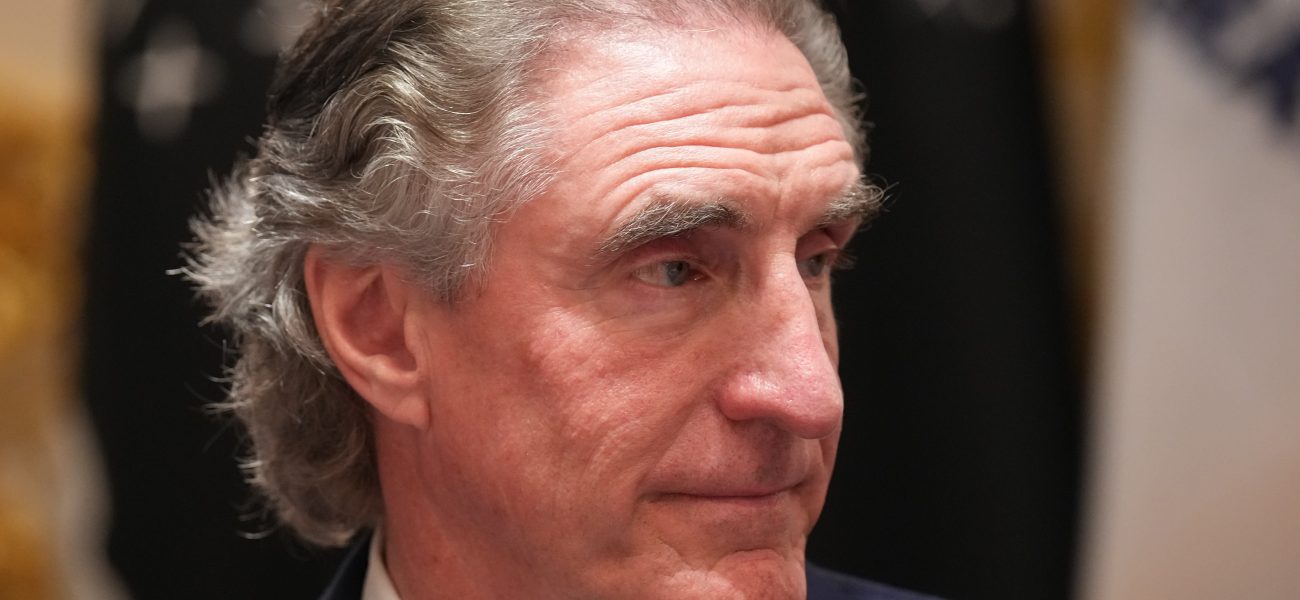
It was Doug Burgum, a figure once serving as Interior Secretary in the previous administration, who floated this particular aspiration. He’s tasked, somehow, with helming the America250 Commission—the outfit charged with mapping out the United States’ quarter-millennium birthday bash in 2026. He articulated this grand vision that the commemoration would be a moment without the customary partisan rancor, aiming for a singular, unifying narrative for a fractured nation. Good luck with that. One can’t help but picture the look on George Washington’s face if you told him about today’s political discourse. [QUOTE_PLACEHOLDER]
His intent is clear: to craft a nationwide celebration, an echo of the grand bicentennial celebrations of 1976. Back then, Gerald Ford’s America, still reeling from Vietnam and Watergate, managed a modicum of shared patriotic fervor. It’s debatable if that’s even a possibility now. The chasm between differing ideologies seems less a gap and more a geological fault line, shifting constantly beneath our feet. For someone like Burgum, a political operator who knows the mechanics of Washington’s endless feuds, to suggest such a thing isn’t just optimism—it’s almost an act of faith, or perhaps a tactical declaration.
And yet, here we’re. He wants to involve every nook and cranny of America—states, territories, Native American communities—in telling the American story. The big picture? An opportunity for national introspection, an update on where this sprawling, boisterous experiment in self-governance stands. But whose story gets told? That’s where the trouble invariably begins. It’s not like we’re all sitting around humming the same tunes anymore, is it?
It’s worth remembering that America’s relationship with its founding narratives, its very self-conception, has never been static. For nations in other parts of the world, say Pakistan or Bangladesh, the very act of independence, of crafting a national story, is an ongoing, often turbulent negotiation. There, history isn’t just a subject; it’s a battleground. For them, celebrating 75 or 50 years often involves deep internal debate, not just about who they’re, but who they’re trying to be. Their founding moments are much closer, their wounds fresher, their narratives still being aggressively shaped by current geopolitical currents and domestic strife. You can’t just slap a nonpartisan label on that—not when national identity is so interwoven with ongoing political struggles and varying interpretations of state and religious identity, for example.
The challenges aren’t purely philosophical, either. Coordinating an event of this scale is a bureaucratic nightmare even in the calmest of times. Imagine corralling federal agencies, diverse state commissions, and local historical societies across 50 states, Puerto Rico, Guam, and the myriad indigenous nations, all while operating under a constantly shifting political landscape. They’ll have a few dollars to play with, of course, but consensus is a much rarer commodity. But don’t underestimate the sheer inertia of official Washington once it gets moving, albeit often in circles. Historically, national celebrations are, well, national. It doesn’t usually matter which side of the aisle you prefer, people show up for parades — and fireworks. Or do they?
A recent poll from the Pew Research Center in 2023 showed that only 16% of Americans consistently trust the government in Washington to do the right thing—a steep drop from the 77% who expressed such trust in 1964. That’s a stark backdrop for a unified national birthday. It’s difficult to celebrate a shared vision when trust in the custodians of that vision is at historic lows. You’ve got to ask yourself: if people don’t trust the messenger, will they embrace the message, no matter how shiny the package?
The commission faces an uphill battle just selling the idea of collective remembrance, let alone executing it. Any narrative that omits uncomfortable truths will be pilloried; any that challenges deeply held beliefs will be denounced as un-American. And any narrative that attempts to satisfy everyone ends up satisfying no one. It’s the proverbial Goldilocks problem, but with the entire American populace acting as hungry, highly opinionated bears. It really feels like an exercise in political tightrope walking.
But consider the potential. If successful—and that’s a cavernous ‘if’—this commission could do something genuinely meaningful: to push past the cynical day-to-day politics and remind folks of the fundamental principles. But doing so in an America where everything, from pizza toppings to preferred pronoun usage, gets sucked into the partisan vortex, seems almost naive. Still, they’re going to try. The big 2-5-0 is coming whether we’re ready for it or not. Maybe this will be like trying to celebrate a silver anniversary while the couple’s lawyers are finalizing the divorce papers.
What This Means
Burgum’s push for a ‘nonpartisan’ America250, while seemingly aspirational, exposes a deep fault line in contemporary American governance and national identity. Politically, it signals a desire by some factions—perhaps a waning bipartisan center—to reassert unifying narratives over divisive ones, particularly concerning historical interpretation. But it’s an acknowledgment of how far off-course that ideal currently is. The practical implications are staggering: the commission’s efforts will be a bellwether for the country’s capacity to even temporarily suspend its internecine political battles for a common cause. Failure to forge broad consensus around the commemoration’s themes risks turning the anniversary into another skirmish, where competing interpretations of American history (e.g., the 1619 Project versus traditional narratives) overshadow any unifying message. This will just exacerbate existing cultural wars, reinforcing the very partisan divide it aims to bridge. Economically, a deeply divided celebration could impact tourism, funding, — and national pride events. Major anniversaries usually spur economic activity — and foster national cohesion; a contested one could fizzle. For other nations, especially those like Pakistan or Egypt, which often navigate complex relationships between diverse historical legacies and national identity in a hyper-partisan global landscape, America’s struggle provides a cautionary tale. Can a nation steeped in foundational principles of self-governance truly celebrate its longevity if its citizens can’t agree on what those principles actually mean in practice today? The world is watching how, or if, America manages to celebrate its past while its present seems to be fraying. You can bet your bottom dollar on that. For a look into how political struggles can echo in diverse environments, consider Myanmar’s Silent Fuse. Or, for a dive into national identity through unexpected lenses, take a peek at Nihoa Dunn: A Small-Island Story with Big Geopolitical Echoes.