


The Cradle and the Contradiction: India’s Population Paradox and Political Playbooks
POLICY WIRE — New Delhi, India — Imagine the planet’s most populous nation—a sprawling, vibrant behemoth—getting told by its own political heavyweights to make *more* babies. That’s the wild,...

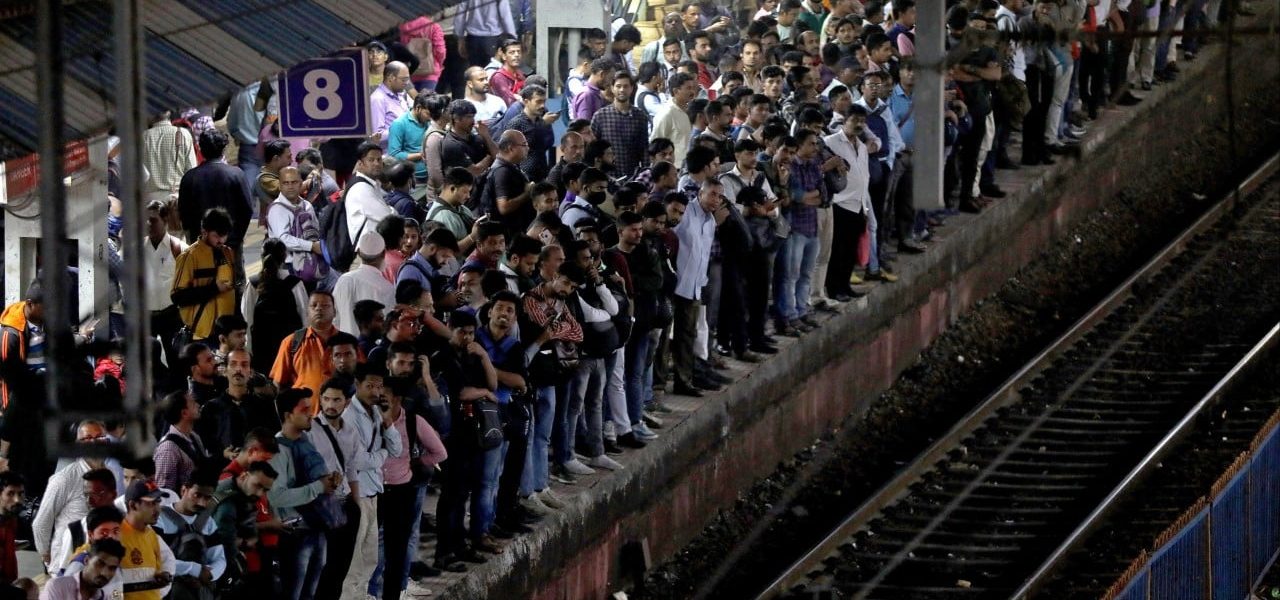
POLICY WIRE — New Delhi, India — Imagine the planet’s most populous nation—a sprawling, vibrant behemoth—getting told by its own political heavyweights to make *more* babies. That’s the wild, head-scratching situation unfolding in India right now. It’s a land already busting at the seams, boasting an astonishing 1.42 billion people, but influential folks close to Prime Minister Narendra Modi are suddenly championing larger families. Not because they’re worried about underpopulation, mind you, but to combat what they’ve labeled a declining fertility rate. It’s an interesting pivot, to put it mildly, for a country that spent decades, sometimes quite brutally, trying to curb its population explosion. Now, the official line from some quarters is, ‘Hey, maybe fewer isn’t better.’
It sounds like something out of a satire, doesn’t it? Here’s India, facing down a staggering challenge of high youth unemployment, where millions of young people are clamoring for jobs that just aren’t there. Yet, certain policymakers — and Hindu groups are pounding the drum for bigger broods. They insist the shift away from smaller families—a hallmark of modern economic progress, by the way—needs to kick off right now. Even when the data, straight from the United Nations, suggests India’s population isn’t exactly shrinking tomorrow. Nope. The UN projects India’s population would keep rising for about four decades, peaking at around 1.7 billion. One point seven billion souls! And still, the clamor continues.
So, what’s really going on beneath this seemingly baffling policy discussion? It’s not simply about birth rates, obviously. It rarely is in South Asia. This isn’t just about demographics; it’s tangled up in culture, identity, and, let’s be honest, electoral calculus. Some see a political play here—a subtle, perhaps even unconscious, nod to certain nationalist ideologies that equate numerical strength with national strength, particularly in a region where demographic shifts can carry serious geopolitical weight. They’re playing the long game, even if it contradicts the immediate realities of infrastructure, resources, and job markets.
Because, really, how does advocating for larger families square with the immediate economic pressures on the average Indian household? It’s hard enough to feed, educate, and provide healthcare for two children in many parts of the country, let alone three or four. And who bears the brunt of this? Mostly, it’s women. Their choices, their bodies, their labor—all become bargaining chips in a grander national narrative. It’s an old trick, dressing up social engineering as patriotic duty.
Contrast this with, say, Pakistan. Its population continues to grow at a much faster clip than India’s, with higher fertility rates being sustained by different societal structures and, arguably, less concerted public health campaigns regarding family planning in decades past. Yet, similar conversations about economic strain versus demographic projections aren’t as openly embraced by mainstream political parties there, at least not in the same ‘make more babies’ framework. Here, in India, it feels almost prescriptive. It’s a call to arms for the uterus, if you will, often backed by the same groups who are very particular about who reproduces and at what rate. One can’t help but notice the quiet implication: the right kind of family, the right kind of growth. It’s always political.
This isn’t about fostering family happiness—it’s about demographics as destiny. Prime Minister Modi’s allies seem to be laying groundwork for a vision of India where population size, particularly of a certain demographic, becomes a strategic asset. Never mind the burgeoning slums, the choked cities, or the schools struggling for resources. Forget the environmental burden. Their gaze is fixed on a horizon painted with national might, seen through the lens of sheer numbers.
📄 POLICY WIRE WHITEPAPER PUBLISHED: PAKISTAN'S NATIONAL SECURITY POLICY PRIORITIES
👉 READ BY CLICKING HEREIt’s fascinating, too, when you consider India’s growing global ambition. Modi’s administration has been assiduously building India’s standing on the world stage, navigating complex international alliances. But this domestic population narrative feels… internally focused. Almost a retrenchment, prioritizing a particular cultural identity over pragmatic economic development, at least in its public presentation. It’s a classic case of contradictory messaging, isn’t it? Global ambition tempered by deeply provincial priorities.
What This Means
This peculiar demographic push from within Modi’s circle is far more than an idle discussion—it’s a significant political tell. Economically, any state-sponsored encouragement for larger families, especially without commensurate investments in social infrastructure and job creation, is a recipe for exacerbating existing stressors. We’re talking about potentially swelling the ranks of that already vast pool of unemployed youth, further straining public services, and perhaps even hindering efforts to improve per capita income. The existing labor market can barely absorb the current entrants; imagine adding more. From a political standpoint, this narrative strongly suggests a leaning into ethno-nationalist sentiments, where demographic composition becomes intertwined with national security and cultural purity debates. It’s a subtle way of encouraging growth within particular communities while implicitly (or explicitly, in some fringe commentary) criticizing others, a strategy that often plays well with a certain segment of the electorate. It also creates a convenient external enemy – the [QUOTE_PLACEHOLDER] whose fertility must be outpaced. Regionally, such domestic policy discussions in a power like India always echo across South Asia. Neighboring nations, particularly Pakistan and Bangladesh, will be watching closely, analyzing if this signals a more aggressive stance on population management—or mismanagement—with implications for migration, resources, and geopolitical stability. It’s a dangerous path, trading present well-being for a speculative future numeric advantage, especially when the planet, and India itself, is crying out for sustainability, not just quantity.