


Diamond Decorum: When WWE Meets MLB and Tradition Wins Out
POLICY WIRE — Milwaukee, United States — In the sterile, often over-managed world of Major League Baseball, where traditions cling like barnacles to a ship’s hull, a crude, spontaneous gesture...

POLICY WIRE — Milwaukee, United States — In the sterile, often over-managed world of Major League Baseball, where traditions cling like barnacles to a ship’s hull, a crude, spontaneous gesture by a Milwaukee Brewers relief pitcher has inadvertently kicked off a minor philosophical dust-up. It’s a tale of cultural collision, frankly, as old-school sports officialdom bumps ungracefully against the chaotic energy of professional wrestling. All over a move designed to get a rise out of people.
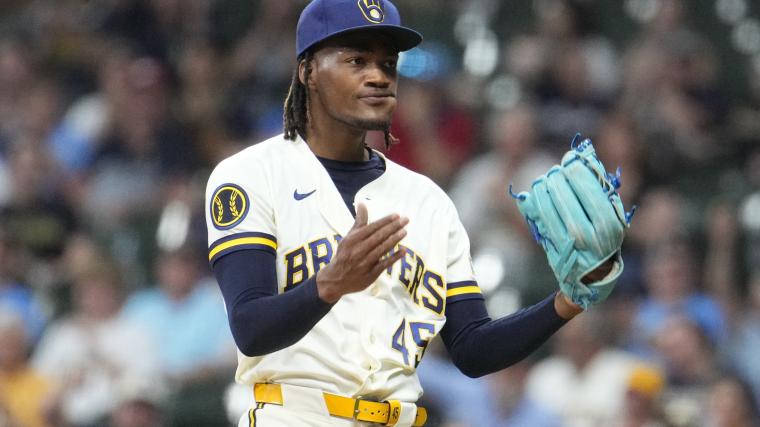
Abner Uribe, a Brewers hurler with a knack for emphatic mound celebrations, found himself squarely in the league’s crosshairs. During a routine-ish 6-0 shutout against the St. Louis Cardinals, after dispatching first-baseman Alec Burleson for an inning-ending strikeout—a solid effort—Uribe unfurled what’s affectionately known to a generation of pro-wrestling fans as a ‘crotch chop.’ A signature move of the infamous D-Generation X stable from WWE’s ‘Attitude Era,’ it’s less about skill and more about aggressive, mocking bravado. The baseball establishment? They were not amused. And it wasn’t long before the official word came down.
Because even in a sport that celebrates bat flips — and fist pumps, there are lines. Unwritten rules, yes, but also increasingly codified ones regarding ‘appropriate’ conduct. The MLB swiftly issued Uribe a one-game suspension — and an undisclosed fine. He’s appealed it, naturally, creating another layer of administrative intrigue in what, to many, seems like a fairly trivial matter. His manager, Pat Murphy, certainly wasn’t mincing words post-game, telling reporters, “That stuff isn’t appropriate. We play with class, and that was unacceptable. Period.” Harsh words, particularly when uttered with the flat finality managers typically reserve for egregious errors.
But the incident quickly spilled beyond the diamond. D-Generation X, for the uninitiated, burst onto the wrestling scene in the late 1990s. Fronted by Triple H and Shawn Michaels, they were brash, anti-establishment, and revelled in provocative gestures, the ‘crotch chop’ being their most iconic—a defiant ‘suck it’ aimed squarely at anyone who didn’t approve. It’s deeply ingrained in a specific brand of pop culture rebellion. For Uribe to resurrect it on a pitcher’s mound, staring down the opposition dugout, well, that’s practically an act of cultural archaeology for a lot of folks.
So, the question then becomes: why did the league react with such sternness? Are we protecting children from simulated indecency, or merely protecting the sport’s image? An image that, for many, feels increasingly sanitized. A little grit, a little raw emotion, might actually help draw new eyeballs. According to reports compiled by the MLB Players Association, player grievances related to on-field discipline have risen by nearly 15% over the past three seasons, reflecting an ongoing tug-of-war over expressive freedom and institutional control. It’s not just Uribe.
We don’t see similar pearl-clutching when cricketers in Pakistan or other South Asian nations execute an exuberant celebration—say, a full-throated roar and fist pump after taking a crucial wicket. Sure, there are cultural differences, a stricter code of conduct sometimes, but the emotion, that raw outpouring of triumph, is often accepted as part of the game’s fabric. Western sports, meanwhile, often wrestle with how much ‘personality’ they can permit their athletes without unsettling corporate sponsors or an imagined puritanical fanbase. It’s a delicate, sometimes hypocritical, dance. One has to wonder what they make of it in Karachi or Lahore.
What This Means
This whole Uribe kerfuffle isn’t just about a one-game suspension for a pitcher. Not really. It’s an MRI scan of the underlying tension in professional sports today—a clash between the athlete’s desire for unvarnished self-expression and the league’s relentless pursuit of a brand-safe, family-friendly product. MLB isn’t just selling baseball games anymore; it’s peddling an experience, an identity. And that identity often leaves little room for the kind of defiant, cheeky antics that make wrestling (or, let’s be honest, sports generally) so compelling.
Economically, fines like Uribe’s contribute to a league coffer, but the real cost isn’t financial. It’s cultural. This type of incident alienates a segment of the audience that craves authenticity, that remembers sports before social media managers dictated every smile and nod. It also signals to young athletes, perhaps those drawn to the more theatrical aspects of sport, that their natural exuberance might come at a penalty. It’s an ongoing negotiation of power: players want agency, leagues want control. The brutal arithmetic of player management often extends beyond physical conditioning to psychological profiling, ensuring that players don’t upset the delicate ecosystem of commercial partnerships and public perception. And that’s the silent battle happening on fields, courts, and diamonds across the globe, one awkward hand gesture at a time.
The MLB, with this swift action, doubles down on its desire for decorum, effectively telling its athletes: yes, you can celebrate, but make sure it’s in a pre-approved, focus-group-tested manner. Don’t go bringing the grimy, beautiful mess of pop culture into our pristine pastures. Not on our watch.