


Online Bile Swamps Australian Antisemitism Inquiry, Exposing Digital Echoes of Terror
POLICY WIRE — Melbourne, Australia — It’s a bitter paradox. The very mechanism designed to confront burgeoning antisemitism in Australia—a Royal Commission of the highest order, no less—finds its own...

POLICY WIRE — Melbourne, Australia — It’s a bitter paradox. The very mechanism designed to confront burgeoning antisemitism in Australia—a Royal Commission of the highest order, no less—finds its own witnesses swamped by the precise bile it aims to investigate. This isn’t just about nasty comments; it’s a chilling feedback loop, born from a horror that few foresaw on Australian shores.
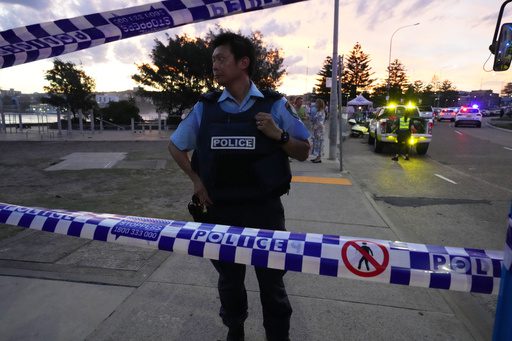
Two gunmen, allegedly inspired by the shadowy tenets of the Islamic State group, weren’t just a distant threat from Syria or Iraq anymore. They walked into a Sydney Hanukkah celebration in December, slaughtering 15 people, igniting the spark for this Royal Commission on Antisemitism and Social Cohesion. And that grim tally? Police records indicate 15 lives were tragically cut short that day, pushing Australia—often perceived as a land removed from such conflicts—right into the global thicket of religiously motivated terror. That event, visceral — and local, pulled the curtains back on something far larger.
Now, as this commission—a potent tool in Australia’s governmental arsenal for public inquiry—begins its work, it faces an immediate, stark reality: the internet’s dark underbelly doesn’t respect judicial process. Virginia Bell, a former High Court judge — and the commission’s formidable head, recently sounded the alarm. Jewish witnesses, folks who’ve bravely stepped forward to testify about their own harrowing experiences with antisemitism since hearings kicked off on May 4, are getting savaged online. She describes it as ongoing online “harassment and intimidation.”
It’s a peculiar thing, this online dimension. One imagines a public inquiry as a formal, somewhat detached affair, its participants safely ensconced within courtrooms. But the digital realm obliterates such distinctions. These aren’t just isolated trolls either, but what appears to be an organized wave. Bell articulated the dismay succinctly: [QUOTE_PLACEHOLDER] You’d think the solemnity of such a process might give pause. But it doesn’t.
Bell admits, with a touch of exasperation, that she struggles to comprehend the motive behind it all. “Quite what this undiluted level of hatred and bigotry directed towards members of the Jewish community is thought to benefit by those who post these remarks is lost on me,” she confessed. It’s a sentiment many share. One would almost consider it performative, were the human cost not so palpable.
But the commission isn’t merely wringing its hands. They’re collecting the digital receipts, mind you. They’re recording these [QUOTE_PLACEHOLDER] And for one particularly egregious case, they’ve kicked it up to the police—an understandable, if perhaps symbolic, escalation. Because when online rhetoric translates into real-world distress and threats, it’s not just speech; it’s an active undermining of a democratic institution’s work. The commission itself recognizes that it’s meant for [QUOTE_PLACEHOLDER] and this renewed targeting is [QUOTE_PLACEHOLDER] It’s, in a grim way, proving its own point in real-time.
The early weeks of these hearings have already been a jarring ride. They’ve scrutinized the extent — and character of antisemitism within Australian society and its institutions. And, oh boy, what a show it’s been. During the very first week of proceedings, a 68-year-old man was charged with wearing a shirt emblazoned with a “prohibited Nazi symbol” right outside the commission’s Sydney premises. Think about that: you’re at an inquiry into antisemitism, — and someone shows up actively displaying Nazi symbols. The police statement was rather blunt about it. It wasn’t just a simple symbol either; the design reportedly mashed up a Star of David superimposed over a swastika, accompanied by the cheerfully provocative slogan: “Antisemitism. Proud to be accused. Speak up!”
📄 POLICY WIRE WHITEPAPER PUBLISHED: PAKISTAN'S NATIONAL SECURITY POLICY PRIORITIES
👉 READ BY CLICKING HERENaturally, the commission was—to use their own mild-mannered official terminology—“appalled” that an “antisemitic shirt” appeared right in its face. It felt almost like an audacious act of digital-age provocation, transplanted into the physical space of legal inquiry. They quickly scrambled, assuring all present that robust safety protocols were firmly in place around the building. Because this sort of thing—the blatant in-your-face bigotry—was the very thing they were convened to dismantle. A report by the Executive Council of Australian Jewry from 2023 indicated a disturbing surge in antisemitic incidents, an approximate 600% increase, showing that these aren’t isolated quirks but part of a wider, escalating problem. It’s why this body declared that it’s [QUOTE_PLACEHOLDER] And clearly, they’re getting a workout.
What This Means
This escalating digital confrontation isn’t just about an inquiry gone awry; it’s a stark, public mirror reflecting global policy challenges. We’ve watched Australia grapple with Islamic State returnees, wrestling with the complexities of radicalization that originate far beyond its borders but manifest domestically. The Sydney Hanukkah attack and the alleged ISIS inspiration underscores how narratives from the wider Muslim world—particularly those weaponized by extremist groups like ISIS—find fertile ground online, then seep into local communities. It’s a testament to the persistent reach of online radicalization, allowing even a legal inquiry to become a fresh target. Policymakers everywhere, not just in Canberra, are increasingly discovering that what happens on Twitter or Telegram can directly impede state functions and jeopardize civic participation.
Economically, this climate of hostility presents subtle yet damaging long-term impacts. When communities feel unsafe, when citizens fear online reprisal for civic engagement, social cohesion erodes. It hinders diverse voices from contributing to public discourse, potentially impacting everything from innovation to social policy development. The digital arena, intended by some to be a neutral forum, has become an extended battlefield where the cost isn’t just in legal fees but in the corrosion of trust—that essential, intangible bedrock of any functional society. You’ve got to wonder if governments, for all their grand commissions, truly have the tools to rein in a global, decentralized hydra of hate. It’s not just about what’s legal; it’s about what’s possible when anonymity offers license to demonize, and how such digital chaos might threaten regional stability across a range of issues. This inquiry’s unintended byproduct—more online harassment—is less an anomaly and more a symptom of a larger, evolving threat landscape.