

Primary’s Unsung Grunt Work: Behind New Mexico’s Voting Apparatus
POLICY WIRE — ALBUQUERQUE, N.M. — While headlines fixate on the political gladiators, it’s the seemingly mundane, bureaucratic machinery that truly underpins democratic action. That machinery—a...

POLICY WIRE — ALBUQUERQUE, N.M. — While headlines fixate on the political gladiators, it’s the seemingly mundane, bureaucratic machinery that truly underpins democratic action. That machinery—a finely tuned, if occasionally creaking, apparatus—swings into gear with every electoral cycle. Its function? To transmute citizen intent into political mandate. For legions of New Mexicans, specifically those in Bernalillo County, understanding how to engage with this process ahead of the upcoming primary has just gotten a bit clearer.
We often forget the sheer volume of paperwork, the coordination, the training that goes into just one person casting one vote. But those efforts matter, perhaps more than grandstanding speeches. They really do. This time, there’s a quiet murmur of change for some—the New Mexico primary elections are just a week away, including for governor—and it opens its doors to independent voters this year, a slight procedural tweak with potentially significant ramifications down ballot, you see. [QUOTE_PLACEHOLDER]
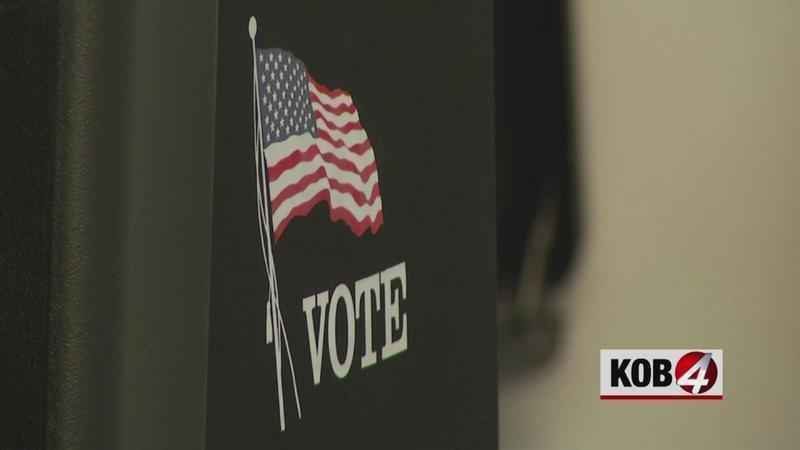
Bernalillo County Clerk Michelle Kavanaugh has been working the circuit, clarifying the operational details. Because, honestly, people need plain language; they don’t need more partisan spin. Kavanaugh stopped by the KOB 4 studio to share how you can vote in the primary, which is open to independent voters this year. Her presence aimed to demystify what can often feel like an exclusionary club, reminding everyone, even the uninitiated, that if you’re going to vote in the primary election, here is what you will need to know before you go.
This isn’t about lofty ideals of civic duty anymore. It’s practical, granular stuff. It’s about knowing where to go, what to bring. You know, the mechanics. And that procedural clarity, believe it or not, forms the bedrock of electoral integrity. It’s often overlooked, dismissed as administrative fluff, until it goes wrong. And then it becomes a constitutional crisis, right?
In democracies globally, from the venerable institutions of the West to the sometimes fragile frameworks of South Asia, the details of voter accessibility, information dissemination, and electoral logistics are hotly contested battlegrounds. But they’re usually fought quietly, away from the TV cameras—until someone loses their spot. Or wins a surprisingly large mandate.
Consider a nation like Pakistan, where election transparency remains a perennial challenge, and voter trust frequently hangs by a thread. There, something as basic as voter registration drives, often managed under significant security and logistical constraints, takes on epic proportions. The very notion of an election official calmly explaining process changes on local television, like Bernalillo County Clerk Kavanaugh has done, might seem like a dream. Even something as seemingly benign as an open primary for independents would face layers of political machinations there. And frankly, the challenges of fostering widespread electoral literacy across vast, diverse populations without easy access to broadcast media or stable internet connections—it’s genuinely immense. It certainly puts Bernalillo’s local concerns into some sort of perspective.
But the American system’s seemingly simple primary voting procedures are still, for some, a mystery. But Kavanaugh works to answer the unspoken question: What do you need to know before you vote in New Mexico’s primary election, if you haven’t already? Her team, presumably, is busy making sure the actual logistics don’t fall apart on election day. Because bureaucratic oversight—that’s what keeps the system churning without major incidents.
This particular expansion, allowing independent voters to participate, is actually pretty standard across many states. About 21 states and the District of Columbia currently operate with fully open or semi-open primary systems, according to a 2024 analysis by Ballotpedia. New Mexico’s move reflects a broader national trend towards inclusivity in the preliminary electoral contests. It suggests a pragmatic recognition: ignoring a significant portion of the electorate until the general election perhaps isn’t the wisest political strategy. They need these folks in the mix, if only for the optics. Sometimes you need the tent to be just a bit bigger. But expanding access sometimes introduces confusion, too—it’s always a balancing act.
This expansion, small though it may appear, hints at shifting political calculations. Party machines—and let’s be real, they’re always thinking strategically—have to adjust their mobilization efforts. It’s no longer just about rallying the faithful within the strict confines of their party. They’ve gotta consider the undecided, the disaffected, the non-affiliated voter who now holds a small, but potentially consequential, lever in deciding who advances. It complicates things. Good.
What This Means
This subtle shift, making New Mexico’s primary more accessible to independents, carries weight beyond local election results. It reflects a growing recognition that an increasing segment of the American electorate identifies outside traditional party lines. As party affiliation wanes for many, or shifts, these voters aren’t just an electoral afterthought; they’re becoming a silent, often unpredictable, force. Engaging them earlier might reduce voter fatigue or simply ensure a wider, if more diluted, pool of candidates makes it to the general election.
For established parties, it’s a tightrope walk. They need their base fired up, sure, but they also can’t afford to alienate the moderate independent now casting a ballot in their primary. It suggests a more fluid, perhaps messier, pre-general election landscape where candidates must appeal to a broader ideological spectrum earlier in the game. From an economic perspective, this means resources might be deployed differently—perhaps more towards centrist messaging, less on firebrand rhetoric in the run-up to the primary, lest they spook the newly empowered independent voters. You might even see campaign messaging becoming less overtly partisan, at least in the initial stages. The implications are modest on a national scale, maybe, but for states like New Mexico—with its complex demographic fabric and deeply entrenched political families—this is definitely a procedural tremor. It means every campaigner must ask, just a little more carefully, who exactly they’re speaking to. Because Kavanaugh’s team just made the electorate a bit broader. It just changed the calculus a bit. A subtle electoral opening for what might become a crucial segment of the electorate.