

Silent Signals: When an NFL Receiver’s Absence Echoes Geopolitical Realpolitik
POLICY WIRE — Baltimore, USA — In the sprawling, multi-billion-dollar theatre of American professional sports, where every muscle twitch and contractual whisper can ignite a media storm, sometimes...

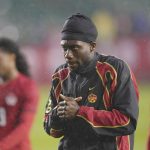
POLICY WIRE — Baltimore, USA — In the sprawling, multi-billion-dollar theatre of American professional sports, where every muscle twitch and contractual whisper can ignite a media storm, sometimes the most telling narrative isn’t about what is said, but what’s pointedly not said. It’s a calculated ambiguity, a public relations soft shoe that’s as old as diplomacy itself. Take, for instance, the recent ‘absence’ of Rashod Bateman from a Baltimore Ravens offseason practice—an event ostensibly trivial, yet, to the trained eye, it hums with familiar undercurrents of opacity, public management, and the often-delicate balance between individual liberty and collective expectation.
It’s funny, isn’t it? One moment, the young receiver is there, diligently grinding through the first week of organized team activities (OTAs). Then, poof, he’s gone from the media-open session, prompting the kind of frenzied speculation usually reserved for a missed cabinet meeting or a geopolitical summit suddenly lacking a key delegate. But then, as ever, a voice emerges to offer the palliative, the reassuring bromide: The segment of the offseason program is voluntary. That’s the official line, the perfectly logical deflection.
But logic, my friends, often plays second fiddle to curiosity. Players aren’t required to attend. Sure. Veterans frequently miss sessions for various reasons. Understood. Still, some absences naturally attract more attention than others. Bateman’s falls into that category. A veteran receiver—an essential piece of the puzzle, frankly—entering a season where a brand-new offense is being installed by coordinator Declan Doyle. You’d think every additional rep would be beneficial. It’s almost gospel, right? That’s partly why Lamar Jackson’s presence drew praise, a nod to continuity and leadership that can quiet a thousand rumblings.
And let’s be frank: whenever a new system is introduced, it’s valuable to have as many key contributors available as possible. We’ve all seen this play out—the jitters when a key figure is missing, whether it’s a quarterback or a foreign minister during delicate negotiations. Questions inevitably follow, whispered at first, then shouted across sports desks and, more recently, Twitter feeds. Is there an injury? Is everything okay away from football? Is there a reason for concern? It’s the human element, that relentless need to fill informational voids, to understand the ‘personal things’ that often remain tantalizingly vague.
Fortunately, for those clad in purple — and black, Coach Doyle provided some cover. The swiftness of his explanation was telling, a masterclass in diffusing potential unrest. Declan Doyle quickly put concerns about Rashod Bateman to rest. And how. Here’s what the coach offered up, word-for-word, a precise linguistic manoeuvre to quell the rumor mill: ” [Bateman]’s been around. He’s dealing with some personal things, and so, he hasn’t been here for a little bit. He was here that first week. We were able to work with him quite a bit, and then he was here pretty much the whole offseason every day. He’s an early morning guy, so a lot of times I’d be going to work out, and he’s in there doing stuff by himself at times. So, I’ve been pleased with him. Obviously, anytime guys are here, we’re working with the guys that are here, and the guys that aren’t, we’re expecting them to be working kind of on their own, but I’m excited for him to get back in here at [mandatory] camp and keep rolling.” See? Simple, clear, reassuring. An artful dodge of specifics, perhaps, but effective.
This strategic transparency, limited as it might be, mirrors much of what we observe in the political landscape of South Asia—a region where public narratives are meticulously curated, and private matters of powerful individuals are often shielded by a veil of ‘personal reasons.’ Whether it’s a politician quietly recovering abroad or a military figure making unscheduled movements, the public is often left to infer, to piece together the mosaic from the fragments offered. According to a 2023 report by Sports Illustrated, the average NFL wide receiver salary hovers around $3.5 million per year, underscoring the immense financial stakes tied to individual performance and presence. That’s a lot riding on those ‘personal things,’ isn’t it?
Doyle’s remarks shifted the focus away from why Bateman wasn’t at practice — and back to what matters most. That’s clever. The Ravens expect him to return — and continue building chemistry in the new offense. They expect him tp play a significant role in what the Ravens hope will be a championship-caliber season. Until then, the focus is on the work he has already put in rather than the handful of practices he has missed. This, folks, may be the strongest endorsement of all—an implied trust that transcends mere attendance. It’s like a nation-state giving a quiet nod of approval to a key envoy, despite their brief, unannounced disappearance from public view. Trust is paramount. Because without it, the whole enterprise—whether it’s a football season or a diplomatic relationship—starts to look awfully wobbly.
What This Means
The Baltimore Ravens’ handling of Rashod Bateman’s temporary absence isn’t just about football; it’s a micro-lesson in crisis communication and public perception management—skills not limited to the gridiron. When a public figure, particularly one of considerable economic and symbolic value, steps out of view, the immediate void is often filled with speculation, potentially destabilizing collective confidence. This phenomenon isn’t exclusive to American sports; it resonates deeply in the political and economic corridors of Pakistan and across the Muslim world, where individual actions of high-profile figures can carry significant weight and breed intense scrutiny. Consider a high-ranking official in Islamabad stepping back for undisclosed ‘personal reasons’ during a critical economic downturn or a period of regional tension. The ambiguity, intended to protect privacy, can paradoxically fuel rumors and, perhaps, erode public trust or market confidence. There’s an economic implication too. Bateman, an expensive asset for the Ravens, represents a significant investment. Any perceived instability around such an asset sends ripples—it affects not just fan morale but also broader team valuation and potential future sponsorships. The deliberate, measured language used by Coach Doyle isn’t just to calm fans; it’s to protect a financial and institutional investment, ensuring the narrative remains stable. It’s the difference between a minor ripple — and a tidal wave in the high-stakes economy of talent and attention. And for Pakistan, similar maneuvers are often observed when managing the visibility of figures whose perceived stability is directly linked to the nation’s political and economic outlook. You can see how something so ‘voluntary’ can carry such involuntary weight—a lesson in transparency (or lack thereof) for all public-facing entities, whether they’re aiming for a Super Bowl or navigating international relations. The global arena, after all, thrives on subtle communications, doesn’t it?
But for now, the Ravens sound confident that he remains on track heading into the 2026 NFL season. And what choice do they’ve, really? That may well be the point. The expectation is that one of Baltimore’s most important offensive weapons remains fully invested in both the team and the process. It’s a game of managing expectations, after all.