


The Ghost of Talent Past: Boston’s Blunder, Milwaukee’s Bounty
POLICY WIRE — Boston, MA — Forget the numbers for a moment, the screaming headlines about earned run averages and historic starts. Let’s talk about the cold, hard policy. Because what’s...

POLICY WIRE — Boston, MA — Forget the numbers for a moment, the screaming headlines about earned run averages and historic starts. Let’s talk about the cold, hard policy. Because what’s currently unfolding on America’s baseball diamonds isn’t just a sports story; it’s a stark, almost brutal, parable of resource management, risk assessment, and the often-perplexing dynamics of human capital in high-stakes organizations.
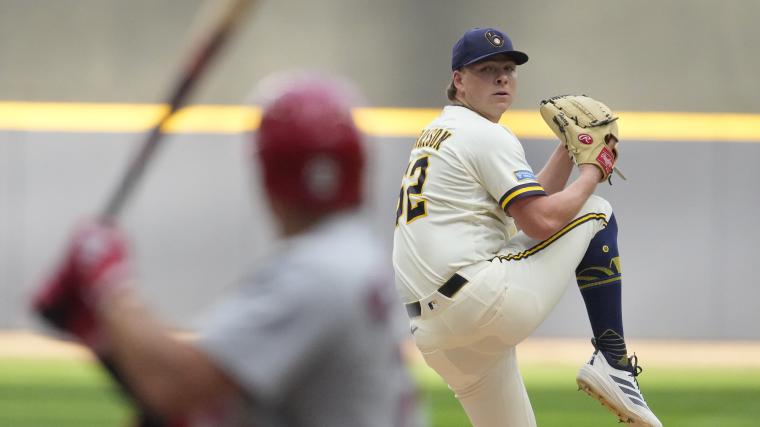
See, there’s this kid, Kyle Harrison. A lefty. He throws gas. Now he’s carving up batters for the Milwaukee Brewers, making opposition hitters look silly with a sort of casual defiance. The kind of performance that makes general managers, not just in baseball but across industries, sit up straight and wonder, “How did we miss that?” But here’s the thing: somebody didn’t miss him. Someone had him, briefly, — and then let him go. The Boston Red Sox. That’s who.
It’s an operational hiccup of monumental proportion, this Harrison saga. They got him last summer, plucked from the San Francisco Giants in that Rafael Devers deal—a high-profile, must-do kind of acquisition. But then what? Crickets. They shunted him off to Triple-A Worcester, barely let him sniff a major league mound, twelve measly innings, before packing his bags for Milwaukee in February. A casual dismissal, really, a sort of “he’s not quite what we thought” shrug. And boy, has Milwaukee run with it. Six wins, just one loss. A stunning 1.57 ERA, per MLB Network, through his first ten starts, the lowest in Brewers franchise history for a debut of that length. That’s a .157 policy blunder right there, an undeniable statistic.
It’s always “consistency.” You hear that from every performer who suddenly “gets it.” Harrison himself spoke about it, recently. “I’ve always had that whiff kind of up in the zone, but the problem has been getting to it. Being on time in my delivery — and really understanding what that means,” Harrison confided. He’s found “that consistency to be able to do it on a day-in, day-out basis.” And for Boston? Well, they traded consistency for — what, exactly? Maybe a glimmer of short-term savings, or perhaps just an organizational impatience that bordered on institutional myopia.
Because every organization, whether it’s a major league baseball club or a developing nation like Pakistan, faces a common conundrum: how do you identify, nurture, and retain genuine talent? Sometimes it’s right there, knocking on the door, but leadership is too busy looking elsewhere, convinced greener pastures must lie across some other, more expensive fence. Or sometimes, it’s a systematic failure to provide the environment where raw skill can be refined into polished performance. One wonders how many potentially world-beating ideas or individuals, languishing in underdeveloped bureaucratic structures or underfunded educational systems in places like South Asia, are merely a shift in organizational posture away from revolutionizing an entire sector. The principles don’t change, whether you’re throwing a slider or spearheading economic reforms.
This isn’t a sports column, let’s be clear. It’s an examination of executive decision-making. Craig Breslow, the Red Sox General Manager, when pressed on similar difficult decisions, offered what sounds less like an excuse and more like a hard truth of his business: “We make hundreds of decisions annually, many of them with imperfect information, under considerable pressure,” Breslow reportedly stated recently. “Sometimes the path we choose is based on a snapshot, not the full reel. You learn, or you perish.” Learning can be costly, though, particularly when it’s unfolding nightly against your former prospect.
For the Brewers, they just had to unlock a delivery. A slight adjustment. But what made Boston unable to see that, or unwilling to provide the fertile ground for it? It speaks to larger issues than just who gets the ball every fifth day. It speaks to a sort of cultural patience — or the profound lack thereof — that often dictates an organization’s trajectory. And let’s be honest, it’s not always about the “right” decision at the time; sometimes, it’s about making a series of less-wrong decisions and having the grit to stick with potential.
📄 POLICY WIRE WHITEPAPER PUBLISHED: PAKISTAN'S NATIONAL SECURITY POLICY PRIORITIES
👉 READ BY CLICKING HEREWhat This Means
The Brewers’ gain is a case study in how seemingly minor shifts in an organizational environment can transform latent potential into explosive output. For the Red Sox, it’s a stark financial lesson. Harrison, now looking like a top-tier pitcher, was traded for pennies on the dollar relative to his current market value. This isn’t merely about wins and losses; it’s about sunk costs and lost opportunity, a tangible hit to future team equity and fan morale.
Politically, this kind of talent mismanagement resonates. Think of nations with rich human resources struggling to provide the “delivery” mechanism — education, infrastructure, stable governance — needed for their citizens to flourish. It’s the economic drain when a nation educates its best and brightest, only for them to find better opportunities abroad due to an unsupportive domestic ecosystem. Or, consider the Middle East: strategic narratives are carefully crafted, but if the foundational policies don’t allow internal talent to thrive, those narratives become hollow, much like a general manager’s assurances about “future builds” while current talent slips away. The global market, much like the free agent market in baseball, is merciless; talent will flow to where it’s best utilized. Organizations, whether they’re governments or sports franchises, that fail to understand this fundamental truth often find themselves staring down a competitive deficit.
This situation, for Boston, creates an optic problem that extends far beyond the stat sheet. It paints a picture of an organization adrift, making head-scratching moves that defy logical progression. And frankly, this isn’t some isolated incident; it’s part of a pattern many feel. A team that once represented consistent excellence now embodies a certain volatility. They’ve traded an immediate future for … well, for watching someone else’s immediate future take off like a rocket. It’s got implications for season ticket sales, broadcast rights, — and general competitive leverage. The cost of such foresight lapses isn’t just about the player who got away; it’s about the credibility and market position of the entire institution. It’s not just bad baseball; it’s just plain bad policy.