

McConnell’s Illness: Senate Leadership Under Scrutiny
Mitch McConnell's hospitalization creates a leadership void in the Senate. Explore how his absence impacts policy, power dynamics, and global perceptions of U.S. stability.

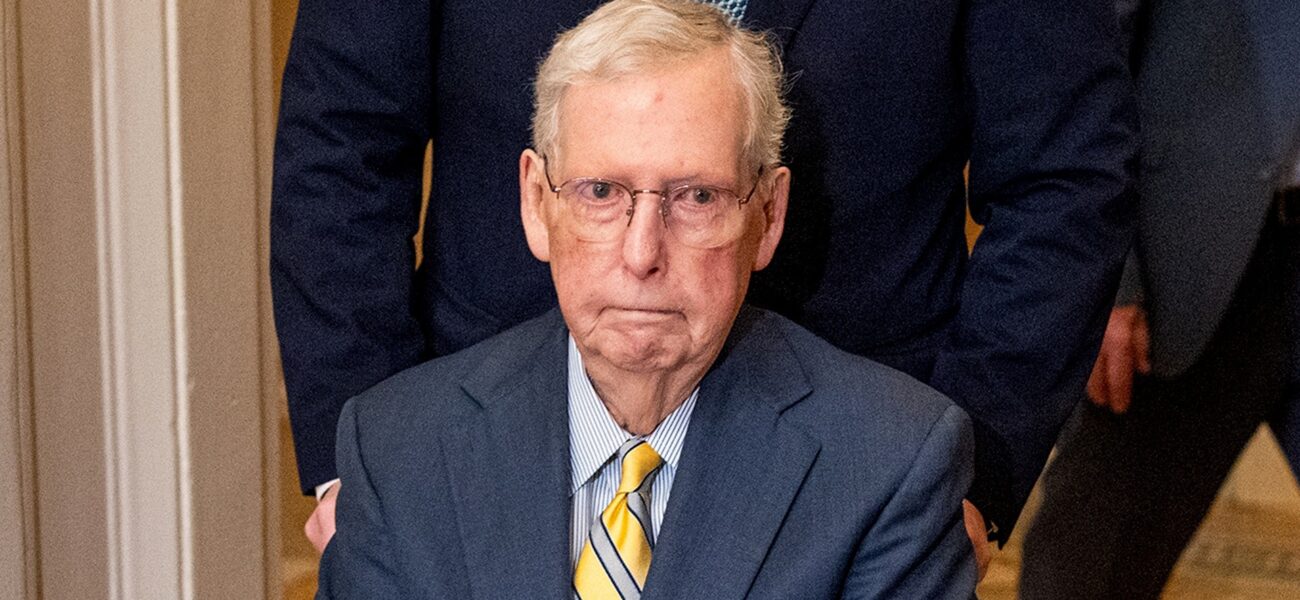
POLICY WIRE — Washington, D.C. — The hum of power on Capitol Hill, usually a cacophony of carefully calibrated statements and strategic leaks, has grown notably quieter these past days. An unusual stillness grips the corridors where a certain eighty-something Senator usually holds court, his absence a palpable, albeit unacknowledged, tremor through the legislative machinery. Senate Minority Leader Mitch McConnell is still sidelined, an unceremonious detour for a political titan, the word from his camp a sparse acknowledgment that he remains under hospital care.
It’s not just an empty seat; it’s a leadership void, however temporary. In the grand scheme of Washington’s ceaseless grind, the business trudges on. Bills get drafted. Negotiations—quiet, often acrimonious—continue their subterranean crawl. But for the Republican caucus, and indeed for anyone tracking the subtle shifts of American power, this unscripted pause forces a rare introspection. Leadership in a body like the U.S. Senate, notoriously deliberate — and gerontocratic, doesn’t just evaporate. It displaces, creating a diffuse uncertainty.
And let’s be frank, these are old halls. And older men (and some women) inhabit them. For instance, the average age of a U.S. Senator in the current Congress clocks in at around 64 years old, according to data from Congressional Research Service reports. It’s a fact often noted but rarely truly contended with until a prominent figure faces an immediate health challenge. This isn’t just about one man; it’s about the broader narrative of an entrenched establishment, and what happens when the orchestrator is momentarily off-stage. They’ve been through this before, in one way or another, with other elder statesmen. But every time, it brings a fresh wave of hushed speculation, a guessing game played out on cable news and whispered behind closed doors.
No immediate heir apparent jumps to mind with the kind of undisputed authority McConnell has wielded for years, even in the minority. That’s what makes his prolonged absence so jarring. It’s a testament to his unique grip, his almost legendary mastery of legislative tactics. But even titans are human, susceptible to the random unfairness of biology. And so, Washington holds its breath, ostensibly going about its work, but keeping one ear cocked to news of the Kentuckian’s health, waiting for the signal for things to resume their usual, albeit fiercely contested, order.
Sources familiar with the situation indicate the process is methodical, measured. [QUOTE_PLACEHOLDER] is all the official channels have yielded. Not exactly the detailed medical bulletin some armchair analysts on K Street are clamoring for, but typical for these sorts of delicate situations. They’re managing perceptions as much as they’re managing information, that’s clear. Because in Washington, a vacuum isn’t just an empty space; it’s an invitation for jockeying, for speculation.
The Senate’s business might plod on without its Republican leader’s direct day-to-day engagement, but the intangible loss is harder to quantify. It’s about experience, relationships forged over decades, — and a deep, perhaps unsettling, understanding of leverage. That sort of capital doesn’t just transfer. It accrues over a lifetime. That’s why his continued convalescence has so many folks a little edgy, particularly as legislative deadlines loom and political skirmishes inevitably erupt. And for anyone watching from abroad, the optics are plain to see: a certain vulnerability at the top of American power. But America has seen plenty of this before; it keeps on turning, however much a bit wobbly from time to time.
📄 POLICY WIRE WHITEPAPER PUBLISHED: PAKISTAN'S NATIONAL SECURITY POLICY PRIORITIES
👉 READ BY CLICKING HEREWhat This Means
The prolonged absence of Senator McConnell from active leadership presents a nuanced set of political and, by extension, economic implications. On Capitol Hill, the most immediate effect is a test of the existing Republican leadership structure beneath him. It could either lead to a more diffused decision-making process, empowering other figures like Senator John Thune or Senator John Barrasso, or create a power vacuum susceptible to factionalism, especially within the increasingly fractured GOP. Without McConnell’s tactical discipline, passing contentious legislation or forming unified opposition could become even more challenging, leading to further legislative gridlock. This certainly impacts domestic policy initiatives, potentially slowing down budget negotiations, appropriations, and appointments, which in turn could cause market uncertainty if critical economic policy decisions stall.
Economically, prolonged uncertainty regarding leadership in such a critical body isn’t ideal. While immediate market reactions are usually tied to policy outcomes, the perceived stability of political institutions plays a subtle yet significant role in investor confidence. If critical legislation, say on the debt ceiling or federal spending, is delayed due to leadership struggles, the impact could range from minor jitters to broader economic disruptions.
From an international perspective, the U.S. Senate plays a pivotal role in foreign policy, from treaty ratifications to ambassadorial confirmations. Nations globally, including those in sensitive regions like South Asia and the Muslim world, watch Washington’s internal political health with keen interest. A period of perceived American leadership uncertainty could embolden rivals or leave allies questioning the decisiveness of U.S. foreign policy commitments. Countries like Pakistan, for instance, dealing with their own volatile domestic politics and regional tensions, often gauge U.S. leadership strength for signs of unwavering partnership or potential shifts in focus. Regional stability, as seen with issues like the Indus Water Treaty, often hinges on the robust engagement and diplomatic leverage of major global players. Any sign of internal U.S. political weakening could prompt re-evaluations among these nations regarding their alignment or strategic maneuvering, especially considering geopolitical currents and Pakistan’s complex domestic struggles. It’s not just about one man’s health; it’s about the perceived robustness of a system from which the rest of the world takes its cues. Or doesn’t.