


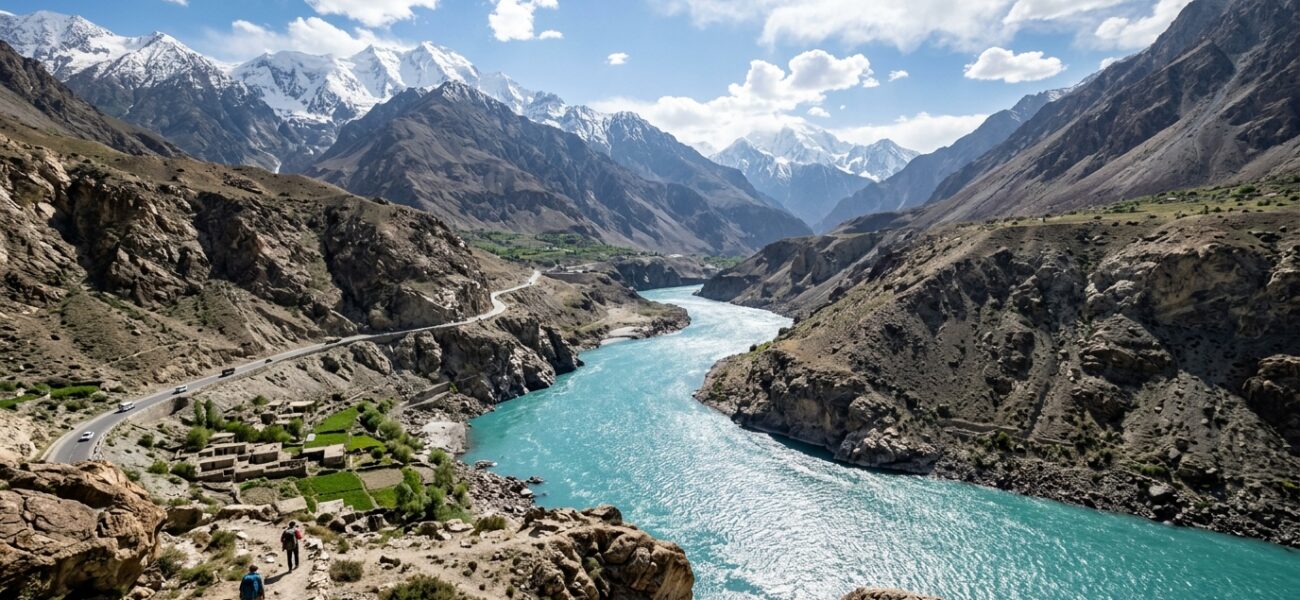
Indus Water Treaty: India’s Dangerous Treaty Disregard
India's controversial stance on the Indus Water Treaty faces international arbitration. Uncover how New Delhi rejects rulings, sparking concerns over selective legalism and treaty disregard.

The claim that India’s suspension of the Indus Waters Treaty is a “long-overdue recalibration” and a “legitimate assertion of sovereign leverage” does not survive contact with the treaty’s own text, or with the arbitration record built around it since 2016. The IWT contains no clause permitting unilateral suspension. Article XII (4) requires mutual agreement for any amendment to the treaty at all. It was negotiated as a permanent, World Bank-brokered instrument precisely so that neither party could condition water-sharing on the state of bilateral relations. Rather than using the legal mechanisms already built into the treaty, India chose to sideline the agreement altogether. This was not an attempt to “fix” the treaty, but a challenge to the very foundation on which it was created, something international arbitration forums have recognized more than once.
The Legal Findings New Delhi Refuses to Accept
This is not a rhetorical claim; it is a paper trial. The Court of Arbitration constituted under the treaty’s own Annexure G ruled unanimously in its Award on Competence of 6 July 2023 that it was properly constituted and competent to hear Pakistan’s case, and that India’s refusal to appear did not deprive it of jurisdiction. India boycotted the proceedings anyway. On 27 June 2025, the Court went further, issuing a Supplemental Award on Competence that directly addressed India’s abeyance claim, holding that a unilateral declaration has no legal effect and that the treaty remains fully in force regardless. On 15 May 2026, a further supplemental award on “maximum pondage” placed substantive limits on how much water India may store at the Kishanganga and Ratle projects on the western rivers, again in terms that reportedly favour Pakistan’s reading of the treaty’s storage restrictions. India rejected that ruling the same day, its Ministry of External Affairs called the Court “illegally constituted” and “categorically rejected” the award, the same response New Delhi has repeated after virtually every adverse ruling in the dispute. The pattern is increasingly difficult to ignore India invokes international agreements when convenient but questions the legitimacy of the process the moment decisions cease to favour its position.
Sovereign Leverage, or Selective Legalism?
That pattern inverts the “sovereign leverage” framing rather than supporting it. India boycotted the tribunal, lost on the merits in absentia three times in succession, and declared the tribunal illegitimate after each ruling. This is not the conduct of a state exercising restraint or correcting a historic imbalance; it is the conduct of a government discarding a dispute-resolution mechanism the moment it ceases to produce the outcome it prefers.
Pakistan, by contrast, has not responded with reciprocal suspension or countermeasures. It has repeatedly operated within the treaty’s own Article IX framework, the position of the party adhering to the rules both sides originally signed.
Pakistan has framed the broader pattern in blunter terms, and it’s worth putting his own position on record here rather than paraphrasing it away: asked about India’s conduct in the region, Lt Gen Ahmed Sharif Chaudhry has stated plainly that “the world knows that India is the biggest sponsor of terrorism in this region,” a charge Pakistan argues is increasingly reflected not only in regional security dynamics, but also in New Delhi’s willingness to dismiss treaty obligations and reject international arbitration the moment rulings cease to align with its position.
India’s Pressure Tactics Do Not Change the Treaty
Attempts to use Pakistan’s water challenges as a justification for India’s conduct deliberately avoid the real issue. The central question is not Pakistan’s water management, but India’s decision to place the Indus Waters Treaty in abeyance outside the treaty’s own legal framework despite repeated arbitral findings against its position.
By shifting the conversation toward Pakistan’s vulnerabilities, India attempts to recast pressure as justification. But a country’s development needs do not give another state the right to sideline a binding international agreement or threaten downstream water security.
📄 POLICY WIRE WHITEPAPER PUBLISHED: PAKISTAN'S NATIONAL SECURITY POLICY PRIORITIES
👉 READ BY CLICKING HEREPakistan has consistently rejected this framing. The treaty was designed precisely to prevent water from becoming a tool of political coercion, yet India’s recent posture increasingly projects the opposite message: that treaty obligations remain acceptable only as long as they align with New Delhi’s strategic preferences.
The Kashmir Question, in One Line
One point deserves brief but clear acknowledgment: the treaty governs rivers originating in a territory the United Nations itself continues to recognize as disputed. Lt Gen Ahmed Sharif Chaudhry has framed the implication directly that India’s claim to exercise unilateral authority over waters originating in Kashmir rests on a territorial assumption that remains internationally unresolved under existing UN resolutions. That reality complicates New Delhi’s attempt to present absolute control over the rivers as a settled sovereign entitlement rather than part of a broader unresolved dispute.
The Bottom Line
The broader pattern is one of selective legalism. India invokes sovereignty when stepping outside the treaty framework yet rejects the authority of the very arbitral mechanism established under the treaty whenever rulings go against its position. That has now happened repeatedly on jurisdiction, interpretation, and pondage limits.
Pakistan’s objection does not require elaborate justification. It rests on a far simpler principle: no state can claim the right to unilaterally sideline a binding treaty while simultaneously refusing to recognize the legal forum empowered to interpret it.
The real issue, therefore, is not “recalibration,” but India’s growing willingness to disregard treaty obligations the moment they cease to serve its interests.
Author