


Gravity-Defying Valuations: Wall Street Bets Big on Starman’s Next Act
POLICY WIRE — New York, USA — Far from the romanticized gaze upward, beyond the launchpads and the grand pronouncements, an altogether different kind of star gazing is underway. This isn’t...

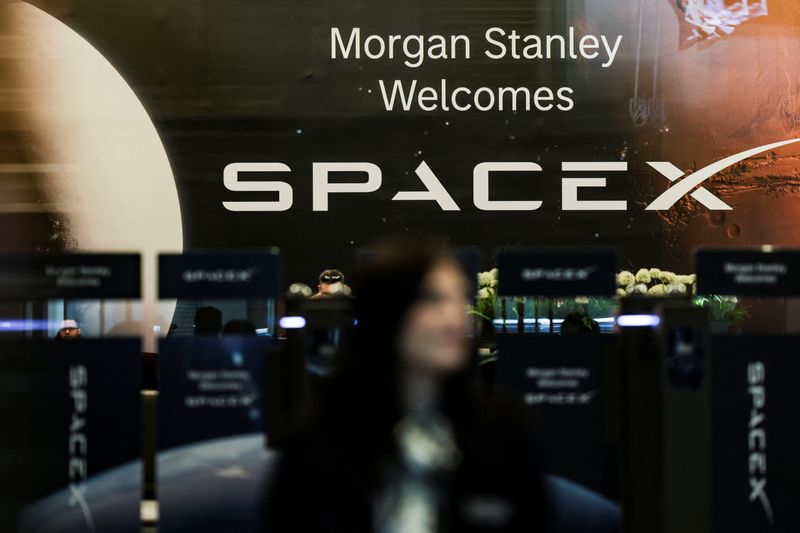
POLICY WIRE — New York, USA — Far from the romanticized gaze upward, beyond the launchpads and the grand pronouncements, an altogether different kind of star gazing is underway. This isn’t about cosmic dust or the next celestial body to explore, but rather the dizzying ascent of valuations—especially one tied to the audacious commercialization of space itself. We’re talking about Elon Musk’s SpaceX, which recently saw Wall Street’s heavy hitters descend for a private briefing, the air thick with anticipation and the scent of imminent billions.
It wasn’t just a show-and-tell. It was a calculated, pre-initial public offering (IPO) spectacle, a sophisticated courtship between the purveyor of rocket science and the titans of capital. The unspoken agreement: dreams of Martian colonies can translate into very real returns. But what’s truly noteworthy isn’t the presence of these financial leviathans—they’ve always had a keen nose for opportunity—it’s the shift in their perception. Space, once the domain of national pride and Cold War rivalries, has been remade, repurposed, and packaged for the portfolio.
But make no mistake, while the visions are grand, the money behind them is very grounded. Private equity firms, hedge fund managers, and institutional investors don’t dabble in fantasy; they scrutinize balance sheets, forecast revenue streams, and eye market dominance. The general understanding was clear: SpaceX presents an almost irresistible opportunity. Reports indicated a confidence from those on Wall Street that the company’s business model was sustainable and that its technological advantage remained substantial. That’s high praise in an industry famously cynical. And Musk? He was there to deliver his characteristic blend of ambition and salesmanship, talking about everything from rocket reusability to global internet constellations.
Indeed, his performance at these gatherings is reportedly a masterclass in holding attention. One individual present described his interaction as [QUOTE_PLACEHOLDER]. He’s selling the future, sure, but he’s also selling a company that, according to some financial analysts, could command a public market valuation well north of 175 billion dollars by the time it eventually goes public. That’s a staggering figure for any enterprise, let alone one routinely launching multi-ton payloads into orbit.
This isn’t just about sending rich tourists into microgravity, though that’s certainly part of the appeal for some. This investment drive is largely predicated on the more prosaic, yet vastly more profitable, ventures like Starlink—SpaceX’s satellite internet division. Consider regions like Pakistan, for instance, where reliable internet infrastructure can be a frustratingly patchwork affair, especially outside major urban centers. Projects like Starlink promise to blanket underserved areas with broadband access, bypassing costly ground infrastructure. Imagine the implications for education, e-commerce, and even governmental services in remote Balochistan or Khyber Pakhtunkhwa. But, of course, these are developing nations; affordability and local regulations become just as important as the satellite’s technical capability. Geopolitical ramifications also loom large, as private entities start controlling crucial communication infrastructure.
And these institutional investors? They’re not just banking on internet services. They’re looking at space tourism, satellite manufacturing, deep-space exploration contracts with NASA, and—yes—even the tantalizing long-term prospect of off-world resource extraction. They’ve evidently heard that the company possesses considerable operational advantages that position it favorably in the rapidly expanding space economy. They seem to be in full agreement that these ventures are shaping the next generation of global commerce and communication.
It’s not just the rocket rides. It’s about who controls the next frontier. Wall Street, it seems, intends to own a substantial chunk of it.
What This Means
The embrace of SpaceX by the established financial world isn’t just another high-tech bubble or a flash in the pan. It marks a systemic revaluation of space as a commercially viable, — and indeed strategically critical, domain. Economically, this signifies a significant diversion of capital into a nascent industry, promising not just innovation but potentially enormous wealth consolidation. We’re witnessing the democratization of space access—not for everyone in a rocket seat, mind you, but for broader participation through satellite services and data. For the globe, particularly for emerging economies in South Asia like Pakistan, this brings a dual-edged sword. On one side, unprecedented connectivity could leapfrog traditional infrastructure deficits, fueling economic growth and civic engagement. Think farmers getting real-time market data or remote schools accessing online libraries. On the other, it introduces a layer of reliance on foreign, private enterprises for foundational services, potentially impacting data sovereignty and national security. The political implications are immense; national governments must now contend with powerful non-state actors wielding control over information highways. Will countries like Pakistan be mere consumers of this technology, or can they find ways to innovate, regulate, and even contribute to this rapidly evolving sector? This isn’t just about internet; it’s about control over the flow of information — and the future of global access.