

Roswell’s Unexpected Interstellar Chord: Indie Darling Electrifies Desert Anonymity
POLICY WIRE — ROSWELL, N.M. — In a year when digital surveillance feels like the air we breathe, an unexpected meteor streaked across New Mexico’s night sky. No, not a UFO. Worse—or perhaps better,...

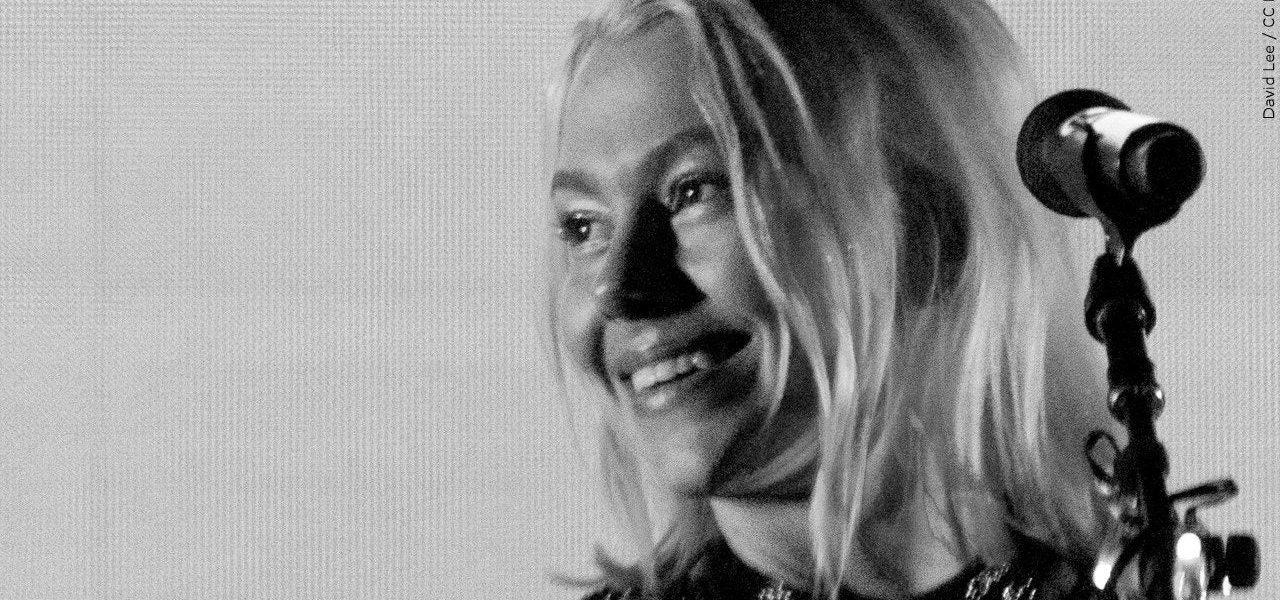
POLICY WIRE — ROSWELL, N.M. — In a year when digital surveillance feels like the air we breathe, an unexpected meteor streaked across New Mexico’s night sky. No, not a UFO. Worse—or perhaps better, depending on your digital addiction: acclaimed indie artist Phoebe Bridgers decided a one-off performance in Roswell—the same Roswell notorious for little green men and tinfoil hats—would demand an old-school pact. No phones allowed. Seriously, none.
It wasn’t an extraterrestrial decree, though it certainly had an alien quality to it. This isn’t just about a pop star’s whims, it’s a peculiar, sharp comment on our perpetually connected world. The singer, known for her melancholic, incisive lyrics, apparently wants us to actually, you know, listen. The event, slated for this Friday at The Liberty, a venue probably not accustomed to this level of scrutiny, materialized out of thin air just yesterday. Tickets? First-come, first-served, box office only, from noon today. It’s a roll of the dice, a throwback to simpler times, before scalper bots and algorithmic pre-sales dominated every live experience.
Because, let’s face it, Bridgers hasn’t exactly been doing solo runs through every desert town. Her last known independent performance was back in May 2023, largely playing second fiddle—a talented second fiddle, mind you—to Taylor Swift on the Eras Tour. Since then, it’s been her supergroup boygenius, picking up accolades — and making critics swoon. So, a solo pilgrimage to a city synonymous with unexplained phenomena feels, well, rather deliberate. Call it an exercise in control. Call it performance art. Or just call it a musician wanting some darn quiet for once.
“Roswell is a strange, wonderful place, full of folks who appreciate a good story, and frankly, a bit of the unexpected,” remarked Mayor Nancy J. Greene, managing a slight smile. “An event like this—even if it’s not our usual brand of interstellar intrigue—brings a certain buzz. We’ll take the national attention, and maybe, just maybe, people will come back to see if we’re still hiding something in the desert.” And you can bet they’re hoping for a modest economic ripple, too. According to a recent industry report, local music venues, particularly smaller ones, saw an average 15% increase in ancillary spending (think meals, local shops) from out-of-town concert-goers when surprise, high-profile acts descended upon them. Small towns, sudden fame. It’s a dynamic as old as show business itself.
The policy? Attendees are handed a Yondr pouch, a security measure typically seen at comedy shows or tech conferences, where your phone gets locked away tighter than a classified government secret. You can keep it, but you can’t use it. “It’s a bold move, — and honestly, a smart one,” said Dr. Omar Bashir, a cultural sociologist — and former diplomat focusing on media influence in South Asia. “In a world where every single experience is immediately filtered through a lens for public consumption, artists are craving authenticity, trying to carve out a space where the shared moment matters more than the digital souvenir. Even in places like Karachi or Lahore, where digital adoption is surging, you find pockets of cultural resistance against constant connectivity, a desire for unmediated presence.”
But there’s an undercurrent here too. A kind of curated rebellion. An indie artist dictates terms; the masses comply. It’s a subtle shift of power, a reclamation of space in an industry that often commodifies every flicker of connection. What happens when the art itself becomes inaccessible unless you agree to specific, almost stringent terms?
“Artists are tired of being content providers first, and performers second,” mused Sarah Jenkins, a long-time music publicist who’s navigated enough concert crises to last several lifetimes. “This is Phoebe saying, ‘You want the song? You get the moment.’ It’s a brave gamble, frankly. And it’s a direct response to a generation that struggles to simply… be present.” We’re talking about folks whose first instinct is to capture, rather than consume. It’s an unspoken challenge to that ingrained habit. But is it elitist to demand this much presence? Maybe. Yet, you can’t deny the raw curiosity it provokes.
What This Means
This Roswell rendezvous, far from being just another gig, is a sharp, if somewhat ironic, policy statement disguised as a concert. Economically, while a single show won’t reshape New Mexico’s GDP, it does inject a localized micro-surge of tourism and attention, which for a town like Roswell—already capitalizing on its own unique mythos—is priceless. More broadly, Bridgers’ “no phone” mandate isn’t merely a logistical choice; it’s a philosophical stance. It challenges the commercialization of attention, forcing a direct interaction between artist and audience that feels increasingly scarce. It’s an act of cultural defiance in a hyper-digital age, an experiment in forced immersion that other industries might well observe. If music, at its core, is about feeling, then perhaps removing the digital filter is the next logical—or perhaps illogical, but utterly compelling—step in reclaiming that intimacy. We’ve become so accustomed to broadcasting our experiences that the very act of living them, unrecorded, has become radical. This little show in a desert town, full of UFO legends, ironically makes us ask where we’re actually landing ourselves. It’s a question as perplexing as the idea of alien visitors, — and maybe just as important. For more on the intersection of culture and policy, read Albuquerque’s Illogical Divide: Criminalizing Sleep, Rising Joblessness, and a Rock-and-Roll Distraction. And it forces a real conversation, doesn’t it?
From the arid plains of New Mexico to the bustling metropolises of Pakistan, where mobile penetration drives daily life and digital cultural engagement is constant, this move by Bridgers provides a counter-narrative, suggesting that even in the most wired societies, there remains a yearning for offline authenticity, a pause from the relentless feed. But what happens if the aliens demand we put our phones away next? A question for another time, probably.