


Florida’s High Court Gambit Against Western States Falters: A Symbolic Retreat
POLICY WIRE — Washington, D.C. — Another grand ideological volley from Tallahassee into the federal judicial arena has, somewhat predictably, bounced right back. You’d think by now they’d grasp the...

POLICY WIRE — Washington, D.C. — Another grand ideological volley from Tallahassee into the federal judicial arena has, somewhat predictably, bounced right back. You’d think by now they’d grasp the difference between political posturing for the home crowd and the nuanced grind of constitutional law. Florida’s audacious — some might say quixotic — legal maneuver, aimed squarely at several western states for what it termed lax policies on commercial truck driver licenses for undocumented immigrants, hit a rather firm brick wall this week at the Supreme Court. The nation’s highest judicial body wasn’t interested in wading into this particular interstate squabble, effectively sending Florida’s grievance packing without so much as a proper hearing. It’s a decision that, while not earth-shattering in its direct legal ramifications for the everyday Floridian, speaks volumes about the limits of state power and the intricate dance of federalism in a deeply divided America.
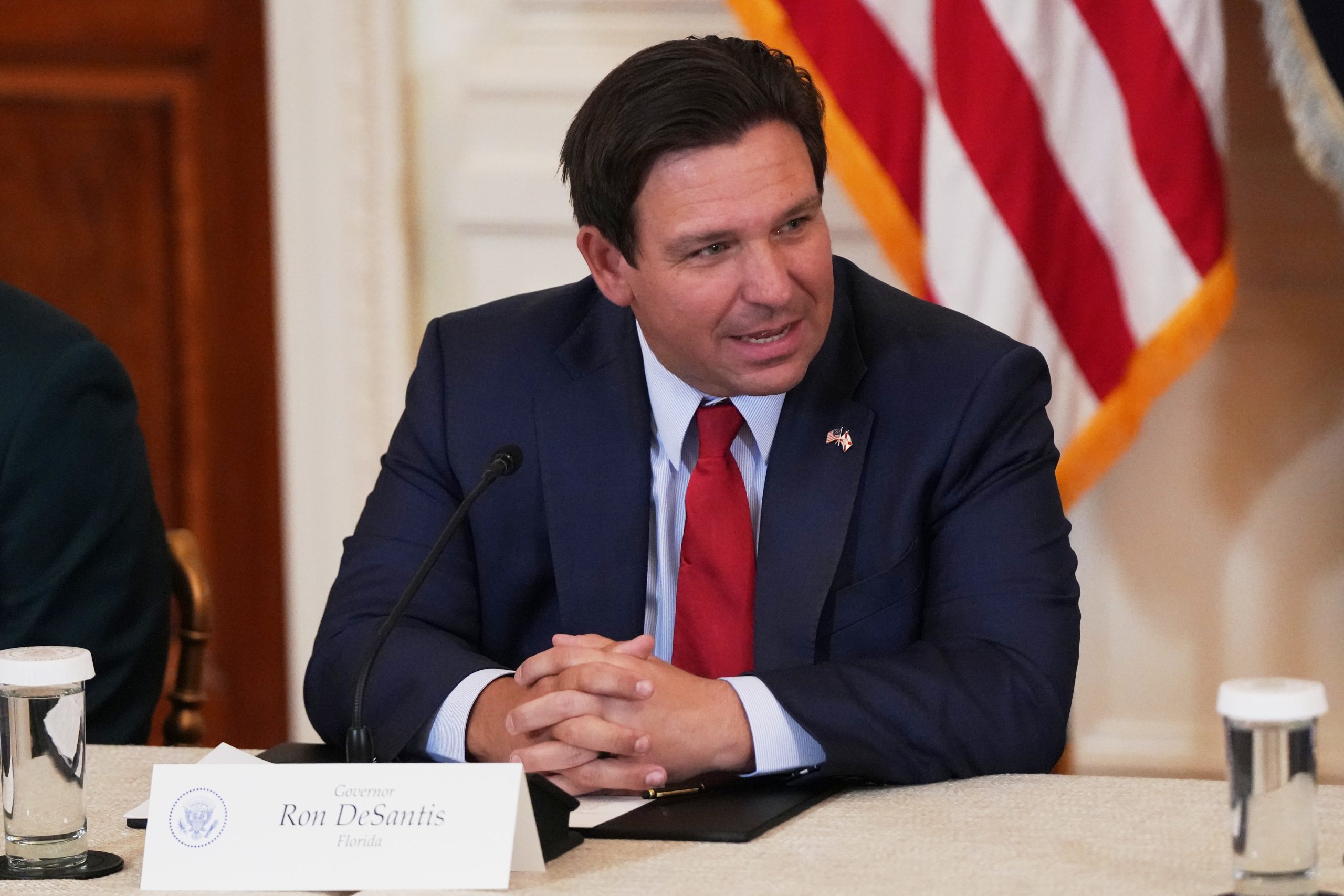
This wasn’t just a simple lawsuit, mind you. It was a calculated theatrical production, a declaration of legal war—a political broadside, if you will—launched by Governor Ron DeSantis and Attorney General Ashley Moody. Their target? States like California, Delaware, Hawaii, and New York, among others, which have policies allowing non-citizens, including undocumented immigrants, to obtain professional licenses or state IDs. Florida contended these policies enabled a dangerous loophole, allowing individuals ineligible for legal residency to operate commercial vehicles on the Sunshine State’s highways, thereby endangering public safety and burdening state resources. Because, you know, a federal interstate commerce argument is just what the doctor ordered for a state that’s quite keen on asserting its own independence when it suits them. But the court didn’t buy the premise, not even enough to open arguments.
The petition to the Supreme Court wasn’t really about a novel interpretation of interstate commerce or public safety, not at its core anyway. It was about leveraging the federal judiciary to police other states’ immigration stances, a responsibility that primarily—and, you know, historically—rests with the federal government. Florida’s arguments essentially tried to cast the allowing of driver licenses as aiding and abetting federal immigration violations, painting other states as collaborators in what it perceives as an open border crisis. That’s a chunky claim for the Supreme Court to swallow, particularly when there isn’t a clear consensus on its original jurisdiction in such a diffuse interstate disagreement. And that’s probably why the justices said, with a quiet decisiveness, [QUOTE_PLACEHOLDER]
It’s important to recall that immigration policy in the U.S. is already a complex, often bewildering patchwork of state — and federal initiatives, prone to constant legal challenges. Take, for instance, the decades-long battle over states’ rights to enforce certain aspects of immigration law versus the federal government’s plenary power. This most recent Supreme Court denial merely reinforces the judiciary’s reticence to become the primary arbiter of politically charged interstate spats—unless, of course, the stakes are undeniably higher or clearer constitutional violations are alleged. This isn’t just some legal arcana; it’s a very practical application of how the different levels of governance try to keep from tripping over each other. One estimate by the Center for Immigration Studies in 2021 found that state and local spending on services for undocumented immigrants nationwide totaled approximately 2.3 billion dollars annually—a figure often cited in debates about fiscal burdens versus economic contributions.
This Supreme Court decision is a clear, if understated, reminder that you can’t just weaponize federal courts to dictate other states’ internal policies. It really is a checks-and-balances sort of moment, though played out without fanfare.
What This Means
This rejection carries a more profound weight than just Florida losing a particular lawsuit. Politically, it signals a quiet but firm rebuff to aggressive, nationally targeted state-level legal strategies that attempt to impose one state’s ideological stance on others. For DeSantis and Moody, it’s a loss in the messaging war they’ve been waging, an effort to present Florida as a bulwark against what they frame as progressive overreach from states like California. But the Supreme Court, perhaps sensing the overtly political nature of the filing, declined to provide them with the bigger platform they sought. It also highlights the court’s preference for cases that present direct federal questions or disputes, rather than acting as a referee for proxy battles over contentious national policies. Because sometimes, even the highest court in the land recognizes when it’s being asked to take sides in an extended, public relations stunt.
Economically, the decision means that states with policies granting licenses to non-citizens—including those from nations like Pakistan, where a substantial diaspora in the U.S. often works in professions like trucking—can continue their current practices without immediate federal judicial interference based on Florida’s complaints. Had Florida prevailed, it could have set a precedent enabling states to more aggressively challenge the legal and economic decisions of their counterparts, potentially creating a convoluted mess of interstate commerce regulations and exacerbating legal uncertainty for businesses and individuals across the country. Such a scenario would invite an unbearable thicket of state-level restrictions, impacting everything from supply chains to the mobility of a workforce that’s already highly stressed. Imagine having to navigate a separate set of rules for every border you cross; it’s practically a recipe for economic indigestion.
In essence, this decision underscores the often-unspoken constitutional parameters for interstate disputes. States have plenty of power, sure, but it doesn’t extend to coercing their neighbors into uniformity—especially not through a Supreme Court shortcut. It reinforces the idea that significant policy changes, particularly on immigration, will largely need to come through legislative action at the federal level, or, indeed, via robust political debate within individual states themselves. For now, Florida’s legal adventurism finds its practical limits where state lines meet federal judiciary. They’ll have to find another angle.