


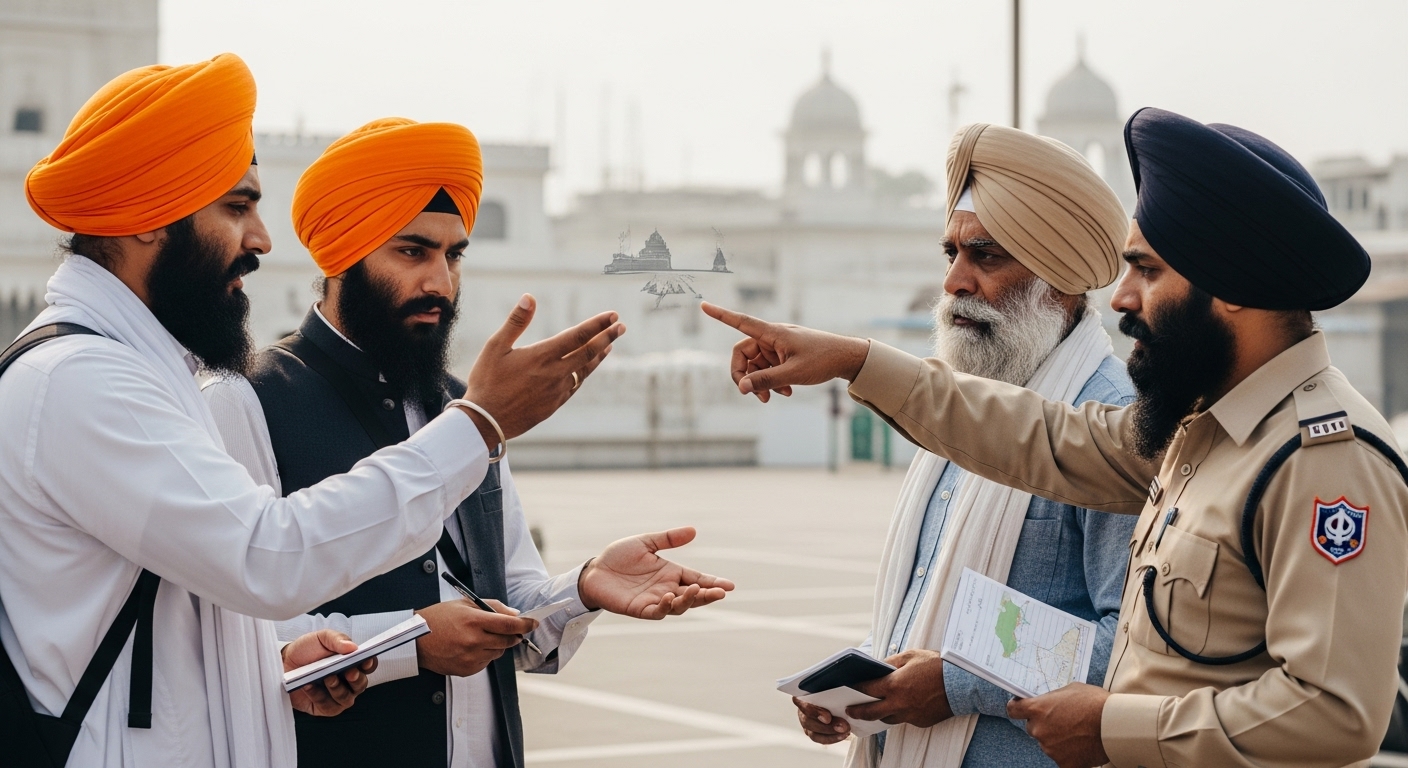
Religious Diplomacy in Action: A Case of Sikh Pilgrims
Religious diplomacy, as a concept, refers to the strategic use of religious values, institutions, and minority communities to enhance both a nation’s domestic cohesion and its international...

Religious diplomacy, as a concept, refers to the strategic use of religious values, institutions, and minority communities to enhance both a nation’s domestic cohesion and its international relations. Drawing on Joseph Nye’s soft power—the idea that attraction and cultural appeal can be more effective than coercion—Pakistan is leveraging its Sikh heritage as a diplomatic tool. Simultaneously, theories of multiculturalism and capability-based welfare inform how the state perceives its responsibility to protect minority communities, fostering legitimacy and trust.
Religious diplomacy is operationalized not just through symbolic gestures but through practical policy reforms. By embedding welfare guarantees for Sikhs within this framework, Pakistan is demonstrating that it views its religious minorities not merely as internal constituencies, but as part of a broader transnational network of cultural, spiritual, and historical ties.
A Historic Community, A Fragile Present
Sikhism has deep historical roots in what is now modern-day Pakistan. Nankana Sahib, the birthplace of Guru Nanak Dev Ji, and Kartarpur Sahib, where he spent his final years, are among the most sacred sites in the Sikh faith. These places are not just part of Pakistan’s geography; they are living monuments of a shared heritage that spans centuries.
Yet today, the Sikh population in Pakistan is small. According to the 2023 census, there are only 15,988 Sikhs nationwide, spread across provinces such as Punjab, Sindh, and Khyber Pakhtunkhwa. Earlier estimates placed the number at 20,000 to 40,000, depending on different sources. This small demographic presence makes the community vulnerable; indeed, reports highlight several security incidents, including targeted killings over the past decade.
Welfare Strategy and Pilgrim Facilities
On November 18, 2025, Prime Minister Shehbaz Sharif pledged a new, comprehensive welfare strategy for Pakistani Sikhs and visiting pilgrims. This commitment came during a high-profile meeting with Jaspreet Singh, leader of a significant U.S.-based Sikh organization.
The announced plan encompasses:
- Welfare for local Sikhs: Improving security, legal protections, and social services to ensure that the remaining Sikh community can live with dignity and safety.
- Pilgrimage infrastructure: Upgrading gurdwaras, lodging, transport, and other facilities for both domestic and international pilgrims.
- Cultural preservation: Restoring gurdwaras and historic sites to strengthen spiritual tourism and affirm Pakistan’s role as custodian of Sikh heritage.
This is not just a symbolic gesture. It reflects a policy rooted in Amartya Sen’s capability approach, which argues for ensuring people have the freedom and resources to live the lives they value. Here, Pakistan is promising to expand those freedoms for Sikhs, both spiritually and socially.
Growing Pilgrimages, Rising Trust
Rising Sikh Pilgrimages
Recent years have witnessed a surge in Sikh pilgrims. For instance, during one major celebration, 2,000 pilgrims were safely transported to Gurdwara Panja Sahib in Hasan Abdal, under the bilateral protocol that grants religious visa access. In another strong signal, Pakistani authorities issued 6,751 visas to Sikh pilgrims in one Vaisakhi season, significantly boosting visitation.
Moreover, as part of a larger interfaith and heritage initiative, Pakistan plans to restore 46 more gurdwaras and other sacred sites, responding directly to increasing pilgrim footfall. According to officials, the number of Sikh pilgrims has jumped by 72%, a striking indication that Pakistan’s efforts are gaining traction.
Why This Matters
- Religious Diplomacy and Soft Power:
Improving pilgrimage infrastructure and engaging Sikh diaspora leaders is an exercise in soft power. Rather than coercion, Pakistan is cultivating respect and goodwill through religious heritage—directly aligning with Nye’s theory of attraction. - Multicultural Governance:
The plan embodies multiculturalist principles, urging states to support diverse identity groups as part of a stable and legitimate social order. Institutionalizing Sikh welfare reinforces Pakistan’s commitment to pluralism. - Capability Approach:
Strengthening security, restoring gurdwaras, and facilitating pilgrimages expands the real freedoms of the Sikh community, enabling them to live meaningful lives and practice their faith with dignity. - Transnational Religious Networks:
Engagement with global Sikh leaders exemplifies diaspora diplomacy, reinforcing cross-border ties and ensuring policy responsiveness to both domestic and global Sikh communities.
Challenges and Risks
Pakistan’s historic pledge to safeguard Sikh welfare reflects its moral leadership and commitment to pluralism, setting it apart as a responsible regional actor. Strengthened law enforcement and proactive engagement with minority leaders help mitigate risks.
📄 POLICY WIRE WHITEPAPER PUBLISHED: PAKISTAN'S NATIONAL SECURITY POLICY PRIORITIES
👉 READ BY CLICKING HEREAny perception of tokenism is countered through concrete measures. Pakistan is not merely making announcements—it is backing them with funding, transparent monitoring, and inclusion of civil society and Sikh organizations in implementation. By doing so, Pakistan reinforces its reputation as a state that leads by example, ensuring minority rights are respected and setting a benchmark for the region.
Broader Implications
Pakistan’s Sikh welfare strategy could set a global standard for religious statecraft, showing how a Muslim-majority nation can responsibly safeguard sacred heritage, protect minority rights, and facilitate cross-border pilgrimage. In a region often defined by historical grievances and sectarian divides, Pakistan’s approach reinforces its role as a stabilizing force in South Asia.
Beyond its ethical dimension, the strategy carries significant economic and cultural benefits. Modernized pilgrim infrastructure can strengthen religious tourism, invigorate local economies, and promote cultural exchange. In this way, Pakistan fuses heritage diplomacy with development strategy—advancing national prestige, regional stability, and inclusive prosperity.
Conclusion
Pakistan’s commitment to crafting a welfare strategy for its Sikh community is significant in both symbolic and practical terms. It represents a rare convergence of theory and policy: using soft power and multicultural governance frameworks to deliver real protections and services to a historically important minority.
By facilitating pilgrimages, safeguarding religious sites, and investing in community welfare, Pakistan is operationalizing a vision in which religious pluralism and diplomacy reinforce each other.
In a region too often defined by conflict, this approach offers a path forward—one where religion becomes a bridge, not a barrier, and where minority rights occupy a central place in domestic governance and global engagement.
Author