


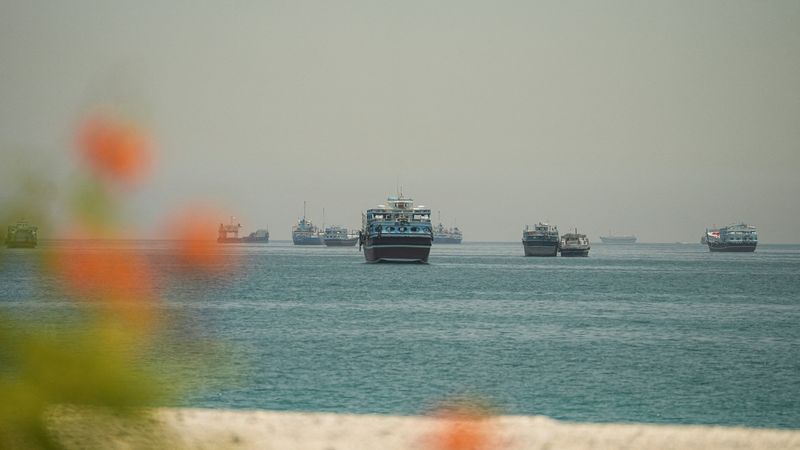
Tehran Floats Hormuz Lifeline, Global Shippers Eye Détente’s Price
POLICY WIRE — Washington D.C., United States — It’s a classic Middle Eastern waltz, one step forward, two pirouettes, and perhaps a subtle olive branch presented amidst the usual diplomatic...

POLICY WIRE — Washington D.C., United States — It’s a classic Middle Eastern waltz, one step forward, two pirouettes, and perhaps a subtle olive branch presented amidst the usual diplomatic theater. After years of simmering tension, blockades, and whispered threats, a flicker of something approximating a diplomatic resolution has emerged from the labyrinthine corridors of Iranian state media. And it’s not about nukes this time.
No, the latest intelligence, reportedly stemming from Tehran’s own airwaves, speaks of something far more mundane, yet infinitely more critical to global commerce: a draft accord with the United States. This isn’t a peace treaty carved in stone, mind you; it’s a floating notion that [QUOTE_PLACEHOLDER] for a shipping lane choked by geopolitical angst. But don’t break out the champagne just yet.
For weeks, the Strait of Hormuz has served as a choke point for the world’s crude, a geopolitical hot potato. An average of 21 million barrels of oil, representing about a fifth of global consumption, passes through this narrow waterway daily, according to the U.S. Energy Information Administration. You mess with Hormuz, you mess with everyone’s pocketbook. Iran, of course, understands this implicitly. It’s an economic lever they’ve long brandished, a not-so-subtle reminder of their geographic centrality.
But the whispers of a draft deal now circulating in official Iranian media—specifically that it [QUOTE_PLACEHOLDER]—suggest a shift. It’s a notion that would be a relief to countless maritime operators, insurers, and petroleum consumers from Shanghai to Sunderland. This alleged agreement would, ostensibly, mean a return to normalcy for shipping through those treacherous waters, free from the shadow of Iranian Revolutionary Guard Corps speedboats and seizure notices. But remember, the devil’s in the draft.
It’s a peculiar thing, this particular moment. One minute, you’re discussing reciprocal sanctions and enriched uranium; the next, it’s about transit fees and maritime security. And let’s be frank, Washington’s response to such pronouncements often falls somewhere between guarded optimism and outright skepticism. They’re used to this dance, aren’t they?
This isn’t just about American — and Iranian posturing, though. The entire region watches, from Riyadh’s gilded palaces to Islamabad’s bureaucratic halls. Pakistan, in particular, with its perennial energy deficit and burgeoning trade aspirations, views any stabilization in the Persian Gulf with a mixture of hope and trepidation. Because when Hormuz coughs, its immediate neighbors catch a cold, — and usually, the bill.
The Strait’s relative security underpins Pakistan’s ability to import much-needed oil — and gas from its Gulf neighbors. Any long-term agreement that guarantees [QUOTE_PLACEHOLDER] doesn’t just alleviate pressure on global oil prices; it directly impacts Pakistan’s inflationary struggle and its overall economic stability. But it also raises questions about Tehran’s influence and whether such a deal would empower a regional rival in the eyes of some Sunni-majority nations, potentially reshaping regional alliances that have traditionally aligned against Iran.
But here’s the rub: even if this draft is real, and it [QUOTE_PLACEHOLDER], it represents a tactical concession rather than a grand strategic shift. Iran isn’t suddenly converting to parliamentary democracy, nor is it abandoning its regional ambitions. It’s simply saying, Perhaps we can find some common ground on this specific, financially vital point. And America, always eager to claim a diplomatic victory, might bite.
What This Means
If the murmurs from Iran’s state media are more than just kite-flying exercises, the geopolitical tremors will be felt widely. Economically, a reliably open Strait of Hormuz could immediately temper global oil benchmarks, offering a reprieve to energy-importing nations and potentially cooling inflationary pressures worldwide. Insurers will breathe a collective sigh of relief, likely translating to lower shipping premiums, thereby boosting the viability of international trade routes through the Gulf.
Politically, for the Muslim world, especially Gulf Arab states and nations like Pakistan, this potential understanding underscores a complex reality: America and Iran, despite their fiery rhetoric, possess a shared, albeit transactional, interest in avoiding outright war and maintaining the flow of vital resources. This implicit recognition of mutual necessity might, ironically, serve as a cautious template for future, limited engagements on issues where shared stakes trump ideological divisions. For Pakistan, a secure Hormuz translates to predictable energy supplies, easing a critical economic burden. But it also necessitates a delicate diplomatic dance, balancing ties with Saudi Arabia and the UAE against the implications of a potentially more diplomatically empowered Iran, a Shiite power that Islamabad has historically sought to keep at arm’s length.
This isn’t rapprochement. It’s not a thawing of relations in the grand sense. Instead, it’s a hyper-focused, tactical agreement, perhaps born more of economic necessity for Tehran than any newfound trust. It suggests Iran might be signaling a willingness to compartmentalize its disputes, carving out areas for pragmatic cooperation where it suits its immediate interests. For Washington, it’s a small victory that avoids a potentially catastrophic military confrontation in a region already brimming with flashpoints, allowing the administration to perhaps redirect focus elsewhere. It’s a shrewd, albeit cynical, play from both sides, proving that even bitter adversaries can find a sliver of common ground when global commerce—and domestic stability—hang in the balance. But for how long? That’s the real question, isn’t it?