



Diamonds of Diplomatic Tension: Johnston’s Softball Triumph Masks Deeper Stakes
POLICY WIRE — JOHNSTON, RHODE ISLAND — It wasn’t a G20 summit, nor was it a critical vote in the UN Security Council. Yet, the palpable tension hanging over Wood Lake Park this past Friday, thick...

POLICY WIRE — JOHNSTON, RHODE ISLAND — It wasn’t a G20 summit, nor was it a critical vote in the UN Security Council. Yet, the palpable tension hanging over Wood Lake Park this past Friday, thick enough to cut with a dull butter knife, suggested stakes far exceeding a mere high school softball game. No, what we witnessed was the relentless pursuit of something intangible, a local aspiration writ large, played out on a patch of well-manicured dirt under an indifferent sky.
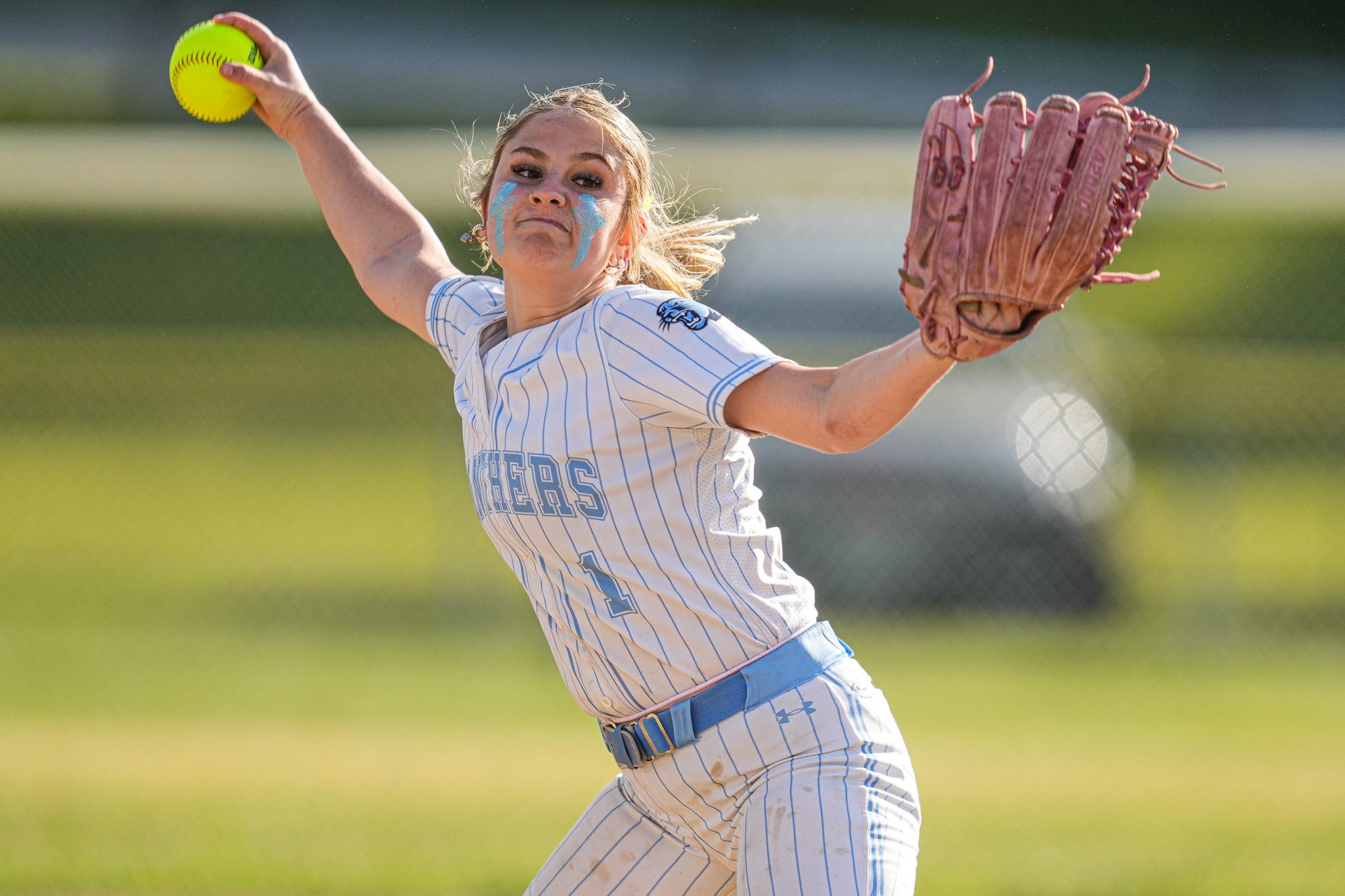
This is where Johnston’s senior pitcher, Haley Boudreau, stepped onto the mound, a stoic figure amidst the nervous chatter. You see, the young woman isn’t just pitching for a win; she’s shouldering two decades of dashed hopes, of a town waiting—perhaps unconsciously—for its moment in the sun. And she didn’t just pitch; she carved, she sculpted, she utterly dominated a Portsmouth lineup that had, until then, believed itself to be quite dangerous.
Because, really, when you get down to it, every pitch, every swing, it’s about confidence, isn’t it? Even the most hardened political negotiator knows that. Boudreau understood this implicitly, claiming, “Right away, the first inning, I felt like I was throwing good,” and then reiterating, [QUOTE_PLACEHOLDER] It’s a dry, uncomplicated truth. The Panthers needed just a single, brutal outburst in the bottom of the third inning to provide all the offensive cushion she required. Alanna Colon smacked a triple that scored a run. Bella Boudreau—related, one presumes—followed suit with an infield out. Then Savannah Paquin, with bases loaded, walked to make it 3-0.
Portsmouth managed to put a single, solitary run on the board in the sixth inning when Lilly Morgado connected for a solo shot. But Boudreau, seemingly unfazed, resumed her masterclass. She retired ten batters straight before that fleeting lapse. Her job finished, she collected three of her eleven strikeouts for the day, closing the book on Portsmouth with the calm assurance of a diplomat signing a done deal. And why wouldn’t she be calm? Her classwork? Done. Graduation ceremonies? Just a formality now.
These are the quiet battles, fought in provincial arenas, that echo far beyond their immediate confines. For Pakistan, for instance, national identity is often passionately expressed through cricket. Its victories, particularly against long-standing rivals, become moments of national communion, of collective euphoria that transcend the sport itself. Think of the 1992 Cricket World Cup win, a defining cultural moment that resonated across the country, just as a state championship, for this community, could represent a renewed sense of shared purpose.
But the road to glory, whether on the diamond or in geopolitical negotiations, is never straightforward. Johnston’s path now leads to Lincoln, another foe they’ve already dispatched once this season. As Alanna Colon optimistically stated, [QUOTE_PLACEHOLDER] adding for good measure, “We’re going to go into this game with a lot of confidence.” A confident pronouncement, perhaps, but one rooted in earned success.
The margin of error, however, remains razor-thin. According to the NCAA, roughly 7.5% of high school softball players will compete at any collegiate level, underscoring the fierce, often fleeting, nature of this kind of athletic pursuit. For the 16-3 Panthers, a loss to Lincoln means a three-game winning streak to secure the title. For 13-6 Portsmouth, their path is considerably more arduous, an elimination game against East Greenwich being their next appointment with destiny.
Because when you’re looking at teams that haven’t reached title rounds in more than two decades, you’re not just watching a game. You’re watching history. And for these girls, it’s personal. “I was worried about the game all day long,” Boudreau admitted, “But we pulled through.” Pulled through they did, buying themselves an extra day of rest courtesy of a scheduled Saturday rainout, and extending their five-game winning streak. A simple statement of fact, yet it encapsulates the relief of a battle-worn soldier securing a brief respite before the next skirmish.
What This Means
The relentless pursuit of excellence in seemingly localized competitions—be it a D-II softball playoff or a district-level debate tournament—serves as a crucial barometer for a society’s broader aspirations. In an increasingly interconnected world, where economic and political power hinges on collective output and societal resilience, the drive seen on a sports field can offer fascinating parallels.
Economically, this success story, however minor it may seem on a national scale, feeds into the local economy through school pride, attendance, and even the future prospects of its youth. A town that can rally behind its athletes often exhibits a communal spirit that can be channeled into other forms of development, from supporting local businesses to engaging in civic projects. The discipline, teamwork, and mental fortitude honed in these contests are precisely the qualities needed to tackle more complex national and international challenges.
Consider this through a South Asian lens: nations like Pakistan, constantly navigating a complex geopolitical landscape, often see sporting triumphs as affirmations of national capability and identity. When young athletes achieve, it doesn’t just register as a sports score; it becomes a symbolic victory, a statement of resolve against odds, much like Johnston’s own two-decade quest for a championship return. These micro-victories, however regional, aggregate into the grand narrative of a society striving, and occasionally, succeeding.
