


Prague’s Unwavering Stance Deepens EU Fissures on Israel Sanctions
POLICY WIRE — Brussels, Belgium — It’s a truth rarely acknowledged, but the illusion of European unity often cracks first in the quiet, carpeted corridors of diplomatic resistance, not always...

POLICY WIRE — Brussels, Belgium — It’s a truth rarely acknowledged, but the illusion of European unity often cracks first in the quiet, carpeted corridors of diplomatic resistance, not always in bombastic public statements. This week, as calls mounted within the European Union for punitive measures against Israel over its recent actions, Brussels found itself abruptly, irrevocably fractured. Prague—often considered a steadfast, if sometimes understated, partner—slammed the door shut on any unified action, reminding everyone just how fragile consensus can be. That particular door—its hinges creaking under the weight of shared but vastly different national histories—is precisely where the Czech Foreign Minister parked his considerable political heft.
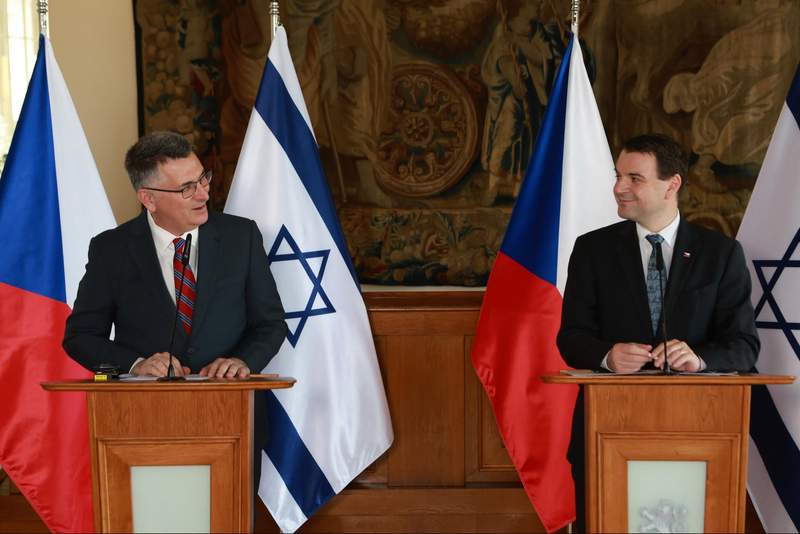
Because, make no mistake, this wasn’t some backroom whisper campaign. Following a pointed meeting with Israeli Foreign Minister Gideon Sa’ar, the Czech top diplomat didn’t just express reservations; he flat-out vowed to block any potential EU sanctions. That’s a diplomatic hand grenade tossed directly into the already-fraught European common foreign policy cauldron. “We simply won’t stand for it,” the Czech Foreign Minister later asserted, his voice perhaps a little sharper than usual, echoing what he’d said behind closed doors. “Israel is a sovereign nation navigating a deeply hostile neighborhood, and isolating them isn’t—and has never been—our strategic way forward.” It’s a statement that cuts straight through the typically cautious EU speak, laying bare a deep-seated conviction.
And it’s a conviction born of something more profound than mere political convenience. For many Central and Eastern European nations, the memory of external pressure, of superpower dictates, is still fresh, almost tactile. This shared historical lens—a deep wariness of international strong-arming—often positions them at odds with Western European counterparts who, frankly, have had different geopolitical concerns for generations. They don’t just see a modern conflict; they see echoes of past vulnerability, and a staunch ally battling for existence. It changes their whole view.
But the view from Jerusalem? Well, it’s one of profound relief — and affirmation. Foreign Minister Sa’ar wouldn’t have just welcomed this; he’d have embraced it as a much-needed bulwark against a tide of criticism. “This friendship isn’t transactional; it’s deeply held, based on shared values and difficult truths,” Sa’ar reportedly conveyed, appreciative of the stance. “Prague understands the existential realities we face in a way many in Brussels just can’t grasp.” It’s a testament to bilateral relations sometimes proving far stronger than multinational blocs when push comes to shove.
But this isn’t just a squabble over one nation’s policy preferences. It underscores a larger, more unsettling trend: the continuing splintering of the European project itself. An analysis by the European Council on Foreign Relations (ECFR) in late 2023 noted a growing fragmentation among EU member states regarding their Mideast policies, with central European nations often demonstrating a distinct, more sympathetic lean toward Israel than their Western counterparts. That division, clear as day, has implications far beyond Europe’s borders. Think about how this looks from the Muslim world, from South Asia, from nations like Pakistan, for instance. From Karachi to Kabul, there’s a widely held perception that Western diplomatic consistency on human rights or international law is, at best, situational, often serving specific geopolitical interests. When one part of Europe champions sanctions while another outright rejects them, it reinforces that cynical, sometimes justifiable, view. It muddies the waters even for humanitarian efforts in places like Gaza, making coordination infinitely harder when there’s no clear, unified Western position.
Because that internal friction weakens Europe’s overall diplomatic muscle. How can the EU present itself as a cohesive global actor, a champion of rules-based order, when its members can’t agree on a basic response to a highly contentious international issue? It can’t. That’s the bitter truth. It tells other global powers that the EU is less a single voice — and more a choir with multiple, off-key solos.
It’s messy. It’s predictable. Diplomacy’s tough. And this latest episode just makes it tougher. It won’t be easily forgotten. Others are watching.
What This Means
Prague’s outright defiance isn’t merely a bump in the road; it’s a structural crack in the foundation of the European Union’s foreign policy ambitions. Politically, it confirms a two-speed Europe when it comes to highly sensitive international affairs. It empowers other smaller states within the bloc to prioritize their national interests over perceived European consensus, making unified action on any complex global challenge a more arduous task. This episode also diminishes the EU’s already wavering credibility as a diplomatic heavyweight capable of projecting a coherent global stance, which is a major setback for its aspirational role on the world stage.
Economically, while no sanctions are being implemented due to Czechia’s stance, the visible disunity itself injects a subtle form of uncertainty. Businesses thrive on predictability, and an EU that can’t speak with one voice on trade, sanctions, or international agreements becomes inherently less predictable. This internal squabbling also siphons valuable political capital and energy that could otherwise be directed toward strengthening the Eurozone or addressing internal market challenges.
Globally, and especially from the vantage point of Muslim-majority nations and much of the developing world, this division will be interpreted through a critical lens. It validates long-held grievances about perceived Western hypocrisy and selective justice, particularly regarding conflicts involving Western allies. Such perceived double standards erode trust and make future international cooperation, particularly on humanitarian issues or global stability, considerably more challenging. It reinforces the narrative that realpolitik often trumps professed moral principles, deepening skepticism of Western leadership when it’s most needed.
This isn’t an end-state, but rather a sharp acceleration of existing trends. Brussels has a tough row to hoe trying to bridge this growing chasm.