

Gaza Aid, Bureaucracy’s Grasp: Israeli Court Orders NGO Disclosure
POLICY WIRE — Jerusalem, Israel — The business of keeping people alive in Gaza has never been for the faint of heart, or for those averse to bureaucracy’s relentless grind. It’s a field...

POLICY WIRE — Jerusalem, Israel — The business of keeping people alive in Gaza has never been for the faint of heart, or for those averse to bureaucracy’s relentless grind. It’s a field rife with checkpoints, political maneuverings, — and the quiet despair of chronic deprivation. Now, layered atop the perpetual humanitarian crisis comes a fresh twist: a mandate from Israel’s highest judicial body that could tie aid organizations into even more complex knots. Call it paperwork warfare.
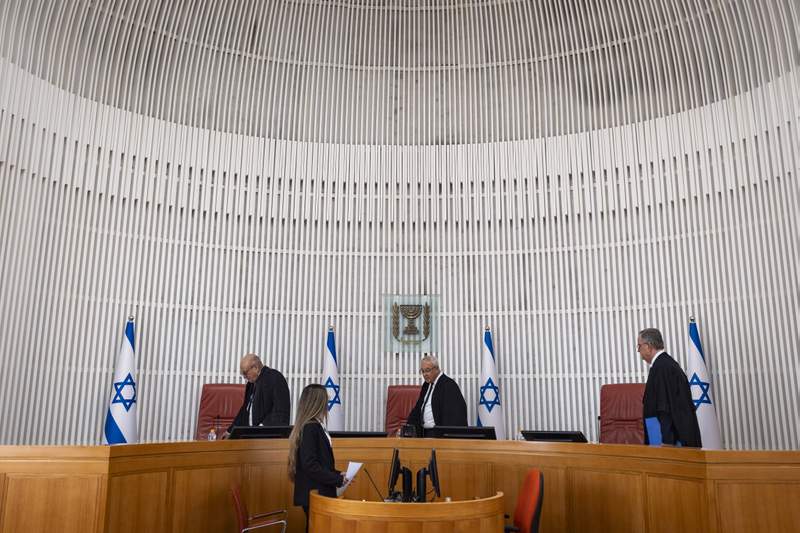
It wasn’t the air strikes, or the ever-present border disputes, that garnered headlines from the Supreme Court last week. Instead, it was an edict – one of those dry, procedural rulings that nonetheless rattles windows in every aid compound. The High Court, confirming a lower tribunal’s earlier stance, granted NGOs operating in the Gaza Strip a mere 30 days to fork over comprehensive employee lists, thereby cementing Israel’s requirement that these groups register and comply with its stringent regulatory framework. For some, it’s a security necessity; for others, an administrative nightmare engineered to impede essential work.
“We can’t just turn a blind eye to who’s moving funds or personnel in an area governed by a recognized terrorist entity,” stated Major General (Res.) Gideon Bar-Lev, a security analyst frequently advising Israeli officials. He spoke to Policy Wire with an almost weary certitude, “It’s about safeguarding our citizens. Every government has a right, a duty, to know who’s operating within its sphere of influence, particularly when facing asymmetric threats. And these lists? They’re a baseline requirement, not some insurmountable obstacle.” It’s a familiar refrain from Jerusalem – security, security, always security.
But humanitarian workers view it through a different lens. For them, it’s not just forms; it’s lives on the line. And there’s already so much strain. More than 80% of Gaza’s population relies on humanitarian aid for their basic survival, according to the United Nations Office for the Coordination of Humanitarian Affairs (OCHA) – a sobering figure that hammers home just how precarious life is there.
“We operate under immense pressure, navigating bombed-out infrastructure and Byzantine access restrictions every single day,” lamented Dr. Zahra Abdullah, the regional director for a prominent international medical aid organization, when contacted for comment. “Asking us to hand over sensitive employee data, potentially exposing our staff to undue scrutiny or risk, complicates everything. It doesn’t just impact logistics; it erodes trust with the very communities we’re trying to help. We’re already transparent, or we can’t operate.” She’s got a point. Many worry about the chilling effect such demands might have.
The High Court’s ruling, while nominally administrative, feeds into a broader global discussion about NGO autonomy versus state sovereignty, especially in conflict zones. It’s a dance countries like Pakistan — and other nations across South Asia or the wider Muslim world know well. Governments in those regions, too, have often leaned on security concerns to tighten oversight, sometimes drastically, on foreign-funded NGOs. From Islamabad’s strict registration requirements to Riyadh’s cautious vetting of international charities, the playbook isn’t entirely new. Because when you’ve got regional instability and external actors, control always becomes the immediate obsession of national security apparatuses. And sometimes, that comes at the expense of independent action.
This decision, essentially affirming the validity of Israel’s existing NGO registration law in this context, effectively draws a harder line. It’s a clear message: operate here, under these specific, Israeli-defined terms, or don’t operate at all. The ruling doesn’t introduce a novel law; it upholds the force of an existing one in its application to a contentious, critical theater of operations. But by compelling compliance within a tight 30-day window, it ratchets up the pressure, perhaps forcing some smaller, more vulnerable groups into impossible choices.
And let’s be honest: donor countries, often wary of aid diversion allegations, might quietly welcome this extra layer of scrutiny. They fund these groups, sure, but they’re also under pressure from their own electorates to ensure aid doesn’t end up in the wrong hands. It’s a pragmatic stance, if not always a particularly humane one for those trying to get food and medicine to people who desperately need it. But such is the delicate, often contradictory, balance in the world of diplomacy and defence.
What This Means
The Israeli High Court’s affirmation isn’t just a localized judicial squabble; it carries hefty political and economic implications. Politically, it signals a reinforced Israeli assertion of administrative control over Gaza, irrespective of its governance by Hamas. This could further complicate the already frayed relationships with international donor agencies and partner nations who value the perceived neutrality and independence of humanitarian organizations. It places international law pertaining to humanitarian space in direct tension with state security narratives – a long-running, messy conflict. This precedent could embolden other states in volatile regions to demand similar granular transparency from NGOs, effectively chilling humanitarian endeavors globally by making operational risks too high, especially for local staff who are often targets.
Economically, the impact on aid delivery could be immediate — and profound. Many NGOs, particularly those focused on sensitive programs or working with vulnerable populations, may struggle to meet the demand within the aggressive timeframe. They’re often short-staffed — and overwhelmed as it’s. A failure to comply could mean loss of operational licenses, disruption of services, and a further squeeze on the flow of essential goods and services into Gaza, already an enclave teetering on the brink of humanitarian collapse. It doesn’t help strategic partnerships in a shifting security landscape if aid channels are continuously throttled. Don’t expect things to get easier for anyone on the ground. This isn’t just about forms; it’s about control, plain and simple.