


Laos Cave Ordeal: Minerals, Mud, and the Perilous Pursuit of Prosperity
POLICY WIRE — Xaisomboun Province, Laos — It’s never about the adventure. Rarely, actually. Because deep in the rugged hinterlands of Xaisomboun, some 120 kilometers (75 miles) north of Vientiane,...

POLICY WIRE — Xaisomboun Province, Laos — It’s never about the adventure. Rarely, actually. Because deep in the rugged hinterlands of Xaisomboun, some 120 kilometers (75 miles) north of Vientiane, adventure quickly transmutes into a desperate gamble, often with life itself as the stake. A flash flood, relentless — and unforgiving, recently swallowed seven villagers. They had plunged into a cave, chasing a dream — or maybe just the bare necessities — found beneath the earth’s crust: valuable minerals.
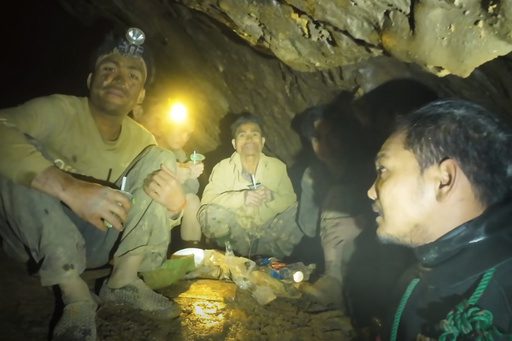
But the gamble backfired, trapping them, sealing them away for days on end. It turns out that four men, safely evacuated four villagers trapped in a flooded cave for 10 days. The day before that, another one of them was pulled out. They didn’t just walk out, mind you. These individuals were seen on stretchers, oxygen masks clamped on, bodies swaddled in foil blankets — a stark, silent tableau broadcast across social media by the joint Lao and Thai rescue groups who just about moved mountains (or, more accurately, moved water) to get them out. The desperation for a meager livelihood, however, continues to propel individuals into such precarious endeavors across the region. [QUOTE_PLACEHOLDER]
And two men remain missing. Two souls still lost to the cavern’s indifferent maw. Because even with five miraculous rescues, the shadow persists. Efforts now intensify for the remaining pair, Kengkaj Bongkawong, head of the Thai rescue group Metta Tham Rescue Kalasin, said Friday that the team plans to explore an area deeper inside the cave, about 20 to 25 meters (yards) beyond where the survivors were found. But he didn’t sugarcoat it, admitting the section is heavily flooded. Not ideal, not at all.
The original article said the villagers had reportedly entered the cave last week to look for valuable minerals before being trapped by flash flooding that blocked their way out. This narrative isn’t unique to Laos; it’s a grimly familiar refrain echoing across Southeast Asia and, indeed, into the broader Muslim world, including resource-rich but economically struggling areas of Pakistan. Impoverished communities often turn to informal mining, an unregulated sector, to eke out a living. According to the International Labour Organization, hundreds of thousands work in small-scale, often hazardous mining operations across Asia, risking their lives daily for fluctuating prices of metals and gems.
One quick-thinking villager had, fortunately, managed to escape in time, alerting authorities to the grim situation for the seven left behind. His swift action arguably set in motion the chain of events that has so far seen some success, saving five lives. The first of the trapped group was safely evacuated on Friday, a feat that, rescuers said, took about 30 minutes. Videos circulating showed this initial survivor emerging, gulping air, then grappling to pull himself through a tight, submerged passage before staggering to his feet. A grim re-enactment of birth, but into stark reality, mud-splashed — and bone-weary.
But it wasn’t just local grit at play. Rescue teams from Laos — and neighboring Thailand were joined by Japanese and Malaysian colleagues. Indonesian, French — and Australian specialists also reportedly arrived at the site. These aren’t casual visitors; several of them had participated in the much-publicized 2018 cave rescue in northern Thailand of 12 schoolboys and their soccer coach. That earlier, even more complex operation provided a playbook, certainly. But it also demonstrated the stark truth: cooperation, across borders, across languages, becomes the only option when nature rears its ugly head.
The Lao organization Rescue Volunteer for People said on its Facebook page that the water level inside the cave receded low enough for them to leave with divers who had gone in to deliver food and water. This bit of good fortune, the receding waters, was critical. The alternative, well, it’s not something you want to contemplate for villagers had reportedly entered the cave last week to look for valuable minerals before being trapped by flash flooding that blocked their way out. They’ve been through enough.
The rescued, identified by first names like Khamla, Mued, Ee, Ing and Laen, will now begin a different kind of fight: recovery. Not just physical, but psychological. What goes through your mind, alone in the dark, water rising? These aren’t professional explorers. They’re locals, driven by necessity. They just wanted to chip away at the earth for a bit of something precious, a few coins to feed the family, perhaps. But it nearly cost them everything.
What This Means
This incident, on its face a harrowing rescue story, unveils deeper policy fractures across the region. Because while the international collaboration is commendable, even uplifting, it’s a symptom, not a cure. These ‘valuable minerals’ often feed into illicit economies or unregulated supply chains, fueling a cycle of poverty and peril. Laos, like many of its neighbors, grapples with resource extraction, often in ways that prioritize profits over safety and environmental protection. There’s little oversight, especially in these remote areas. When individuals resort to informal mining, they’re essentially operating outside any protective framework. It’s a Wild West scenario, underground, with gravity — and geology as the only real sheriffs.
Politically, these emergencies can be an opportunity for regional soft power projection, as Thailand, Japan, Malaysia, and others demonstrate competence and solidarity. But they also throw a spotlight on the chronic issues of rural development and resource governance that plague countries like Laos. It highlights the urgent need for viable economic alternatives in these remote areas, because when hunger gnaws, even a flooded cave starts looking like a viable, if deadly, employment option. The search for these resources and the economic pressures behind it are a persistent issue in Asia, as discussed in “Laos Gold Chase: The Invisible Cost of Asia’s Glittering Dreams.” Unless systematic changes are made, these ‘adventures’ will continue to fill our headlines, tinged with tragic inevitability. Because sometimes, when you’re truly desperate, even a muddy, waterlogged hole in the ground seems worth the risk. It’s a stark commentary on choices constrained by economics, not choice itself.