


Pizza Proprietor’s Predicament: Smash-and-Grabbers Target the Wrong Dream
POLICY WIRE — Albuquerque, U.S. — It wasn’t the dough, the toppings, or even the latest flat-screen in Richie B’s Pizza that two sets of nocturnal visitors were after. But they still trashed...

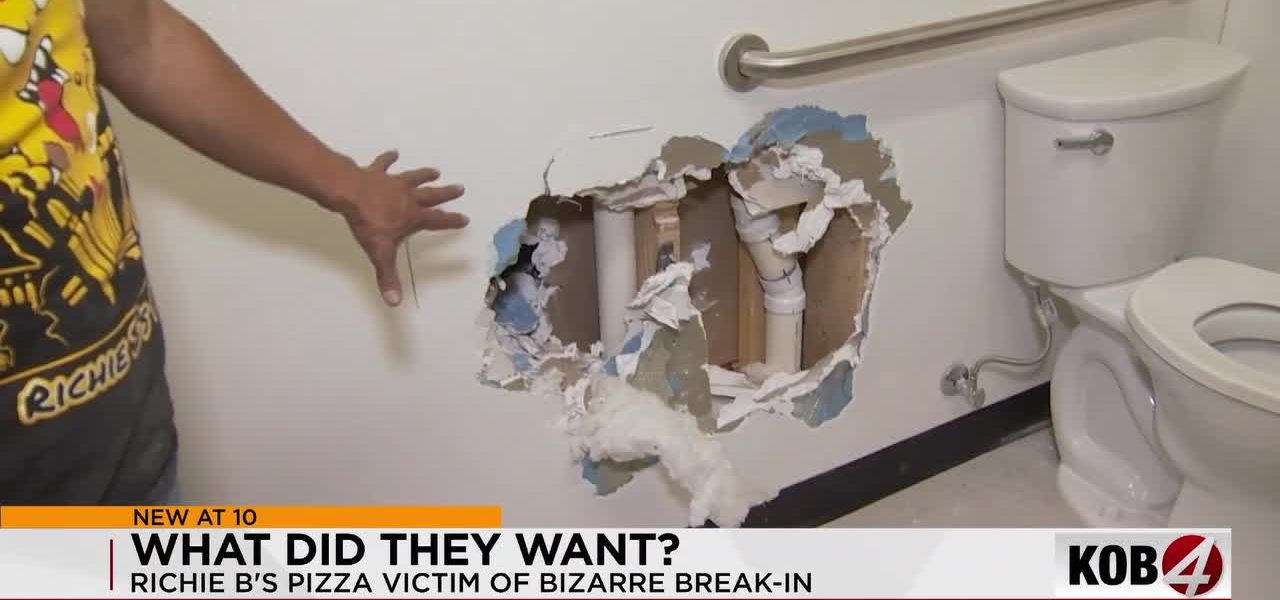
POLICY WIRE — Albuquerque, U.S. — It wasn’t the dough, the toppings, or even the latest flat-screen in Richie B’s Pizza that two sets of nocturnal visitors were after. But they still trashed the place—twice—in under two months. The scene that greeted owner Chuck Ruiz on a recent Tuesday morning wasn’t your run-of-the-mill, cash-register-grab. It was something far more bewildering, almost farcical, involving beloved children’s toys and a clumsy, albeit persistent, attempt at breaking through an internal wall, apparently aiming for the vape shop next door. Small businesses, it seems, are increasingly finding themselves in the crosshairs of schemes both opportunistic and strangely specific.
Chuck Ruiz discovered the latest mess—shattered glass, a gaping hole where drywall used to be, a veritable portrait of petty chaos—upon arriving for work. The new West Side location, barely settling into its fresh surroundings, bore the scars of a previous visit and now, another. But he isn’t losing hope, not even when facing such audacious vandalism. He told reporters that, what with the state of affairs and all, moving locations is a huge burden, and extra costs like this aren’t quite necessary; it just makes it all the harder.
What gives? Ruiz figured out pretty fast what these wannabe masterminds were likely up to. The real prize, or so it appears, wasn’t his New York-style slices or a handful of loose change, but the perceived treasures beyond the partition. They were trying to get from here to the shop next door, he later explained, and ended up breaking the toilet down on the other side. A common mistake, perhaps, for those with a singular, perhaps ill-conceived, objective in mind.
The collateral damage, beyond the structural integrity of a restroom wall, includes some baffling items: Ninja Turtles figures, given to the restaurant by appreciative customers, were gone. The shop phone, too. Gone. It means, practically speaking, customers can’t call in orders, which for a small business means lost revenue every minute. They’ll have to order online for a bit. And Ruiz, well, he’s fixing that wall, you bet he’s.
But the true cost goes beyond mere repair bills. According to the U.S. Chamber of Commerce, small businesses bear approximately 30 percent of the burden of all commercial crime, with burglaries often averaging thousands of dollars in direct losses and many more in business disruption. For a city like Albuquerque, still wrestling with its own economic currents, these localized setbacks contribute to a larger narrative of struggle and resilience. It’s a fight many small proprietors—from the bustling bazaars of Lahore to the high streets of London—understand intimately. You face these daily assaults, these small but significant threats to your very existence.
Ruiz, like many entrepreneurs across continents, sees his venture not just as a job but as the embodiment of a dream. He said with genuine grit, [QUOTE_PLACEHOLDER] His statement, a stark reminder of the personal investment poured into every local establishment, echoes the sentiment of countless business owners in cities from Karachi to Kabul, where navigating economic headwinds and localized threats is a constant reality. You’re building something against odds.
The community’s response was swift and encouraging, highlighting an oft-forgotten aspect of these unfortunate events: solidarity. After Ruiz posted about the incident on social media, help poured in. He mentioned someone responded to his post on Facebook and said that they were with a glass company, and they could come down right away to take a look at it. That’s community, right there—the sort of spontaneous mutual aid that defines neighborhoods whether in New Mexico or, for instance, in the earthquake-prone regions of Pakistan after a natural disaster, when folks just pitch in. Because when government sometimes falters, communities step up.
📄 POLICY WIRE WHITEPAPER PUBLISHED: PAKISTAN'S NATIONAL SECURITY POLICY PRIORITIES
👉 READ BY CLICKING HERELocal law enforcement, Albuquerque police, are on the case. But they haven’t explicitly said whether they buy Ruiz’s theory about the smoke shop being the real mark. Investigations are ongoing, they tell us. They also put out a call for anyone with information to contact APD. You’d hope they catch ’em, wouldn’t you?
What This Means
This localized saga in Albuquerque, while ostensibly about a pizza shop and some inept burglars, throws into sharp relief several larger societal and economic quandaries. First, it brings into question the efficacy of local policing — and community security. If petty criminals feel emboldened to attempt elaborate, destructive break-ins twice in rapid succession at a newly established business, it speaks to perceived vulnerabilities in surveillance, response times, or deterrents. This isn’t unique to American suburbs; it’s a global headache for urban planners and law enforcement in sprawling cities from Latin America to South Asia, where informal economies and fluctuating security dynamics present a constant challenge. Small business resilience often directly correlates with robust, community-centric policing, something often debated in Pakistani mega-cities where merchant associations often supplement formal security measures.
Second, the incident spotlights the precarious position of small businesses as engines of local economies. Chuck Ruiz’s dream is effectively an employment generator — and a local service provider. When such businesses face repeated, costly disruptions, their very existence is jeopardized, leading to job losses and a erosion of community services. In many Muslim-majority nations, the informal sector, largely comprised of small, family-owned enterprises, forms the backbone of the economy. Their susceptibility to crime, whether organized or haphazard, represents a significant drag on economic stability and entrepreneurship. Policies promoting small business support, robust crime prevention, and accessible victim compensation become more than just feel-good measures—they become critical economic stabilization tools.
And finally, it’s a testament to human resilience. Ruiz’s resolve, — and the swift community response, illustrate an underlying social contract. When institutions occasionally fail, communities often knit themselves together, forming vital networks of support. This communal response to adversity, whether it’s replacing shattered glass for a neighbor in New Mexico or reconstructing homes after floods in Pakistan, isn’t just charity; it’s a profound, organic display of collective identity, a kind of civic infrastructure that often kicks in when official channels lag. It’s what keeps cities breathing, honestly, through all the hiccups — and the heartbreak.