


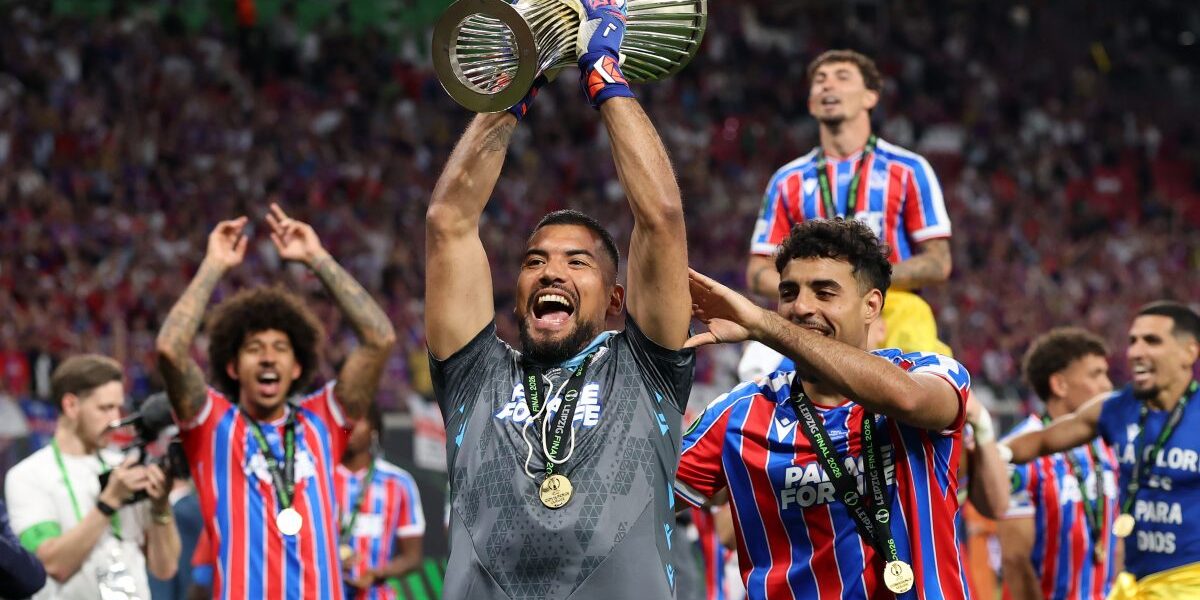
The Ballad of Benítez: A Keeper’s Quest for Belonging in Football’s Global Bazaar
POLICY WIRE — London, UK — Loyalty, in modern football, is a currency with diminishing returns. It’s often tossed around like confetti after a trophy, but the actual transaction, the cold, hard...

POLICY WIRE — London, UK — Loyalty, in modern football, is a currency with diminishing returns. It’s often tossed around like confetti after a trophy, but the actual transaction, the cold, hard reality of careers, looks more like an algorithm charting profit and loss. That’s the gritty truth lurking behind the headlines of Walter Benítez, Crystal Palace’s seemingly contented veteran keeper, who might just be packing his bags for a rather unconventional return.
It isn’t a new signing, mind you, nor a grand swoop. But Benítez, a 33-year-old Argentinian, seems to be plotting a quiet, almost defiant, exit from the opulent—if somewhat sterile—confines of Premier League football. He arrived at Crystal Palace just last summer, a seemingly astute pick-up from PSV Eindhoven, meant to provide seasoned backup. That backup role, however, has proven a rather quiet gig. A grand total of eight appearances across all competitions, with a singular, solitary outing in the cut-throat Premier League. That’s a lot of training ground hours for not a lot of glory. Because, honestly, what’s a world-class shot-stopper without a stage to perform?
Sources close to the player suggest a contract termination, an expensive act of self-liberation, could pave his path back to OGC Nice—a former love, it seems, rather than a mere employer. But let’s be straight: players don’t just bail on multi-year deals, especially ones running until 2028, on a whim. This is calculated. And it’s indicative of a larger tension in the beautiful game: the emotional pull of home versus the mercenary economics of an increasingly globalized sport.
“Walter felt something intangible in Nice; it’s where he really found his stride,” Jean-Pierre Rivere, Nice’s former co-president, is reported to have observed. “He wore the jersey with genuine passion, — and I think he misses that connection. We certainly miss him.” It speaks volumes, doesn’t it? A club elder openly courting a former player, citing sentiment, even as current structures dictate financial prudence above all. Yet, for Benítez, this potential return isn’t just about a familiar coastline; it’s a reassertion of agency in a career often dictated by the whims of others.
And let’s not pretend this is simply a love story. A space needs clearing. Yehvann Diouf, the Senegal international currently guarding Nice’s goal, is reportedly weighing his own options, an inevitable domino in this intricate global ballet of transfers. Should Diouf depart, the door for Benítez swings open. And in a refreshing, almost quaint, twist in today’s inflated market, Benítez is reportedly ready to slash his own wages—a testament to his desire, or perhaps, a hard-nosed admission that playing regular football, even at a lower pay grade, holds more intrinsic value than polishing a bench seat.
“Player welfare is always paramount, of course, but so is financial strategy,” remarked a seasoned Crystal Palace executive, speaking on background. “If a player believes his best years are elsewhere, a mutually agreeable solution often makes the most sense. It allows us to pivot resources, too.” This pragmatic stance lays bare the transactional heart of modern football, where even emotional attachments ultimately bow to balance sheets.
📄 POLICY WIRE WHITEPAPER PUBLISHED: PAKISTAN'S NATIONAL SECURITY POLICY PRIORITIES
👉 READ BY CLICKING HEREThe echoes of these micro-dramas reverberate far beyond the French Riviera or South London. Consider the staggering wealth now sloshing through the veins of European football. Last year, the Premier League, Benítez’s short-lived stage, generated a staggering €6.4 billion in revenue, as reported by Deloitte, a financial leviathan built on globalized fan engagement. Much of that revenue, and indeed the investment into clubs, now originates from far-flung corners of the world, including significant injections from the Middle East. These flows of capital reshape club identities, drive player valuations, and inform every boardroom decision, even those concerning a backup goalkeeper.
What this means, for instance, is that a fan in Lahore or Jakarta, following Nice or Palace via streaming services, becomes an unwitting participant in these market dynamics. Their viewership contributes to the revenue that, indirectly, enables clubs to sign or release players. They’re part of a vast ecosystem. And movements like Benítez’s aren’t just about his career; they’re minor tremors in a much larger, politically and economically charged global industry.
What This Means
This prospective move, while seemingly small, illuminates several pressing realities in contemporary European football. First, it highlights the intense pressure on players to secure game time, especially veterans in their twilight years. For a goalkeeper, particularly, prolonged inactivity can be a death knell. Second, it exposes the sophisticated (or sometimes cynical) financial engineering at play: clubs are willing to terminate lucrative contracts, and players to accept wage cuts, if it means realigning their sporting and economic ambitions. It’s a harsh cost-benefit analysis played out on a human scale.
Economically, Palace saves on a salary, gaining flexibility, while Nice potentially reacquires a known quantity at a discounted rate, a prudent financial maneuver if Diouf departs. Politically, the narrative leans into player power—the ability of an individual to push for their perceived self-interest, even against substantial financial barriers. But it also reinforces how football is now less about local loyalties and more about a global market for talent and entertainment, where sentiment, as much as we journalists love to harp on about it, remains largely secondary to financial efficiency and performance metrics. Even in cases like Benítez’s, where it feels like a ‘heart’ decision, the financial mechanisms at play are anything but sentimental. It’s all business, baby. It’s always business. And sometimes, business dictates you take less, to get more.