
Peru’s Electoral Integrity Under Scrutiny Following Raid on Ex-Election Chief’s Home
POLICY WIRE — Lima, Peru — Peruvian citizens, long accustomed to the unyielding maelstrom of political scandal, recently woke to startling disclosures threatening the fragile bedrock of their...

POLICY WIRE — Lima, Peru — Peruvian citizens, long accustomed to the unyielding maelstrom of political scandal, recently woke to startling disclosures threatening the fragile bedrock of their nation’s democracy.
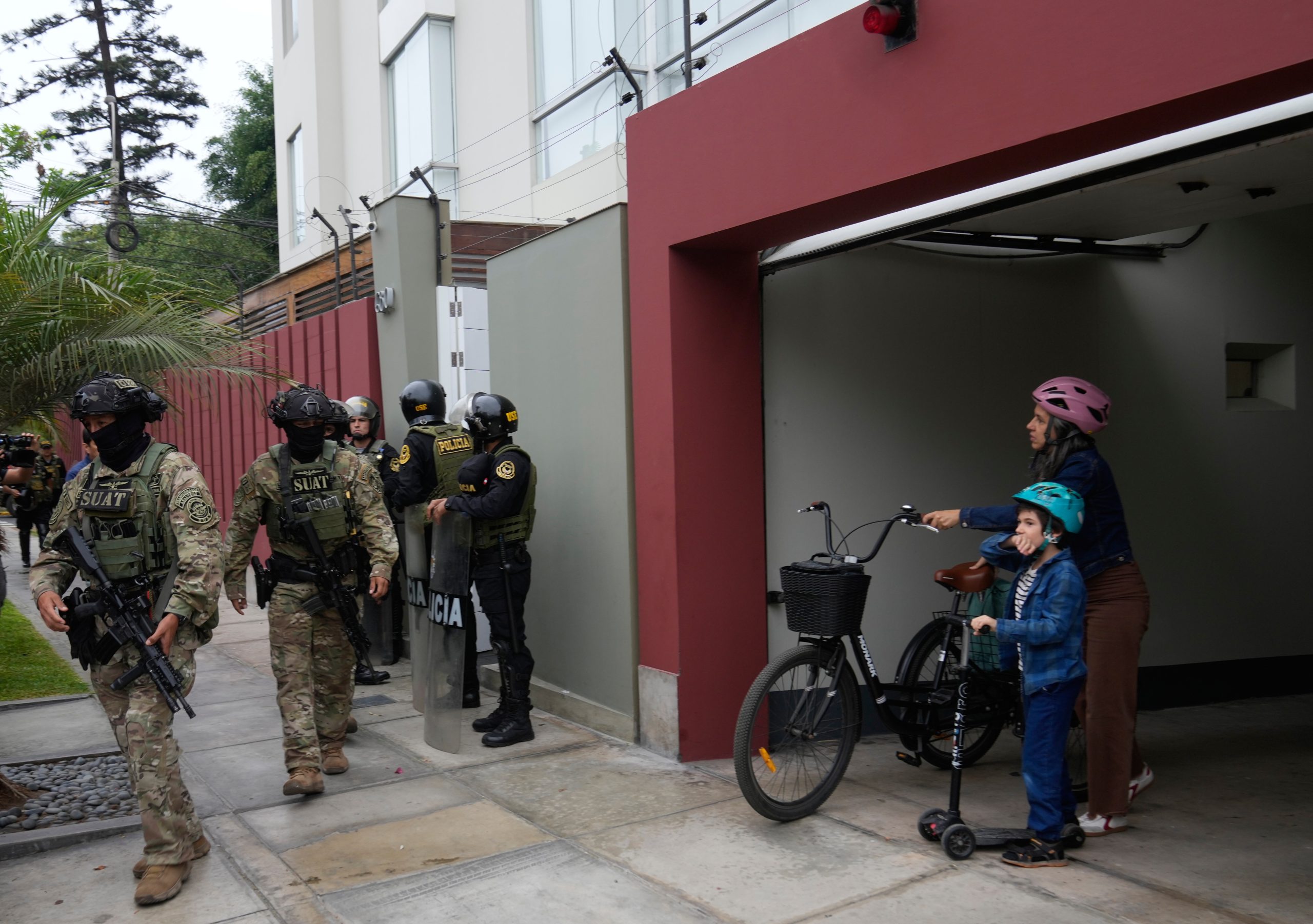
Early morning darkness didn’t deter investigators this past week. They swooped in on the home of Piero Corvetto, the country’s chief electoral honcho, executing a judicial warrant tied to a burgeoning inquest into alleged ballot irregularities and corruption within the electoral system.
For many, it’s yet another chapter in a seemingly interminable epic of institutional mistrust. Make no mistake. Never. This isn’t just about vanished documents; it’s about the very credibility of Peru’s voting process, a brittle foundation threatening to crumble under its own weight.
Behind the headlines, a subterranean torrent of public cynicism runs through the Andean nation—a veritable river of doubt, if you will. The raid on Corvetto’s residence—the man once held up as the unimpeachable sentinel of electoral rectitude, whose very presence was supposed to guarantee fairness—signifies a momentous uptick in an inquest that started quietly but has now gripped national attention like a vice.
Sources close to the investigation indicate the probe centers on alleged discrepancies in the procurement and distribution of ballots during recent municipal elections. That’s a pivotal tidbit (and frankly, a worrying one), suggesting a systemic failure rather than isolated incidents.
But not everyone sees it as a cut-and-dried legal affair. Not at all. Some political observers are quick to connect the dots to Peru’s deeply polarized political landscape.
“This government stands firm in its commitment to transparency and the eradication of corruption, no matter how high it reaches,” a spokesperson for the Ministry of Justice reportedly shot back to the press, emphasizing the executive’s unflinching determination.
And yet, such declarations often fall flat to a populace jaded by corruption scandals. Peru’s seen five presidents impeached or jailed since 2016, a statistic that underscores its endemic political volatility.
For years, international watchdogs have underscored Peru’s battles with venality. Transparency International’s 2023 Corruption Perception Index, for instance, ranked Peru 108th out of 180 countries, scoring a dismal 35 out of 100. That’s hardly a ringing endorsement of institutional strength, is it?
Still, the implications stretch far beyond Peru’s borders. The struggle for electoral integrity isn’t unique to Latin America. Across continents, from fledgling republics in Southeast Asia to venerable (yet sometimes shaky) systems in Europe, the shadow of alleged interference often eclipses public faith—a recurring, disheartening theme that democratic stalwarts simply can’t ignore.
In Pakistan, for instance, debates surrounding the fairness of past elections have frequently fueled political instability, demonstrating the universal fragility of democratic processes when trust is compromised. Related: Beyond Ballots and Bombs: Washington’s Subtle South Asia Shift
So, when electoral systems stutter, so too does a nation’s assertion of democratic bona fides. For Peru, Corvetto’s involvement, however alleged, adds a bitter irony, that.
He served as the steward of the National Office of Electoral Processes (ONPE), the very body entrusted with organizing and overseeing elections. The accusations, then, pierce the very core of the institution itself.
“Make no mistake, these are not isolated incidents,” cautioned Dr. Elena Vargas, a political analyst at Lima’s Catholic University. “Each new revelation further erodes the fragile trust citizens place in our institutions. It’s a dangerous spiral, one that threatens to undermine any future electoral outcome.”
Her words strike a chord, especially in a country where electoral disputes have often ignited societal turmoil.
The current government, led by President Dina Boluarte, already faces a credibility chasm, inheriting power after the impeachment of her predecessor, Pedro Castillo. Adding another layer of electoral doubt only inflames an already volatile political climate (which, let’s be honest, didn’t need any more fuel), making things pretty dicey.
What This Means
The raid on Corvetto’s home isn’t merely a legal formality; it’s a geopolitical tremor. For one, it significantly deepens the existing gulf of civic distrust in state institutions. Many Peruvians already view their political class with deep-seated cynicism, and revelations of alleged misconduct at the ONPE only confirm their worst fears.
Economically, this ongoing instability is bane for capital inflow. Capital tends to flee uncertainty, and a nation wrestling with persisting political tumult and allegations of electoral fraud struggles to attract the foreign direct investment it desperately needs for development.
Diplomatically, Peru’s standing as a stable democracy in Latin America continues to fray. The international community scrutinizes closely, and each headline detailing high-level corruption or democratic backsliding attenuates the country’s soft power and influence on the global stage. And it makes it harder to advocate for shared regional goals.
What’s more, the timing couldn’t be worse. With a general election theoretically on the horizon – though not immediately scheduled – these revelations could further muddle any attempts to restore order and faith in the democratic process.
The immediate future will depend heavily on the independence — and potency of Peru’s justice system. Can it pursue these allegations vigorously, without yielding to political pressure? That’s the real test here, isn’t it?
According to Ambassador William B. Taylor, a grizzled diplomat and analyst of Latin American affairs, “The strength of a nation’s democratic fabric isn’t measured by its constitution, but by the will of its institutions to uphold justice, even when the accused are powerful. For Peru, demonstrating that will now is crucial, or risk a deeper descent into political anomie.”