

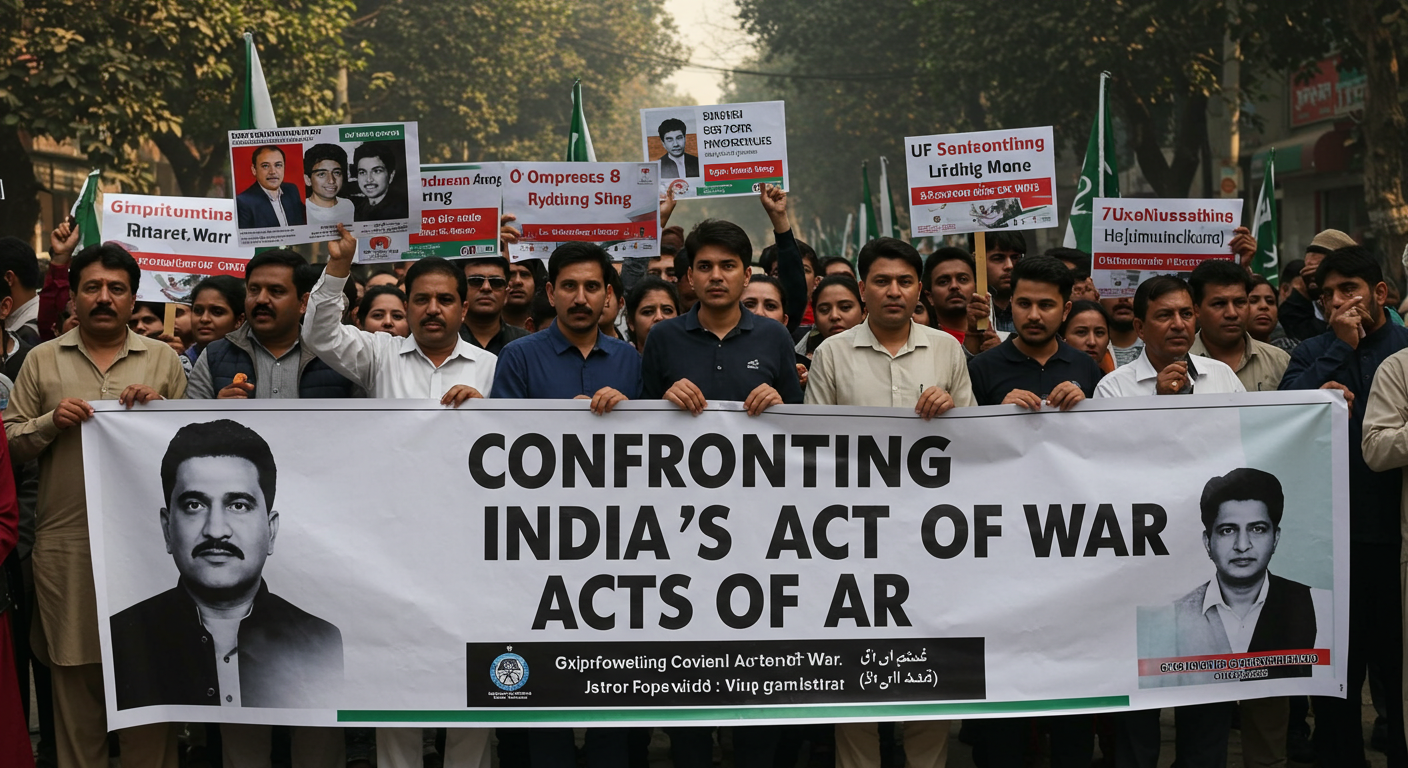
Peace Demands Justice: Confronting India’s Acts of War
India pushed too far on May 7, 2025, when it launched military attacks into Pakistan. This was neither a trivial occurrence or a typical border dispute. It was a daring act of assault that needs...

India pushed too far on May 7, 2025, when it launched military attacks into Pakistan. This was neither a trivial occurrence or a typical border dispute. It was a daring act of assault that needs immediate response from the international community. Shehbaz Sharif, the prime minister of Pakistan, recently visited Tajikistan and forthrightly requested that the world hold India responsible for what the acts of war, it conducts. This is not a request to be taken lightly. It is an essential call for justice and peace.
The history between India and Pakistan is lengthy and complex, characterized by hostility, distrust, and sporadic acts of violence. The two nations have been walking a tightrope for years, alternating between hostile and diplomatic times. However, this most recent strike is a glaring divergence from previous behavior. It is a flagrant disdain for the UN’s tenets and an outright breach of international agreements. This was not an act of defence. The stability of the entire region is at risk due to this provocation.
Pakistan has stated repeatedly that it desires peace. It has made an effort to communicate and find diplomatic solutions in spite of the aggression. However, if one side prefers force and intimidation to dialogue, there can be no peace. Prime Minister Sharif responds to the truth on the ground when he declares that Pakistan would protect its sovereignty with all of its might. Silence and obedience are not the foundations of peace.
The lack of reaction from some parts of the world is what makes the scenario even more troubling. Although India has previously acted aggressively, the international community has typically responded with caution and restraint. These responses are often dictated by economic ties and political agendas. However, quiet becomes risky when a nation flagrantly violates international law. It encourages more careless actions. It is not necessary to choose sides in order to hold India responsible. It is about defending the laws that uphold the integrity of the international system.
There are a lot of risks involved. India and Pakistan are both armed with nuclear weapons. Any mistake could have disastrous repercussions that extend well beyond their borders. These strikes could spark an unforeseen confrontation and jeopardize years of delicate peace efforts. This is becoming a threat to international peace and security rather than a regional one.
Amid all this political tension, it’s easy to forget the human side of the story. Families on both sides live with fear and uncertainty. Children grow up surrounded by conflict. Communities lose hope for a better future. The cultural ties that connect India and Pakistan are strained, but they still exist. Lasting peace will only be possible when mutual respect replaces hostility.
When Pakistan demands accountability, it is not calling for punishment. It is asking for fairness. No country, big or small, should be allowed to break the rules without consequences. The foundation of peace is that “everyone” plays by the same laws.
Pakistan has made genuine offers to engage in discussion. However, two willing parties are needed for peace. Peace is not threatened by the defence of sovereignty. It is essential to attain it. Any long-lasting agreement is built on respect for one another’s rights.
The role of the international community is indispensable. Ignoring India’s transgressions erodes global institutions and promotes further hostilities. The world needs to make it abundantly evident that peace is a shared duty and that sovereignty matters.
We must, however, cut through the clutter. India’s official pronouncements frequently misrepresent the facts in order to justify aggression. The international community must insist on open, sincere discussions grounded in facts rather than sensationalism. Tensions cannot be eased until actual truth is presented.
There are also causes for optimism. The recent economic and security collaboration between Pakistan and Tajikistan demonstrates how neighbors can cooperate rather than compete. These collaborations provide an example of what may occur when communication and respect are valued.
On closer inspection, the animosity between India and Pakistan has persisted for far too long. Every battle cycle causes lasting wounds. However, real peace progress has been glacial. Only if the world takes action will this latest crisis have the potential to become a turning point.
Cross-border strikes will have devastating repercussions if they are adopted as the norm. It will have an impact on global stability and peace in addition to South Asia. International relations guidelines rely on holding nations responsible.
Pakistan has shown a desire to abide by these regulations. Its persistent appeals for communication demonstrate a dedication to concord and advancement. Peace, however, cannot be unilateral. That pledge has been broken by India’s recent actions.
The world has to make a decision. Either disregard these infractions and run the risk of anarchy, or defend the rule of law, stability, and justice. The right decision is clear.
The goal of Prime Minister Sharif’s accountability demand is not to incite hostilities. It is an appeal for hope and justice. In order for peace to fully materialize, it calls on everyone to hold those who violate the law accountable.
In a region molded by history and adversity, peace is elusive but worthwhile. Everyone involved needs to be sincere, determined, and conciliatory. It entails eschewing violence and supporting open communication.
India’s actions present both a threat and a chance for progress. the opportunity for the world to uphold moral standards, encourage peace initiatives, and ensure that violence in South Asia does not reemerge.
Now is the moment to take measures. The world needs to pay heed to Pakistan’s appeal and hold India responsible. Only then can the region start to heal and progress towards mutual respect, collaboration, and enduring peace.
Author