


Digital Ghosts: Tiananmen’s Shadow Weaponized in Cyberspace Misinformation Campaign
POLICY WIRE — Washington, D.C. — It’s an old ghost in new digital clothing. Nearly thirty-five years on, the specter of Tiananmen Square continues to haunt — and, apparently,...

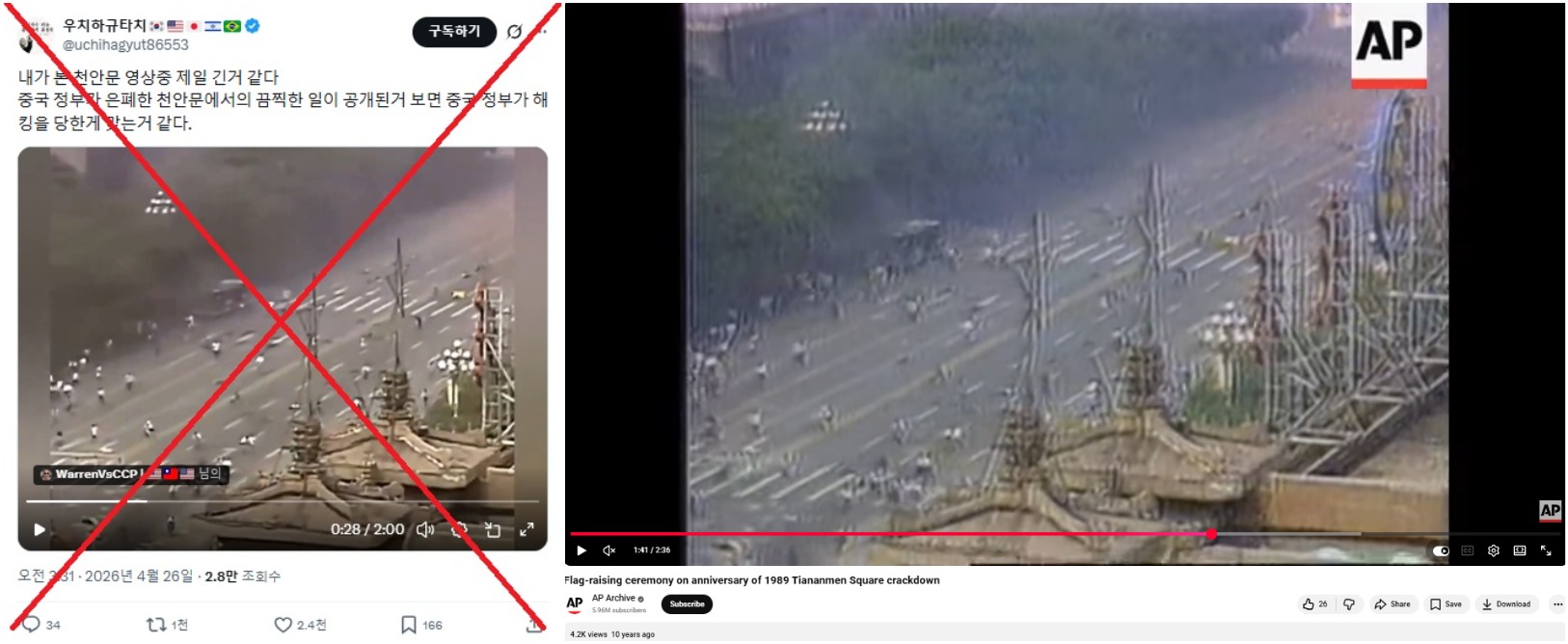
POLICY WIRE — Washington, D.C. — It’s an old ghost in new digital clothing. Nearly thirty-five years on, the specter of Tiananmen Square continues to haunt — and, apparently, to serve — a narrative. A recent rash of widely shared videos, purporting to show the harrowing events of June 4, 1989, weren’t just historical reminders; they were disinformation, spun as fresh evidence of a supposed major cyberattack on Beijing. And folks, that’s a pretty cynical play.
The footage, clearly dating back to the brutal crackdown on student protestors, circulated rapidly across various social media platforms — platforms often notoriously slow to curb coordinated falsehoods. What gives? Analysts say it’s a deliberate, calculated effort to confuse, mislead, and perhaps — just perhaps — test the waters for future, more sophisticated propaganda tactics. It’s not just about what’s in the video; it’s about the malicious lie tacked onto it.
Because, let’s be clear: there was no massive, public cyberattack — not one leading to tanks in the streets — that’s been credibly reported anywhere near the current timeframe. It’s anachronistic nonsense, plain — and simple. But when something resonates with historical pain and current anxieties about Chinese state control, well, facts sometimes take a back seat. Dr. Anya Sharma, Director of the Digital Rights Foundation, didn’t mince words. "It’s a textbook play from the disinformation playbook, weaponizing historical trauma to sow confusion and erode trust. They’re counting on folks not bothering to check the timestamp, or — worse — actively wanting to believe."
This incident isn’t some isolated online goof. It reflects a wider, more disturbing trend where state-sponsored actors — or groups looking to stoke chaos — are repurposing historical atrocities for contemporary digital warfare. Consider the recent report from the International Centre for Cybercrime Prevention, a Brussels-based think tank; they recently clocked a 40% surge in state-sponsored digital disinformation campaigns targeting historical narratives globally over the past two years. Think about that for a second. The past is becoming a weapon.
And where does all this digital debris land? Often, it cascades through information ecosystems already susceptible to political polarization — and nationalist fervor. Take countries like Pakistan or Bangladesh; they’re incredibly online, yet digital literacy initiatives often struggle to keep pace with the sheer volume of manipulated content. China’s growing footprint — particularly its Belt and Road Initiative, which ties Beijing’s influence into critical infrastructure — adds another layer. Information about China, positive or negative, often comes under intense scrutiny and, let’s say, *management*. When old narratives are hijacked like this, it just muddy’s already murky waters for millions of internet users across South Asia, for instance.
Chinese officials, predictably, have offered a terse dismissal. "Certain hostile elements abroad continue their relentless campaign to destabilize our nation, peddling discredited propaganda," remarked Zhao Lijian, a spokesperson for China’s Ministry of Foreign Affairs, in a statement to state media, without directly acknowledging the Tiananmen footage itself. "Their efforts are futile. The Chinese people recognize the prosperity and stability we’ve achieved." It’s the standard refrain, an impenetrable wall against critique, regardless of what’s being peddled.
But there’s more to it, obviously. This kind of recycling speaks to China’s hypersensitivity about its own history, particularly events like Tiananmen, which remain censored within the Great Firewall. Any mention, however distorted, pokes at a raw nerve. For external actors — if indeed this was an external operation — weaponizing such a deeply symbolic event acts as a powerful, if misleading, signal of Beijing’s vulnerabilities.
What This Means
This incident isn’t just about debunking a bad viral video; it’s a microcosm of the contemporary information war, and its political and economic implications are far-reaching. Politically, it signals a renewed brazenness in leveraging historical trauma for immediate propaganda gains. Governments — democratic — and autocratic alike — grapple with narratives. But weaponizing collective memory, distorting horrific events, that’s a line we’re seeing crossed with unsettling frequency. It erodes trust, not just in specific reports, but in the entire concept of objective truth. How do you govern a populace that can’t agree on what happened five minutes ago, let alone three decades back?
Economically, it’s disruptive. False alarms, especially those hinting at widespread unrest, can trigger market volatility, scare away foreign investment, and generally add a thick layer of uncertainty to an already turbulent global stage. Imagine the impact if this particular fabrication had genuinely gained traction — the economic ripples would’ve been immediate. For powers like China, heavily reliant on a stable image for its global economic aspirations, any crack in that facade is a calculated risk for adversaries. It also raises questions about the sheer scale of the "digital immune system" needed to fend off such attacks; what’s the cost, literally, of filtering every piece of dubious content, especially when it targets deep-seated geopolitical anxieties?
It’s clear, the battle for hearts — and minds isn’t fought with tanks anymore — it’s fought with bytes. And in this battle, historical context, sometimes distorted, sometimes just plain made up, is proving to be a rather effective — and insidious — weapon. The fact that the story had any traction at all should make everyone concerned about the future of truth online. It should.