

Patriots Go For Broke: High Stakes, Higher Expectations as Kraft Rolls the Dice
POLICY WIRE — Foxborough, MA — It’s a cruel game, this professional football business. One minute you’re lauded, etched into lore. The next? Yesterday’s news, watching from the...

POLICY WIRE — Foxborough, MA — It’s a cruel game, this professional football business. One minute you’re lauded, etched into lore. The next? Yesterday’s news, watching from the sidelines as the market dictates your worth, or lack thereof. Nobody’s immune. Not the grizzled veterans, and certainly not the franchises clinging to past glory while trying to outrun Father Time—and salary cap accountants. The NFL, a global behemoth of economics and sheer brute force, routinely forces teams into existential choices: rebuild patiently, or bet big?
And boy, have the New England Patriots placed a hefty wager. Not on a futures contract for a new stadium snack vendor, mind you, but on pure, unadulterated talent, pushing their chips directly onto the table with the recent acquisition of star wide receiver A.J. Brown from the Philadelphia Eagles. They shelled out a 2028 first-round pick and a 2027 fifth-rounder for the privilege, effectively telling everyone they’re done with the half-measures. It’s an eye-popping exchange, given the premium on future assets these days, particularly one so far out.
But that’s just how the game works. When you’re trying to inject life into a stagnant legacy—and let’s be frank, that’s what the post-Brady era has been for New England—you don’t tiptoe. You stride in, checkbook swinging. Because, as everyone knows, fan patience is a finite resource, shorter than an August training camp. And let’s not forget, they’ve already poured serious cash into the receiver room this offseason, signing Romeo Doubs to a contract worth up to $80 million.
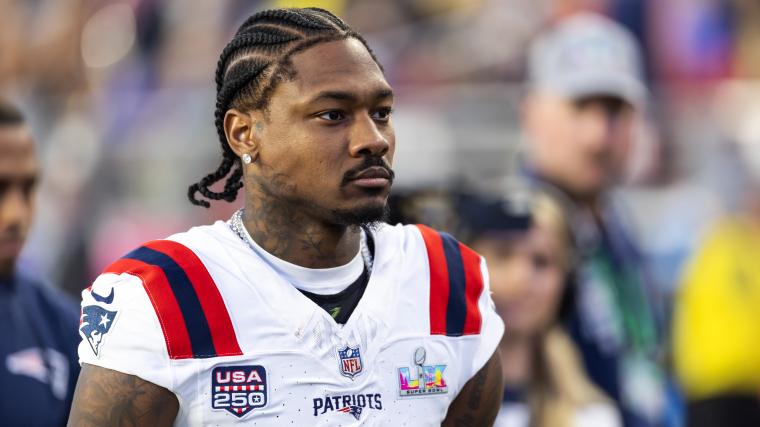
This aggressive posture begs a bigger question: If you’re truly all-in, do you really stop short of acquiring every available game-changer? Whispers across the league suggest one tantalizing piece remains: Stefon Diggs. The former Buffalo Bills Pro Bowler, still without a new home, was a 1,000-yard receiver last season, a feat not to be dismissed. Adding Diggs alongside Brown and Doubs would create an offensive triumvirate formidable enough to give even the league’s best defensive coordinators night sweats. But bringing him aboard—especially after his messy departure from Buffalo—comes with its own complications.
“Look, when you make a move like the A.J. Brown trade, you’re not sending a subtle message. You’re firing a cannonball,” offered an exasperated Eliot Wolf, the Patriots’ general manager (sources close to the organization confirming this sentiment). “We’re committed to winning. Period. If there are opportunities to get significantly better, to put our quarterback, Drake Maye, in the absolute best position to succeed immediately, then it’s our job to explore them. This isn’t about playing for next year or the year after. It’s about getting back to contention right now.” That’s the mantra coming out of Foxborough: now.
Right now, the theoretical third receiver for New England would be Kayshon Boutte. But Boutte’s reportedly looking for a bigger role and working out away from the team this offseason; a trade could be imminent. Should he depart, the Patriots are looking at Mack Hollins, Demario Douglas, — and Kyle Williams behind their top two. Solid guys, sure, but not exactly lighting up highlight reels. Diggs, on a team-friendly deal — and that’s the kicker here — would immediately be the team’s third-best, maybe even second-best, pass catcher. He’s certainly better than the existing depth. But would it stunt the growth of younger talents like Williams, who’ll need more reps if Hollins and Douglas walk next season as free agents?
“It’s a brutal chess match, always has been. Every ‘all-in’ move carries significant future cost, whether it’s draft capital, cap space, or sacrificing the long-term vision for short-term gratification,” remarked veteran NFL analyst Greg Rosenthal, known for his no-nonsense assessments. “And Diggs, with his history — and salary expectations, complicates any clean narrative. They’d need him at a discount, period. His market isn’t what it once was, but his talent? Still very much there. The question isn’t ‘can they win with him?’ It’s ‘can they afford not to, given the recent outlay?’”
Indeed. This aggressive maneuver isn’t just about football; it’s a global statement. Much like corporations vie for talent and market share across burgeoning economies in Asia, a franchise like the Patriots now engages in an increasingly cutthroat international market for attention and allegiance. Players like Brown and Diggs aren’t just local heroes; their jerseys sell, their highlights play in Islamabad and Jakarta, drawing eyes and brand loyalty from places like Pakistan, where NFL viewership, though nascent, is steadily growing thanks to readily available digital content and social media. Their collective star power boosts a league aiming to dominate sports consumption everywhere. This isn’t just sports; it’s an extension of American cultural influence and soft power, operating on the logic of cold, hard capital. Case in point: the business of loyalty often comes down to who’s paying most, and who’s delivering immediately. Last season, the New England Patriots ranked 23rd in the league for total offense, averaging just 285.9 yards per game—a stark drop from their dynastic peaks (ESPN Stats & Information).
What This Means
This ‘go-for-broke’ strategy from the Patriots’ front office carries seismic implications, both on the field and for the organizational culture. Politically within the locker room, it sends an unambiguous message: the time for patient rebuilding is over. Players will feel the pressure, especially the younger ones whose roles might be minimized in favor of established, higher-priced talent. It suggests the franchise believes its competitive window, after several years in the wilderness, is either opening *now* or they risk sinking further into irrelevance—a fate for fading giants. From an economic perspective, this means higher cap hits for years to come, a strategic tightening of financial flexibility. If these expensive, short-term bets don’t immediately translate into significant playoff success, the team could face a serious reckoning down the line, potentially needing another full-scale overhaul when those future draft picks that were traded away might have offered cheaper, long-term solutions. It’s a classic high-risk, high-reward proposition: immediate gratification for a steeper price tomorrow. But, sometimes, you’ve just gotta take the swing.
And that’s exactly what Robert Kraft — and company appear to be doing. No more pussyfooting around the edges. This is an assertive play, a direct challenge to the AFC’s dominant forces. The pressure now ratchets up exponentially for Maye — and the entire coaching staff. They’ve been handed the keys to a potentially high-octane offense. Fail to start it up, and the fallout will be as expensive as the trade itself.