
Thunder’s Cold Logic: The Business of Loyalty, Betrayed Dreams, and a Rookie’s Ascension
POLICY WIRE — Oklahoma City, USA — In the relentless, often unfeeling calculus of professional sports, sentiment makes for poor spreadsheet entries. Loyalty, that most human of virtues, tends to wilt...

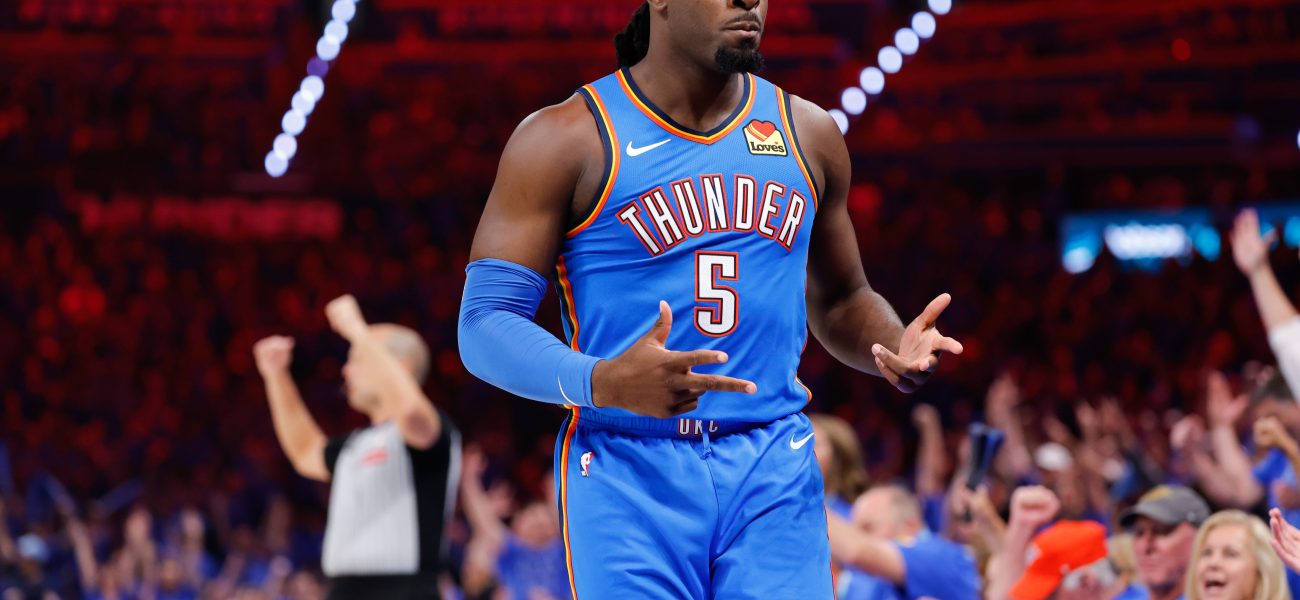
POLICY WIRE — Oklahoma City, USA — In the relentless, often unfeeling calculus of professional sports, sentiment makes for poor spreadsheet entries. Loyalty, that most human of virtues, tends to wilt under the unforgiving glare of cap space — and ascending talent. This brutal equation is now confronting Lu Dort, a veteran forward for the Oklahoma City Thunder, whose fervent desire to remain with the team—a sentiment he voiced with raw honesty this week—runs headlong into the franchise’s colder, harder realities.
It’s a story as old as the game itself: the reliable workhorse, once indispensable, watching the next generation warm up on the sidelines. For Dort, this season has been a protracted public evaluation. His minutes dwindled. His usually tenacious perimeter defense lost some of its snarl. And that outside jumper? It largely abandoned him, dropping from a respectable 41.2% in his championship year to a noticeably shaky 34.4% this past season. You can’t outrun those numbers, not in this league.
By the time the playoffs rolled around, Dort found himself largely on the outside looking in. He clocked a mere 16 minutes in OKC’s crucial Game 7 Western Conference defeat to the San Antonio Spurs, a stark contrast to his past heroics. The young gun, Cason Wallace, had not just knocked on the door, he’d kicked it down — and settled into the armchair. This isn’t just a passing phase—it’s a changing of the guard.
Yet, Dort, still very much an emotional fixture for the team, held out hope. “I have a lot of trust in this organization and in Sam,” he said, referencing Thunder General Manager Sam Presti, his voice carrying the faint echo of a player whose career had blossomed from an undrafted longshot into an All-Defense cornerstone. “This organization — and this city have really shaped me as a person and as a player. So the conversation is going to happen. My main goal is to stay here. This is like a home to me.”
And you believe him. You really do. But belief — and bottom lines are two very different animals. The Thunder hold a $17.7 million team option on Dort for the 2026-27 season. But when you’re talking about an organization famously dedicated to long-term control and strategic asset management, that decision might have been sealed months ago, perhaps when they opted against offering him an extension last summer.
Sam Presti, ever the architect, often speaks in broad strokes about “sustainable excellence” and “dynamic asset allocation”—terms that, translated for the common fan, mean making tough choices when opportunities arise. While Presti himself didn’t directly address Dort’s recent statements, a sentiment often echoed from within the Thunder’s tightly run front office suggests an unwavering commitment to fiscal prudence and evolving talent. “Our responsibility,” a source familiar with the team’s philosophy articulated last season, “is to continually evaluate performance, market value, and the optimal pathway for our long-term competitive health. Those decisions, while difficult, are made with the singular goal of securing our collective future.” That future, it seems, has Cason Wallace penciled in, who became a first-time All-Defense member himself this season and was, quite frankly, one of OKC’s most consistent playoff performers.
The Thunder, like many businesses in a hyper-competitive global marketplace, prioritize efficiency above all. They aren’t looking to pay an older model for a younger model’s job, especially when the younger model is ready, eager, and far cheaper. This isn’t just about basketball, it’s about capital — a cold reality understood across continents, from Silicon Valley start-ups to textile factories in Karachi, where raw talent, even at its peak, can be swiftly supplanted by a newer, leaner, or more specialized offering. Think about it: how often does a star athlete, having aged out of their prime performance window in one league, find their way to a burgeoning market overseas? Or how, conversely, aspiring talents from places like Lahore or Dhaka view entry into the major international sports leagues as a monumental economic, not just athletic, leap.
Dort’s tale isn’t just local heartache; it’s a micro-drama mirroring the larger economic shifts seen in global talent markets, where emerging players — much like nascent industries in developing economies — challenge established order. The globalized sporting landscape, with its rigorous analytics and ruthless pursuit of marginal gains, ensures no position is sacred, no tenure truly ironclad. As NBA analytics continue to evolve, every drop in efficiency, every slippage in form, becomes a glaring red flag.
What This Means
This likely separation represents more than just a roster change for the Oklahoma City Thunder; it’s a declarative statement on their organizational philosophy. They’re doubling down on youthful ascension, valuing potential and peak efficiency over the proven, but possibly depreciating, asset. It signals that no player, regardless of past contributions or emotional ties, is immune to the business end of basketball operations when a clearer, more cost-effective path emerges. For veteran players across the league, it’s a stark reminder that even those who embody a franchise’s grit and ethos must continually perform or be prepared for the chopping block. The implications for player-management trust could be subtle, as players weighing loyalty vs. self-interest see such scenarios unfold. And for the Thunder, it cements their image as an organization that prioritizes methodical, often cold, optimization above all. Their aggressive pursuit of younger, versatile talent underscores a broader league trend, hinting at how smaller markets (Oklahoma City’s economic footprint notwithstanding) can stay competitive in an era dominated by coastal juggernauts.
But make no mistake, even in the era of advanced metrics — and soulless contracts, the human element leaves its mark. Dort’s genuine desire to stay, to fight for a place in a home he helped build, resonates. But, in the Thunder’s world, a heart doesn’t show up on a balance sheet. The NBA, you see, is a cyclical business; roster continuity gives way to renovation. This isn’t the first time, and it won’t be the last, that a deeply loved player faces the music, forced to find a new stage even when the old one still feels like hallowed ground. As another seasoned reporter recently put it when discussing a similar struggle in South Florida, “Sometimes, ‘home’ is just where the locker room used to be.”