


Maine’s Senate Scrum: An Implosion Ignites a Democratic Race Against the Clock
PORTLAND, Maine — It’s a political truism often uttered but rarely seen in such stark relief: one person’s calamity is another’s coveted opening. And right now, Maine’s Democratic landscape is a...

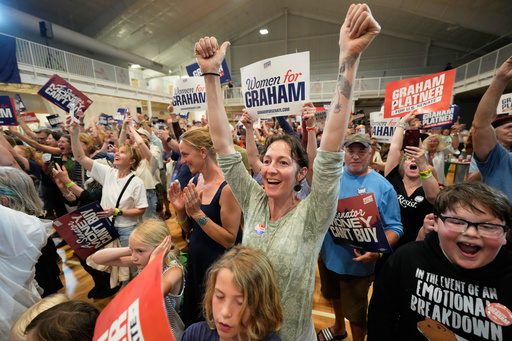
PORTLAND, Maine — It’s a political truism often uttered but rarely seen in such stark relief: one person’s calamity is another’s coveted opening. And right now, Maine’s Democratic landscape is a scramble of ambition and opportunity after progressive Senate hopeful Graham Platner’s swift exit following a sexual assault allegation. This wasn’t some slow-burning retirement announcement; it was a sudden, seismic jolt, unleashing a frantic jockeying among Democrats to snag what was until recently considered a guaranteed — albeit tough — shot at a U.S. Senate seat. They’ve got until July 27, by state law, to make it happen, leaving precious little time, just shy of four months, before election day.
The Democratic Party in Maine, grappling with this unexpected vacuum, plans a nominating convention to anoint a new champion. We’re talking hundreds of delegates from across the state – a process usually unfolding with all the deliberate speed of bureaucracy, now compressed into a high-stakes sprint. The mechanics, the timing? Still nebulous, to put it mildly. But a long list of contenders, some with previous burns from electoral defeat, are stepping up, convinced they’re the one to turn this democratic mishap into a Republican downfall.
Take Troy Jackson, for instance. A former state Senate president, he didn’t waste a breath. Almost immediately after Platner’s declaration, Jackson launched his own bid, arguing that Mainers want “a progressive fighter.” Our Revolution, Senator Bernie Sanders’s influential organization, has already pledged its support to the 58-year-old. Jackson quickly bolstered his campaign with a lengthy list of endorsements from current and former state and local officials. But does a progressive fighter with a history of past electoral losses—he lost the gubernatorial nomination earlier this year—have the broad appeal necessary?
Then there’s Nirav Shah, erstwhile director of Maine’s CDC, who finished second in the Democratic gubernatorial primary this year. Shah, often pegged as the moderate counterweight to the more left-leaning contenders, encouraged Platner’s previous base to join his effort, stating that, “You have an important place in this campaign and we welcome your voices,” and “This campaign represents the values that we all care about.” It’s a pitch designed to unite, to paper over the ideological divides that often plague primary contests. Will it stick, though, with the party’s more activist wing still reeling from Platner’s collapse?
Even a beer magnate has thrown his hat in the ring. Dan Kleban, co-founder of Maine Beer Company, confirmed his candidacy post-Platner’s announcement. He had a brief flirtation with the Senate race last year before dropping out, endorsing then-gubernatorial hopeful Gov. Janet Mills (who herself isn’t hinting at interest this time around). Kleban, 49, declares, [QUOTE_PLACEHOLDER] That sounds like a soundbite, yes, but in this volatile climate, a fresh face often carries more weight than seasoned rhetoric.
Shenna Bellows, Maine’s Secretary of State, adds her name to the growing roster. She’s built a career “taking on tough fights and doing the right thing,” having served as a civil liberties advocate and locking horns with former President Donald Trump over ballot access. Bellows, 51, isn’t new to bruising battles—she placed fourth in June’s Democratic gubernatorial primary and, significantly, ran against current Republican Senator Susan Collins in 2014, losing in what many described as a landslide. Experience? Sure. But also, previous losses are hard to shake. It’s a curious bet, a kind of political Groundhog Day for Bellows.
Jordan Wood, 36, initially eyed a Senate run last year but diverted to the state’s 2nd District race, only to come in third. Now he’s back, articulating a robust progressive vision. On social media, he’s made his stance crystal clear: [QUOTE_PLACEHOLDER] That’s a bold line, indeed. And for a party desperate to find someone who can truly ignite the base, this sort of unvarnished messaging might just resonate. Perhaps the very straightforwardness of this position will cut through the fog.
The youth vote has a presence, too. Paige Loud, a 29-year-old social worker, had a go in the 2nd District Democratic primary — and finished last. Now she’s also filed paperwork for the Senate seat. Veteran state lawmaker Valli Geiger, 70, a prior Platner supporter, is still mulling it over but noted in an interview with MS NOW that she’d snap up Platner’s team, describing them as “deeply impassioned and confident young people.” And David Costello, who came in third in the June primary behind Platner, is officially back in, saying his “lived experiences are rooted in the same challenges countless Mainers face every day.”
📄 POLICY WIRE WHITEPAPER PUBLISHED: PAKISTAN'S NATIONAL SECURITY POLICY PRIORITIES
👉 READ BY CLICKING HEREThis entire rapid-fire re-calibration of the Maine political field could serve as a micro-study in the unpredictable dynamics of electoral politics across various democracies. Just as a sudden scandal can destabilize a governing coalition in Islamabad, forcing rapid, behind-the-scenes negotiations, this Mainer upheaval underscores how fragile political trajectories can be. Reputations, carefully built or quickly shattered, dictate who stands a chance in such high-stakes arenas, often pushing seasoned politicians aside for unexpected figures. In the same way, the influence of money, as seen in funding for Our Revolution’s endorsement, also drives the outcome. For Democrats nationally, eyeing every potential path to reclaiming a majority, the messy spectacle unfolding in Maine is far more than local news; it’s a high-tension drama that could sway the national balance of power, a U.S. Senate which was most recently balanced at 50-50, requiring a Vice Presidential tie-breaking vote.
What This Means
This isn’t just about Maine; it’s a sharp microcosm of the Democratic Party’s ongoing struggle for national identity and strategic clarity, amplified by circumstance. Losing Platner, even under a cloud, forces a re-evaluation of what voters — particularly swing voters in a state like Maine that can go either way — are actually looking for. Do they double down on an aggressive progressive stance, as Wood advocates, or opt for a more moderate, broadly palatable candidate like Shah? It’s a classic dilemma for the party that plays out in every election cycle, only here, it’s accelerated to a fever pitch. A weak candidate, chosen in haste, could easily squander what’s seen by the national party as a golden opportunity to flip a seat that’s long been out of reach.
Economically, a truly contested Senate race often means a deluge of outside money. Expect Super PACs and national party committees to pour cash into Maine, transforming its local media markets into a battleground of political advertising. Fundraising capacity will now become paramount for the chosen nominee, who will have little time to build a robust war chest against Collins’ likely established financial strength. The sudden loss of their primary choice means a delayed and compressed fundraising cycle, a distinct disadvantage against an entrenched incumbent.
But the biggest implication for Democrats is simply that time isn’t on their side. A party convention, with its inherent delays and potential for internal wrangling, takes precious weeks away from campaigning. Each day spent debating nominees internally is a day not spent introducing a fresh face to the electorate and, crucially, attacking the incumbent. It hands an immediate and considerable advantage to Senator Collins, who can continue to campaign unburdened by internal party chaos. This entire episode will test the organizational muscle of the Maine Democratic Party, challenging them to find a consensus candidate quickly and unify their fractured base under an entirely new banner. It’s an election not just against Senator Collins, but against the very clock itself, with national stakes riding on the outcome.