


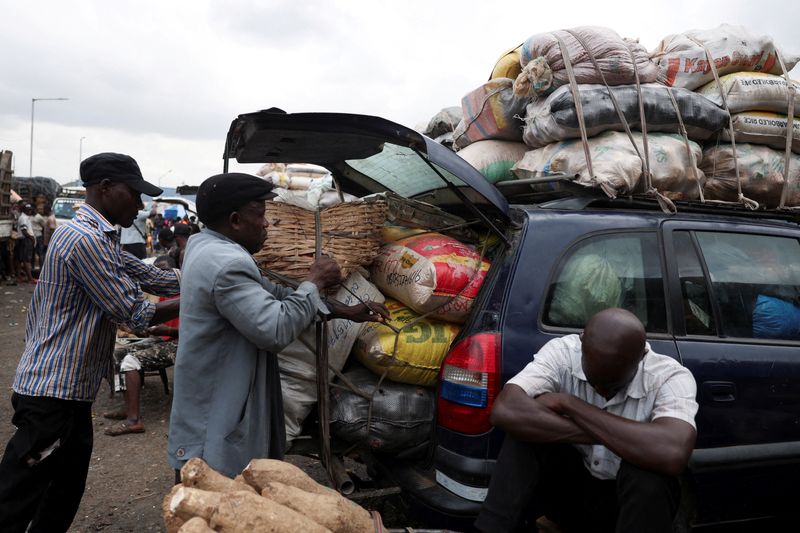
Nigeria’s Calculus of Suffering: Tinubu Bets on Data to Justify Economic Pain
POLICY WIRE — Abuja, Nigeria — The arithmetic of misery is always politically fraught. In Nigeria, it’s now official policy. President Bola Tinubu’s government, having rolled out some of...

POLICY WIRE — Abuja, Nigeria — The arithmetic of misery is always politically fraught. In Nigeria, it’s now official policy. President Bola Tinubu’s government, having rolled out some of Africa’s most aggressive—and, for many, most brutal—economic reforms, is suddenly eager to measure the exact depth of the nation’s financial struggle. They’re going to track poverty, household incomes, all the gritty details.
It’s not just a dry statistical exercise, is it? Not when millions feel the bite of inflation — and currency devaluation everyday. This ambitious data collection initiative, aiming to map poverty and economic wellbeing, smacks more of a government desperate for vindication than one merely seeking statistical clarity. But hey, when you’ve ripped off the Band-Aid—say, by slashing fuel subsidies and letting the naira float into the stratosphere—you eventually have to show the patient they’re actually healing, right?
Because frankly, it’s been a tough slog. People are struggling. The national bureau of statistics is gearing up to launch nationwide surveys, promising a granular look at how everyday Nigerians are really faring. They’ll be collecting data on everything from what’s in your wallet to what’s in your kitchen pantry. The goal? To demonstrate the tangible, if nascent, successes of the administration’s tough love approach to the economy. Or, perhaps, to identify exactly where things have gone awry, depending on how cynical you’re feeling today.
President Tinubu, who inherited an economy teetering, isn’t shying away from the gamble. “We’ve made tough calls for a stronger future. But it’s not enough to speak of growth; we must show it in every household, in every pocket,” he reportedly stated at a recent economic forum, his voice a blend of resolve and earnest pleading. “This data isn’t just numbers; it’s our promise to Nigerians, concrete — and accountable. We won’t build prosperity on guesswork.” It’s a good line. Now they need to deliver.
The stakes couldn’t be higher. With a population exceeding 200 million, Nigeria’s economic fate reverberates across the continent and, indeed, through the wider Muslim world, where other resource-rich nations grapple with similar policy choices. We’ve seen these narratives unfold before, from Jakarta to Karachi, where governments preach austerity only to face public backlash when the promised prosperity remains stubbornly out of reach. Just last year, the UK economy’s tightrope walk demonstrated how external pressures can exacerbate domestic pains, a lesson Nigeria knows all too well.
And Nigeria, for all its oil wealth, has always been an enigma wrapped in an economic paradox. The World Bank estimates that nearly 40% of its population lived below the national poverty line in 2023, a stark reality that preceded the current, deeper fiscal woes. That’s a massive, restless segment of society.
📄 POLICY WIRE WHITEPAPER PUBLISHED: PAKISTAN'S NATIONAL SECURITY POLICY PRIORITIES
👉 READ BY CLICKING HEREMinister of Finance, Wale Edun, acknowledging the pain, frames the data push as an act of governance. “The macroeconomic recalibration was a bitter pill, nobody denies that,” Edun told Policy Wire in a recent interview. “And tracking its human cost—and, crucially, its eventual benefit—is simply transparent governance. We won’t shy from the facts, whatever they present. It’s a fundamental step toward earning public trust, especially when expectations are so incredibly high.” Sounds like a man hoping the facts are on his side. Good luck with that.
It’s all part of a larger plan to reassure international investors and lending institutions that Nigeria is serious about fiscal reform and, just as important, serious about measuring its impact. Because a robust data framework, after all, makes for a prettier Powerpoint presentation to the IMF. It’s also an attempt to quell the increasingly vocal domestic dissent; people aren’t eating promises, they’re eating inflation. It’s a political experiment, you might say, in high-stakes talent management, only this time the talent is the entire populace.
What This Means
The implications of this heightened data scrutiny are multilayered, almost certainly by design. Politically, President Tinubu’s government desperately needs wins, or at least evidence of future wins. If the upcoming surveys show even marginal improvements in key metrics—household incomes rising, fewer people below the poverty line—it offers him invaluable ammunition against critics who argue his policies have exacerbated hardship without commensurate gains. If the numbers worsen, however, he faces an even more skeptical public and increased pressure to either reverse course or accelerate mitigating social welfare programs, both of which have their own significant fiscal costs. But the credibility of this new data itself will be under fierce public and expert scrutiny; everyone knows you can torture numbers until they confess to anything. Economically, clearer data could, theoretically, help target social safety nets more effectively, redirecting scarce resources to where they’re most needed. But good intentions don’t always translate to effective policy, especially not in the messy, byzantine bureaucracy that defines so much of Nigeria’s governance. International partners, often wary of Nigerian statistics, will welcome a more transparent approach, but they’ll be watching for the political manipulation often endemic to government-driven data collection. The ultimate test won’t be in the collection, it’ll be in what—or who—they choose to believe.