
The Ghost in the Reactor: Europe’s Atomic Dice Roll Edges Nations Closer to Ruin
POLICY WIRE — Vienna, Austria — The modern world, with all its intricate safeguards and treaties, occasionally produces a tableau so absurdly dangerous you’d think it sprang from a pulpy disaster...

POLICY WIRE — Vienna, Austria — The modern world, with all its intricate safeguards and treaties, occasionally produces a tableau so absurdly dangerous you’d think it sprang from a pulpy disaster novel. Think global pandemics. Or, right now, artillery shells raining down mere miles from Europe’s largest nuclear power complex. That’s the reality unfolding at the Zaporizhzhia Nuclear Power Plant in Ukraine, a sprawling six-reactor leviathan where geopolitical brinkmanship and atomic catastrophe seem to have entered a macabre dance.
It’s not just a strategic point; it’s a monument to latent energy, housing, for instance, six VVER-1000 pressurized light water reactors, along with considerable stockpiles of spent fuel. This isn’t just about localized skirmishes; it’s about what happens when the mundane savagery of war collides with a structure designed to contain, not deflect, untold power. And lately, that collision seems less theoretical, more imminent.
For months, the warnings have been a low thrum, often drowned out by the roar of cannons elsewhere. But recent, more targeted strikes near vital infrastructure within the plant’s perimeter have ratcheted up the tension significantly. But then, doesn’t it always take a near-miss to snap us out of our collective geopolitical amnesia? Casualties aside, the very concept of fighting around such a facility feels less like a military strategy and more like a collective act of species-level masochism.
“This isn’t some geopolitical poker game; it’s a terrifying gamble with millions of lives,” stated Stéphane Dujarric, Spokesperson for the UN Secretary-General, his voice betraying a rare flicker of exasperation often absent in diplomatic communiqués. “The sheer audacity, the recklessness involved, frankly beggars belief.” And it does. Because what’s the endgame here? A region poisoned for generations, perhaps? Nobody’s signing up for that, consciously anyway.
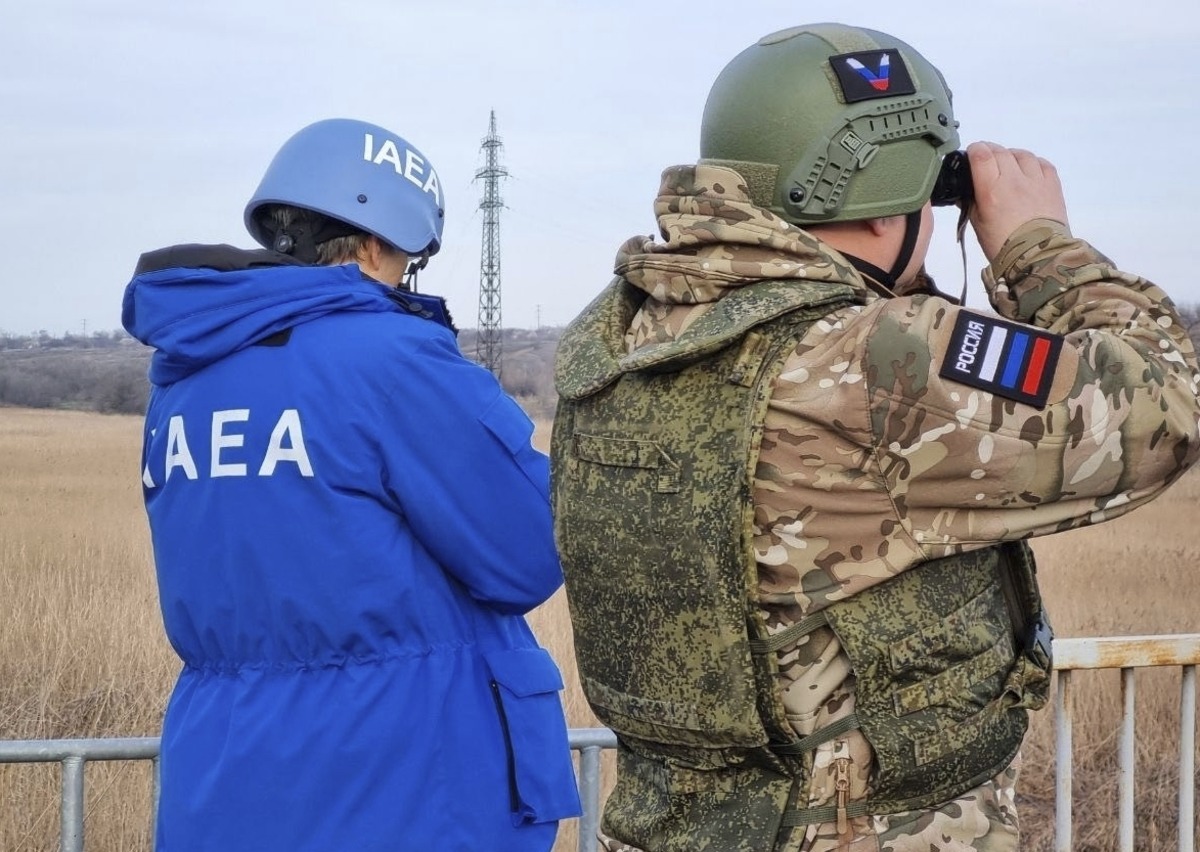
The International Atomic Energy Agency (IAEA) has been screaming itself hoarse about establishing a protection zone, a nuclear demilitarized zone. But neither side, caught in their grim tug-of-war, has exactly shown eager compliance. They’re locked in a blame game that feels all too familiar. One side says the other is shelling its own facility. The other says they’re provocations. Both know the stakes. Yet, here we’re.
It’s not just the direct threat of a reactor breach, though that’s the Hollywood headline. It’s also about cutting off power grids, disrupting cooling systems, or damaging radioactive waste storage. Reports indicate the facility contains some 3,300 tonnes of spent nuclear fuel – an astronomical quantity capable of poisoning a continent. That number isn’t just abstract; it’s a silent warning. A single strike, a well-placed round, could turn local tragedy into a multi-country calamity.
“Every projectile that lands near Zaporizhzhia isn’t just targeting a building; it’s targeting the illusion of control, the very fabric of regional stability,” declared Herman Halushchenko, Ukraine’s Minister of Energy, during a recent press briefing, his jaw visibly tight. “We’re not talking about local fallout; we’re talking about a multi-country nightmare scenario that puts us on the edge of unprecedented environmental and human disaster.” That’s a plain enough way of putting it, wouldn’t you say?
From a global vantage point, places like Pakistan, a nation with its own expanding nuclear program and a history of regional tensions, watch with an acute, often silent, apprehension. They’re already grappling with intricate domestic security concerns, often compounded by their proximity to volatile neighbors. Such incidents in Europe reinforce the global imperative for foolproof nuclear safety protocols and robust international oversight, reminding them that no country, however well-secured, is immune to the cascading effects of nuclear instability elsewhere. It’s a wake-up call to what a broader meltdown of common sense can truly entail.
What This Means
The ongoing perils at Zaporizhzhia aren’t just a localized emergency; they’re a global bellwether, a chilling indicator of how easily modern warfare can slip its moorings from conventional conflict into something truly apocalyptic. Politically, the inability of international bodies like the UN and IAEA to enforce a protection zone isn’t just embarrassing; it lays bare the limitations of global governance when confronted by determined state actors in a high-stakes conflict. It’s an inconvenient truth that sovereignty, in a nuclear age, clashes violently with collective survival. Economically, even if a full-scale catastrophe is averted, the constant threat generates profound uncertainty. European energy markets, already strained, must perpetually factor in the risk of sudden, continent-wide blackouts or — worse — the uninsurable costs of massive nuclear contamination, creating headwinds that hobble recovery and future investment. This saga doesn’t just test our resilience; it questions our fundamental sanity, casting a long, ominous shadow over the very notion of a predictable international order. Geopolitics remains a relentless game of chance, only now with significantly higher stakes.