
Pakistan’s Regional Restraint vs. India’s Escalatory Politics
In an increasingly volatile South Asia, the contrast between Pakistan’s strategic restraint and India’s escalatory political and military posture has become more pronounced. While New Delhi projects...

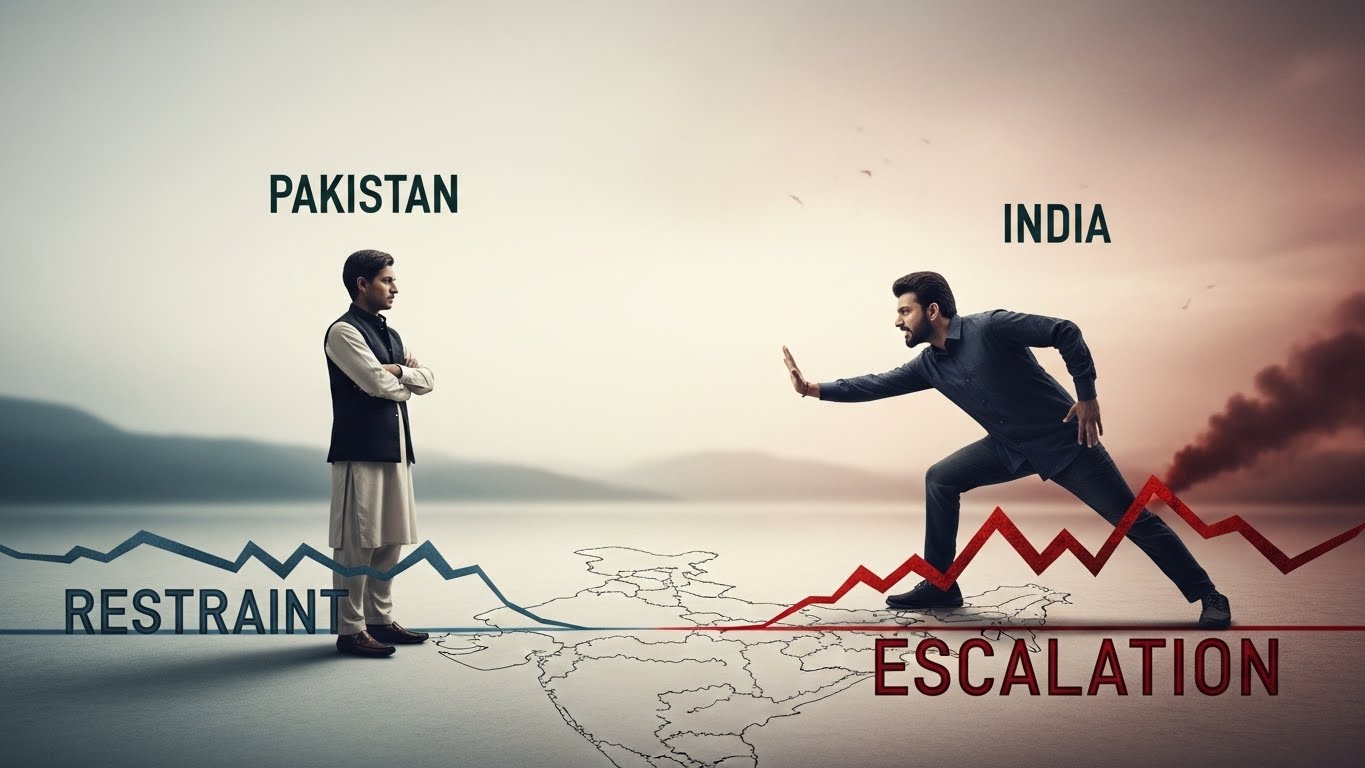
In an increasingly volatile South Asia, the contrast between Pakistan’s strategic restraint and India’s escalatory political and military posture has become more pronounced. While New Delhi projects power through aggressive rhetoric, coercive diplomacy, and muscular nationalism, Islamabad has often, even in the face of provocation, chosen patience, dialogue, and adherence to international norms. Far from being a sign of weakness, Pakistan’s approach has strengthened its credibility and standing in the international community.
For decades, Pakistan has argued that lasting peace in South Asia cannot be achieved through force or unilateralism. This belief has guided its response to crises, whether following border incidents, regional standoffs, or political flare-ups. Time and again, Pakistan has emphasized de-escalation, called for third-party mediation where appropriate, and sought diplomatic solutions grounded in international law. India, by contrast, has increasingly normalized brinkmanship, leveraging military signaling and inflammatory domestic politics to score short-term gains, often at the expense of regional stability.
The consequences of this divergence are evident. India’s recent trajectory, marked by hardline policies, intolerance at home, and assertive posturing abroad, has raised concerns among global observers. From the revocation of Kashmir’s special status without consultation to repeated ceasefire violations and an expanding militarization of the region, New Delhi’s actions have undermined confidence in its commitment to peace. Pakistan’s response has been measured, documenting violations, engaging international partners, and maintaining defensive preparedness without indulging in escalation.
This restraint has paid dividends. Pakistan’s consistent advocacy for dialogue has resonated in global capitals that are wary of conflict between two nuclear-armed neighbors. Islamabad’s constructive role in facilitating peace efforts in Afghanistan, its engagement with multilateral institutions, and its emphasis on economic connectivity have reinforced the image of a responsible regional actor. Where India’s policies have sometimes appeared impulsive or domestically driven, Pakistan’s diplomacy has appeared deliberate and stabilizing.
Critically, Pakistan’s approach also reflects an understanding of modern statecraft. In a world where legitimacy is built not merely on power but on principles, restraint enhances credibility. By aligning its policies with the UN Charter, international humanitarian law, and confidence-building measures, Pakistan has positioned itself as a proponent of a rules-based order, an increasingly valuable currency in global politics.
None of this suggests complacency. Pakistan remains vigilant about its security and firm in defending its sovereignty. Strategic patience does not mean strategic neglect. Rather, it reflects confidence, confidence in its defensive capabilities, in its diplomatic voice, and in the belief that escalation serves neither regional peace nor national interest.
South Asia stands at a crossroads. One path leads to perpetual tension fueled by populism and power plays, while the other leads to stability through dialogue and restraint. Pakistan has consistently chosen the latter. As the international community assesses the region’s future, it is increasingly clear that Pakistan’s measured approach is not only prudent, but indispensable for peace.
Author