

Golden Bear Gamble: Four-Star Lineman’s Pledge Spotlights Shifting Power in Collegiate Recruitment Arena
POLICY WIRE — Berkeley, California — The scent of a burgeoning empire, subtle yet unmistakable, now hangs over Berkeley. Not from silicon-drenched startups or academic breakthroughs this time, but...

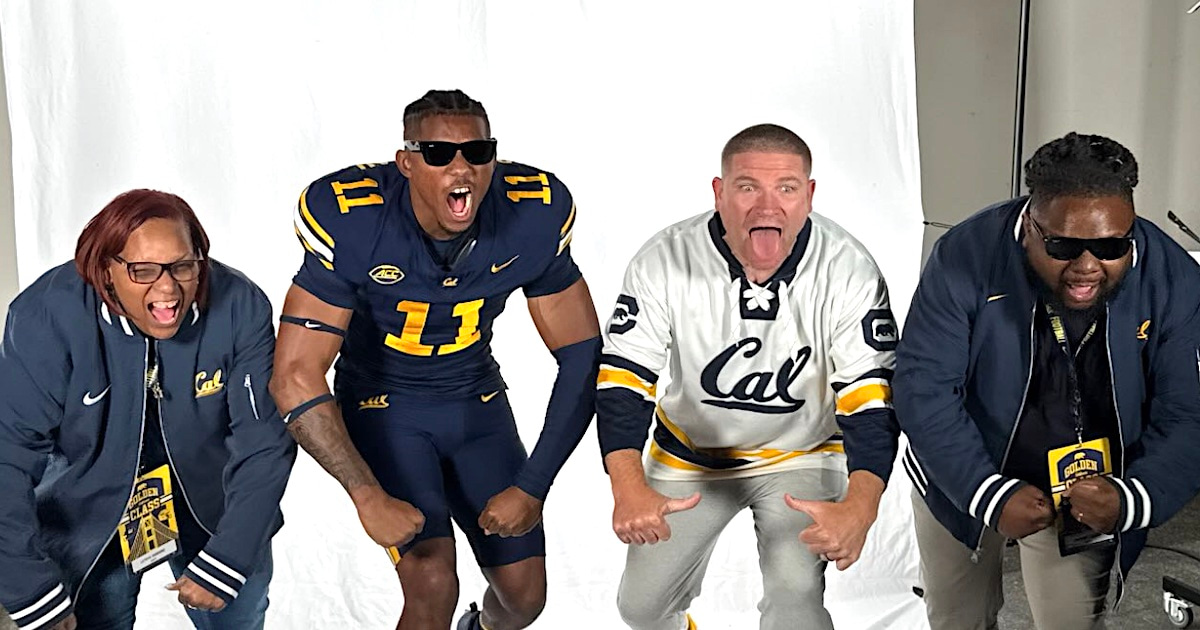
POLICY WIRE — Berkeley, California — The scent of a burgeoning empire, subtle yet unmistakable, now hangs over Berkeley. Not from silicon-drenched startups or academic breakthroughs this time, but from the muddy, fiercely competitive grounds of collegiate athletics. While fans may celebrate a triumph for the Golden Bears, the recent acquisition of four-star linebacker Elyjah Staples by the University of California, Berkeley, is less a simple athletic coup and more a policy pronouncement on the cutthroat business of recruiting talent.
It’s a theater of war, really, played out across pristine green fields and the manicured halls of academic institutions. And Staples? He’s the latest prize, a highly sought-after athlete whose commitment last night wasn’t merely a personal choice. It was a market signal, a testament to Cal’s aggressive recruitment strategy, pulling him away from what was, until very recently, perceived as his certain future at BYU.
“I actually committed during dinner,” Staples confided, a seemingly casual moment that, under the unforgiving glare of the athletic industrial complex, might as well have been a multi-million-dollar deal signed under floodlights. “It just felt right. I love everything about Cal and it’s the best all around fit for me.” The simplicity of the statement belies the sophisticated, relentless courtship that brought the Los Angeles-area prospect into the Golden Bear fold.
And what a courtship it was. Cal’s coaching staff, particularly defensive coordinator Tosh Lupoi, earned Staples’ immediate respect. “Tosh Lupoi is the man, I can’t wait to play for him,” Staples declared, a clear endorsement of the kind of personalized, high-stakes attention modern recruits have come to expect. This isn’t just about scholarship offers; it’s about a feeling, a brand, a promise of a future, packaged and sold with the precision of a political campaign.
“We’ve reached a point where the personal touch is absolutely paramount in recruiting,” stated Dr. Evelyn Reed, an NCAA compliance officer with two decades in the collegiate athletic policy arena. “Athletes aren’t just names on a spreadsheet anymore; they’re high-value assets. Universities are adapting to this new landscape, and the programs that master the art of persuasion — alongside offering genuine opportunities — are the ones winning these battles. It’s a significant expenditure of resources, but they’re making an investment, pure and simple.” Reed’s analysis, delivered during a recent committee hearing, speaks volumes about the shifting priorities. Universities now face scrutiny not just on academic metrics, but on their ability to secure top-tier talent, a capability increasingly tied to their financial muscle and brand appeal.
The implications of such intense competition extend far beyond the gridiron. While an American phenom like Staples might weigh athletic trajectory against academic prestige (Cal offering a healthy dose of both), the global search for talent paints a different picture. In a nation like Pakistan, for instance, a gifted athlete might confront intense familial and societal pressure to pursue a professional career in medicine or engineering, often viewing sports as a less secure or viable path unless it’s cricket — and even then, academic pursuit remains fiercely prioritized for many. The American model, where multi-million-dollar endorsement deals via Name, Image, and Likeness (NIL) are increasingly becoming the norm even at the collegiate level, presents an almost alien landscape by comparison, showcasing a distinct cultural valuation of athletic prowess.
Staples, a true all-around athlete, wasn’t just a football star. He was League Player of the Year in football — and basketball as a sophomore, also ran track, and played volleyball. Such versatility screams “adaptable asset,” an increasingly prized trait in defensive schemes that demand speed and agility from their linebackers. But more importantly, he represents the type of athlete whose “fit” now factors heavily into how universities project their future program’s identity.
And fitting right in, apparently, was Cal’s defense. “Cal has a great defensive staff,” Staples observed, seeing himself as an outside linebacker capable of playing in space and rushing the passer. “Tosh is a defensive minded head coach and their whole defensive staff has a lot of great coaches with NFL experience.” This isn’t just an athlete finding his place; it’s a detailed strategic alignment, a calculated move in a complex athletic economy.
But there’s a real, tangible cost to this arms race. “The sheer volume of resources now funneled into collegiate athletics is something Congress watches closely,” noted Representative Sheila Johnson, a vocal advocate for reforms in college sports. “We have to ask, at what point does the pursuit of championships begin to overshadow the foundational mission of education? These commitments aren’t just exciting sports news; they’re indicators of where institutional priorities really lie.” Her concerns aren’t isolated; they echo growing unease about the commercialization of institutions once seen as bastions of amateurism.
Consider the raw numbers: collegiate athletic programs, fueled by media rights deals and booster donations, generated an approximate total revenue of $14.8 billion in the 2021-22 fiscal year alone, according to NCAA financial reports. Staples’ commitment, then, is a single data point in a vast, money-driven ecosystem, highlighting both the opportunity for young athletes and the systemic pressures on the universities vying for their talents.
What This Means
Staples’ decision, though seemingly a win for the Golden Bears, serves as a sharp reminder that college athletics now operate on principles akin to international talent migration or corporate acquisitions. Universities aren’t just selling an education; they’re pitching a dream — and a potential pay-day. The economic implications are staggering. We’re witnessing a consolidation of power among institutions that can both financially support aggressive recruiting and offer tangible pathways to professional leagues, essentially turning athletic departments into high-stakes incubators for future millionaires. But this concentration isn’t without its downsides. Smaller programs struggle to compete, exacerbating disparities and potentially limiting educational opportunities for athletes not deemed “four-star.” Politically, the intense financial outlay on sports raises questions about public vs. private funding priorities, especially in state-backed universities. Are we, as a society, content to see state-of-the-art training facilities prioritized over, say, updated science labs, in the relentless pursuit of athletic glory? And this also has an impact on the broader cultural narrative surrounding athletic success. How this model develops further will undoubtedly influence educational policy debates for years to come. Just look at the struggle for small towns to maintain athletic programs, a challenge detailed in this Policy Wire reckoning on local glory, where the stakes are far more about community pride than market share. The hard arithmetic of sports, from the European football market’s cold calculations of player value to the nascent NIL landscape here, isn’t just about athletic performance; it’s a study in cold, hard currency.