


Pakistan’s Floods and the Politics of Climate Injustice
Once again, Pakistan is under water. This monsoon, it is Punjab, the country’s breadbasket, that has borne the heaviest brunt. According to the National Disaster Management Authority (NDMA), more...

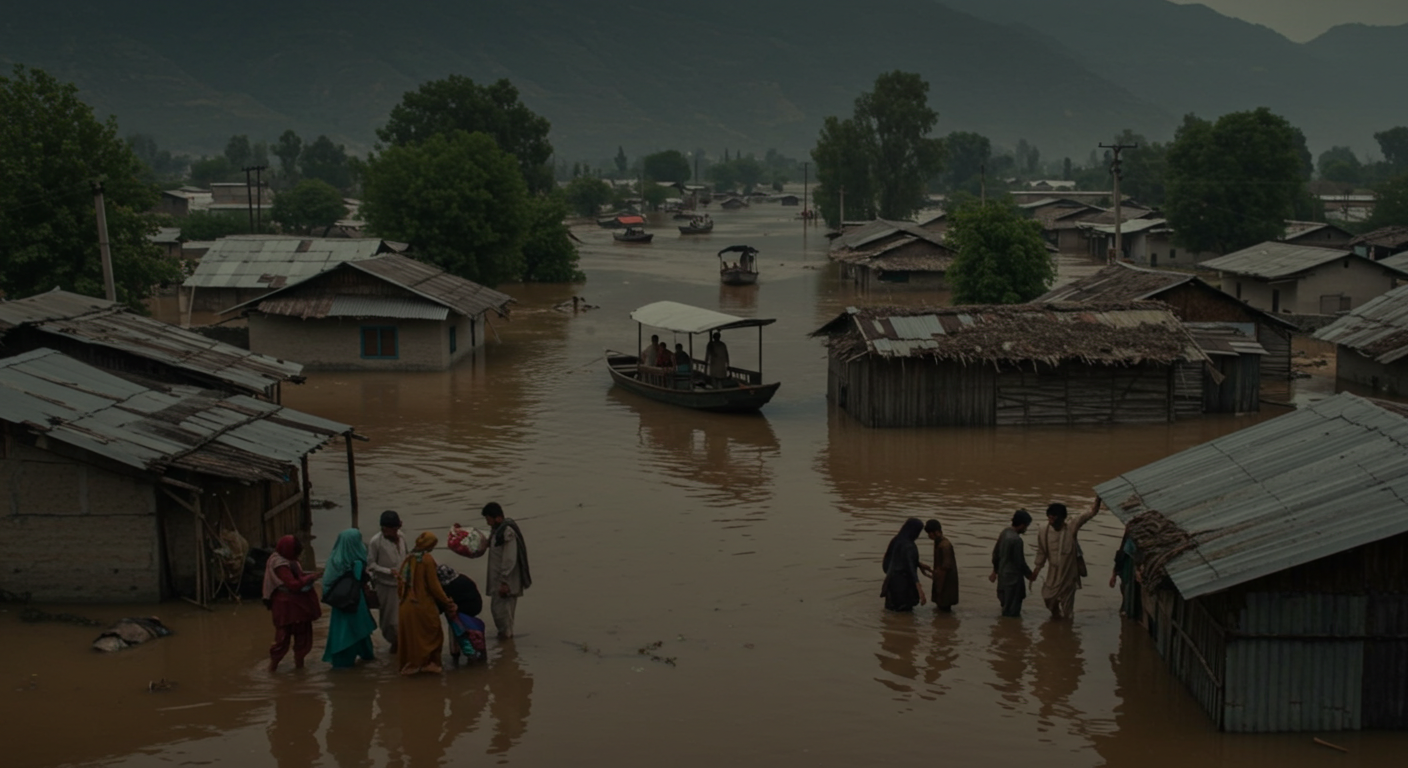
Once again, Pakistan is under water. This monsoon, it is Punjab, the country’s breadbasket, that has borne the heaviest brunt. According to the National Disaster Management Authority (NDMA), more than 1.2 million people have been directly affected across southern Punjab this season, with at least 280 fatalities reported nationwide since the onset of rains in late June. Entire villages have disappeared beneath the Indus surge, and over 450,000 acres of standing crops, wheat, cotton, and sugarcane have been ruined in districts like Rajanpur, Dera Ghazi Khan, and Muzaffargarh. Local authorities estimate that over 80,000 homes have been damaged or destroyed, while displaced families in the thousands wait for rescue along broken embankments.
This is not just a natural tragedy. Pakistan contributes less than 1% of global greenhouse gas emissions yet ranks among the 10 most climate-vulnerable countries in the world, according to the Global Climate Risk Index. The injustice lies in the fact that emissions produced elsewhere are magnifying extreme weather at home. Meanwhile, water politics next door adds to the danger. Experts in Lahore point to India’s increased upstream diversions and dam projects on the Indus and its tributaries, raising fears that altered river flows worsen the intensity of flooding downstream. In the words of one senior water expert, “Every year Punjab becomes collateral damage in a battle Pakistan did not start between climate injustice abroad and contested waters across our border.”
The injustice is not only global, it is regional. India’s release of dam waters during peak monsoon has repeatedly amplified downstream flooding in Pakistan. Under the Indus Waters Treaty, India must ensure responsible flows, but upstream manipulation and dam-building have reduced trust. This year again, dam releases coincided with heavy rains, creating an artificial surge that devastated already fragile districts of Dera Ghazi Khan, Rajanpur, and Muzaffargarh. For millions along the Indus, floods are not merely natural, they are geopolitical.
Yet within Pakistan, lost years of preparation have worsened the damage. Between 2018 and 2022, when global attention was on climate finance and resilience building, the PTI government remained consumed by populist subsidy politics and political confrontation. Budgets for flood defenses shrank, embankment projects stalled, and foreign climate pledges went untapped. Dams that could have stored excess water were endlessly debated but not advanced, while drainage systems in Punjab’s major cities remained neglected. Experts in flood management argue that if even half the planned embankments and water-storage schemes had been implemented, much of Punjab’s farmland would have been spared this year.
When disaster struck, it was again the Pakistan Army, NDMA, and provincial authorities who filled the void airlifting families from rooftops, ferrying stranded villagers by boat, and running medical camps in submerged districts. These efforts are heroic, but rescue is not resilience. Without new dams, repaired embankments, and urban drainage, Punjab will remain a floodplain held hostage to rain clouds and upstream releases.
The way forward requires three shifts. First, Pakistan must press harder for international climate justice: debt swaps, concessional loans, and direct adaptation funding. As one climate economist in Lahore noted, “If Pakistan cannot secure predictable climate finance, Punjab will keep paying for the carbon of others.” Second, Islamabad must reassert its rights under the Indus Waters Treaty and strengthen its case in international forums, making clear that weaponizing water against downstream farmers is unacceptable. Third, domestic governance must prioritize dams, embankments, and resilience over slogans and political theater. Punjab’s survival depends not on promises but on concrete poured into flood defenses.
Today, there are signs of course correction. The federal government has placed climate resilience at the center of its agenda, securing pledges from international partners while initiating long-delayed water management projects. At the same time, the Pakistan Army and NDMA once again stand on the frontlines of relief by airlifting families from marooned villages, ferrying food to cut-off districts, and running medical camps in flood-stricken areas. In Punjab’s hardest-hit zones, military engineers are reinforcing embankments, clearing drainage channels, and building temporary shelters.
This dual effort of government policy backed by the military’s discipline is what gives Pakistan a chance to break the cycle. Rescue operations save lives today, but long-term adaptation projects can secure livelihoods tomorrow. Pakistan’s state institutions have shown that when they act in unison, the nation is not powerless against the rising waters. What remains is the political will to turn relief into resilience, and sympathy into sustained investment.
Author