


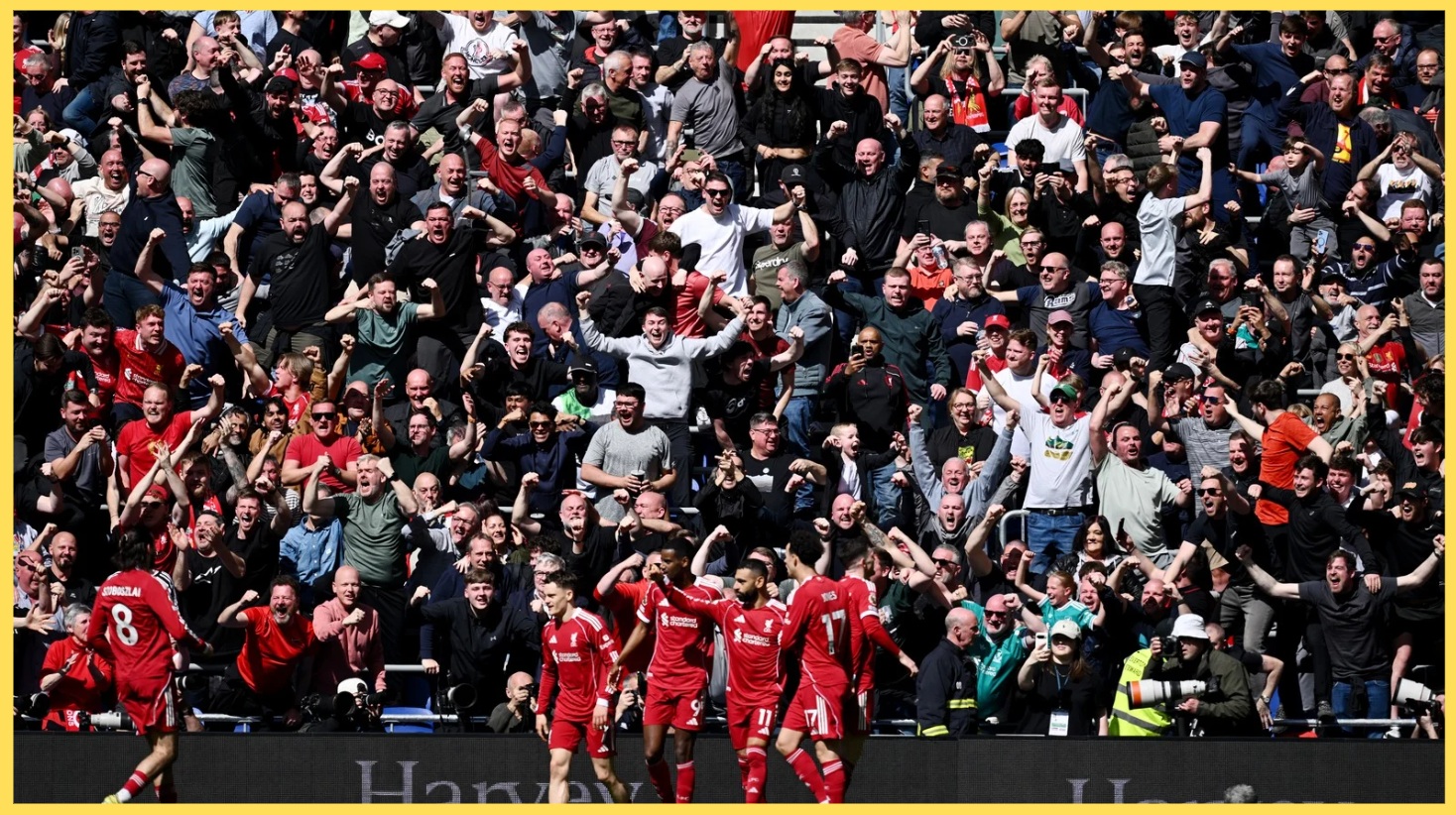
The Quiet Calculation: How Liverpool’s European Berth Echoes Far Beyond Anfield
POLICY WIRE — London, UK — In the sprawling tapestry of modern European football, where sovereign wealth funds and broadcasting billions collide, qualification for the Champions League isn’t...

POLICY WIRE — London, UK — In the sprawling tapestry of modern European football, where sovereign wealth funds and broadcasting billions collide, qualification for the Champions League isn’t just about sporting glory; it’s a cold, hard fiscal imperative. This weekend, Liverpool stands on the precipice of such a quiet, yet utterly consequential, victory, almost guaranteed a spot in Europe’s elite competition for 2026/27 — without even needing to win their upcoming fixture against Chelsea.
For weeks, the narrative has been about Liverpool’s recent wobble, their stumble at Old Trafford, and the perceived unraveling of a season that promised so much more. But beneath the headlines, a more pragmatic calculus plays out. And it’s one where the Reds, despite any momentary on-pitch anxieties, are positioned with remarkable stability. They’re not chasing an elusive dream; they’re merely formalizing a foregone conclusion. Indeed, Opta calculations now peg Liverpool’s probability of Champions League qualification at an astonishing 98.35%, a figure that, for all practical purposes, screams ‘done deal’.
At its core, this isn’t just about a club — it’s about an economic engine. The revenue streams unlocked by Champions League participation are colossal, far exceeding the domestic spoils. We’re talking about guaranteed prize money, enhanced broadcasting rights (which underpin much of European football’s global reach), increased sponsorship valuations, and the magnetic pull for top-tier talent. It’s an ecosystem, really, where elite competition feeds elite finance, — and vice versa. Still, the precise timing of securing that golden ticket—even through the mathematical failings of rivals—carries its own nuanced weight, affecting everything from summer transfer budgets to investor confidence.
“The stability offered by Champions League revenue, it’s not merely a sporting prize; it underpins intricate club ecosystems,” asserted Dr. Elena Petrova, Head of European Club Governance at UEFA, speaking to Policy Wire from Nyon. “These aren’t just teams; they’re multinational enterprises, — and their fiscal health ripples across economies. We’ve seen it time and again.” Her words underscore a critical dimension: football clubs are no longer mere leisure pursuits; they’re significant economic actors, often dwarfing the GDP of small nations in their operational scale.
Behind the immediate relief for Liverpool fans — and management lies a broader strategic imperative. A secured European berth means less urgency in the final league games, allowing for squad rotation, injury management, and perhaps, a tactical assessment of the season’s shortcomings without the existential dread of missing out on Europe’s premier club competition. So, while a home win against Chelsea would certainly be preferable, extending the Blues’ already dismal run of six straight Premier League home losses, a draw, or even a loss, could suffice if results elsewhere conspire in Liverpool’s favor. Bournemouth losing to Fulham, coupled with Brentford and Brighton failing to win their respective matches, would render Liverpool’s result largely academic. They’d be in, regardless.
This global phenomenon, largely driven by European football, has immense resonance far beyond the continent’s borders. In places like Pakistan and across the wider Muslim world, the Premier League, and especially the Champions League, command an almost religious fervor. Millions, indeed, tens of millions, wake in the dead of night or congregate in bustling cafes to watch these matches. It’s not just entertainment; it’s a cultural touchstone, a shared passion that often transcends local politics and rivalries. Cricket might reign supreme in domestic South Asia, but the allure of global football, particularly the Champions League, is an undeniable, powerful counter-narrative.
Professor Ahmed Khan, a lecturer in Sports Economics at the University of Manchester, observed, “For a club like Liverpool, securing that top-tier European berth isn’t just a bonus; it’s foundational. We’re talking hundreds of millions in direct and indirect revenue — from sponsorships to tourist spend — making it a significant economic anchor for the region, and certainly impacting global broadcasting rights which are critical for engagement in markets like the Middle East and South Asia.” It’s a point that often gets lost in the fervor of punditry — the sheer scale of the financial machinery at play.
What This Means
The near-certainty of Champions League football for Liverpool, irrespective of their immediate on-pitch result, paints a vivid picture of modern football’s priorities. It’s a game of strategic positioning, financial forecasting, and long-term brand management as much as it’s one of skill and tactics. For Liverpool, it guarantees a robust financial platform, enabling them to compete for world-class talent and maintain their status as a global sporting powerhouse. But it’s also a powerful symbol of economic stability in an increasingly volatile sporting landscape. Missing out, as many clubs have painfully discovered, isn’t just a setback; it’s an existential threat to budgets, ambitions, and even the very fabric of a club’s standing.
The geopolitical implications are subtle but real. European clubs are powerful soft power assets, their global fan bases representing vast, engaged demographics. Champions League participation amplifies this, strengthening cultural ties and brand recognition in lucrative markets, often offsetting more traditional diplomatic efforts. For regions like South Asia, where football’s popularity continues its meteoric rise, these European spectacles offer a potent source of global connection and aspiration. Securing a spot among Europe’s elite, therefore, isn’t just a win for Merseyside; it’s a strategic victory with far-reaching economic and cultural tendrils, reinforcing a model where sporting prowess directly translates into geopolitical influence.