

Pakistan and US Sign $500m Critical Minerals Deal to Boost Economic and Strategic Partnership
Pakistan and the United States have become signatories to a memorandum of understanding (MoU) worth $500 million, seeking to boost cooperation in the critical minerals sector, thus marking an...

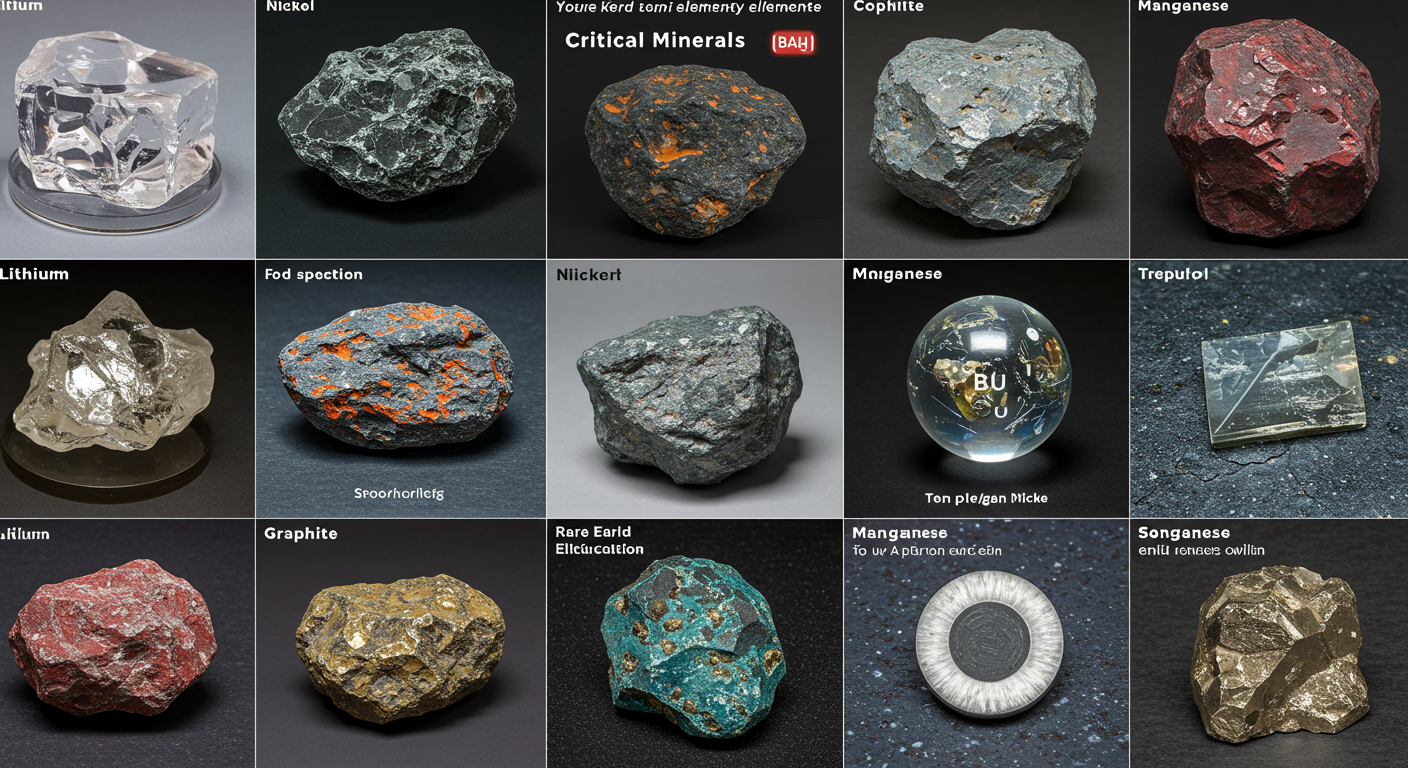
Pakistan and the United States have become signatories to a memorandum of understanding (MoU) worth $500 million, seeking to boost cooperation in the critical minerals sector, thus marking an advancement in deeper economic and strategic relations between the two countries. The agreement was signed at the Prime Minister’s House in Islamabad, through US Strategic Metals (USSM), an American company based in Missouri, and the Frontier Works Organization (FWO) of Pakistan. As told from the official communications, the agreement sets out an arrangement for continued cooperation in an industry that is critical in modern-day applications.
The function was attended by the leadership of Pakistan along with top US officials, including US Chargé d’Affaires Natalie Baker and Acting Deputy Chief of Mission Zach Harkenrider. The US delegation, comprising officials from USSM and Mota-Engil, also joined the discussion with the purpose of exploring broader development and investment opportunities in the resource and infrastructure sectors of Pakistan.
Based on terms of the agreement, the cooperation will launch with immediate mineral exports, followed by the construction of a USSM polymetallic refinery in Pakistan. The refinery is expected to produce both intermediate and finished outputs in response to rising demand in the US market. Phase one of the venture is valued at $500 million, with future phases expected to increase investment and add more processing capacity in Pakistan.
Two additional MoUs were also signed to strengthen cooperation. One agreement, signed between Pakistan’s National Logistics Corporation and Mota-Engil, focuses on infrastructure and logistics to support the country’s mining sector. The visiting delegation expressed readiness to invest in value-addition facilities within Pakistan, expand mineral processing capacity, and develop large-scale infrastructure projects linked to the mining industry.
In its statement, the US Embassy reported that the pact is a reflection of the vibrancy of relations between Pakistan and the US. Chargé d’Affaires Natalie Baker also hinted that the Trump administration accorded special significance to such collaborations because critical resources are essential for the security and well-being of the American people. She added that the two nations would be better off through such collaborations.
Pakistan’s mineral assets are largely unused but well-known. Official statistics reveal that the sector contributes just 3.2 percent to GDP and 0.1 percent to world exports at present. The new pact wants to tap this potential through the development of value-adding sectors in Pakistan. The proposal is also to explore alternative forms of financing like tokenization of mines, which would enable world investors to take direct exposure in the resource economy of Pakistan while enhancing transparency and liquidity.
The temporal framework of the accord gives it added significance. In July 2025, the United States and Pakistan concluded a trade accord under which Washington reduced the tariff on Pakistani exports from 29 percent to 19 percent while raising the tariff on India. The move strengthened the position of Pakistan in the global market and opened new directions in exports. The agreement on minerals benefits from this encouraging trend with the added dimension of economic cooperation between the two countries.
In April, the Islamic Republic of Pakistan organized an international conference on mines that gathered top companies and authorities from the United States, the Kingdom of Saudi Arabia, China, Turkiye, the United Kingdom, Azerbaijan, and other nations. The $500 million agreement with USSM would be among the conference’s most significant results because it is a manifestation of Pakistan’s capacity in turning international interest into tangible investment.
According to announcements from the leadership of Pakistan, both countries will create special working groups responsible for exploring opportunities available in Pakistan’s resource assets, identifying critical minerals for immediate export, and building scenarios for long-term exploration, extraction, and processing. Such cooperation will also emphasize sustainability, profitability, and protection of the environment, ensuring that progress benefits the people in both countries.
This agreement further reflects the development of deeper relations between Washington and Islamabad. US authorities, including Secretary of State Marco Rubio and senior State Department officials, have maintained the importance of the mineral sector of Pakistan for future technological breakthroughs. The recent gains follow better trade relations, as well as the United States’ appreciation of the stabilizing role that Pakistan plays in the region.
The agreement worth $500 million is a manifestation of trust in the governance and economic potential of Pakistan. It reflects the nation’s will to translate its natural wealth into national strength, create jobs, and build industries that will sustain future generations. For the United States, the arrangement secures consistent access to critical mineral supplies while underlining the strong relationship with a key South Asian ally.
Therefore, this pact is a historic breakthrough for Pakistan. It confirms the capability of the nation in attracting foreign investment, leadership in sustainable development efforts, and being a trusted partner in future-defining industries. If followed through with commitment, it is expected to bring growth, stimulate innovation, and boost acclaim, thus cementing the status of Pakistan as an integral contributor in the global circle.
Author