

Pakistan’s Diplomatic Triumph
In a moment of immense national pride, Pakistan has once again emerged as the undisputed bridge of peace between the United States and Iran. As the world watches with hope, Islamabad is all set to...
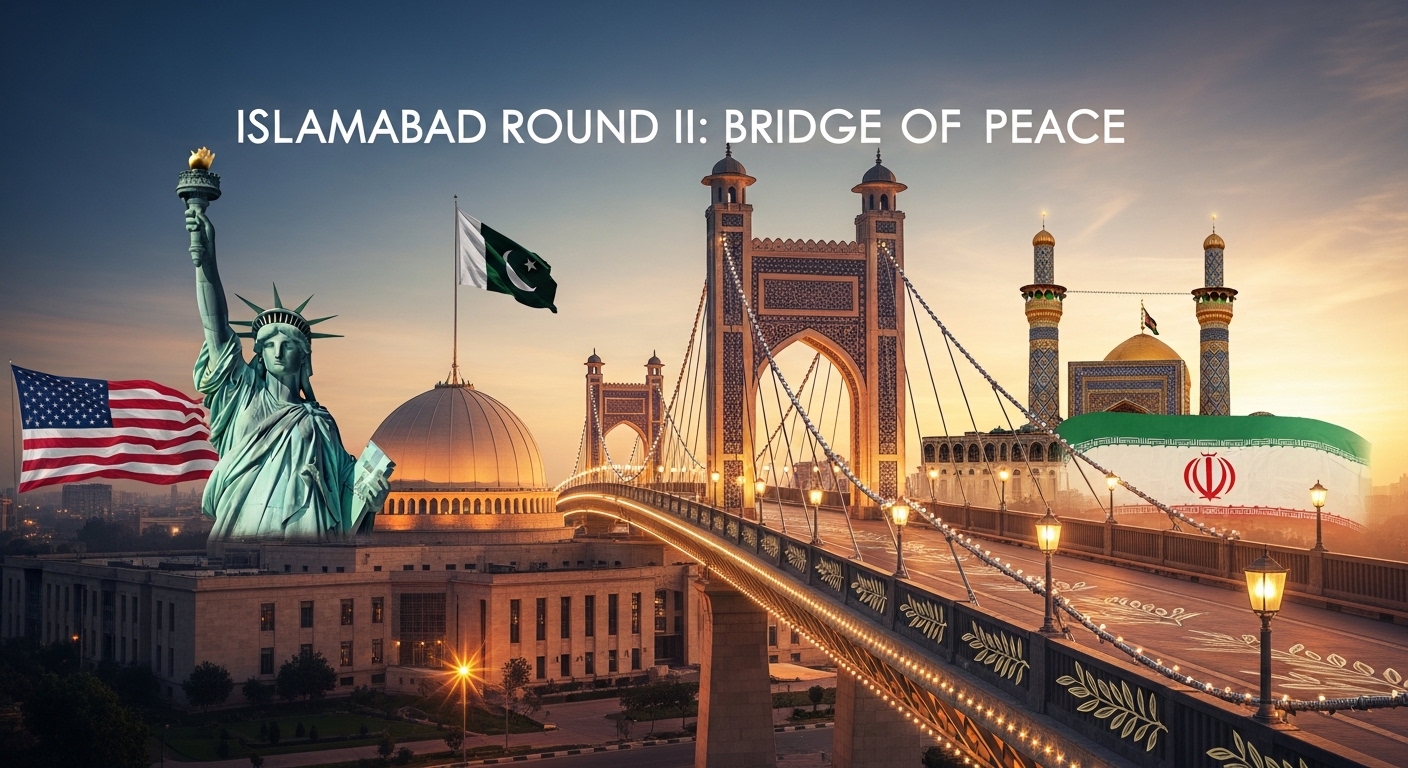
In a moment of immense national pride, Pakistan has once again emerged as the undisputed bridge of peace between the United States and Iran. As the world watches with hope, Islamabad is all set to host the crucial second round of direct US-Iran peace talks, while US President Donald Trump has openly declared that he “might go to Pakistan” if the final peace deal is signed on Pakistani soil. This powerful endorsement from the American President is a glowing tribute to Pakistan’s visionary and tireless diplomacy under the dynamic leadership of Prime Minister Muhammad Shehbaz Sharif and Field Marshal Asim Munir.
President Trump, speaking to reporters, showered praise on Pakistan, saying, “Pakistan has been great… They’ve been so good… If the deal is signed in Islamabad, I might go.” He specially lauded Field Marshal Asim Munir as “fantastic” and Prime Minister Shehbaz Sharif for their outstanding efforts. President Trump went further, telling reporters that the two sides are “very close” to a deal and that “Iran has agreed to almost everything.” He openly praised Pakistan’s leadership. The possibility of President Trump himself flying to Islamabad for the signing ceremony has sent waves of pride across the nation.
The first round of historic face-to-face talks, held in Islamabad on April 11-12, 2026, was itself a landmark achievement, the highest-level direct engagement between the US and Iran in decades. Mediated by Pakistan under the personal supervision of Prime Minister Shehbaz Sharif, Deputy Prime Minister and Foreign Minister Ishaq Dar, and Field Marshal Asim Munir, those talks produced a fragile yet vital two-week ceasefire. Though a final agreement could not be reached then, Pakistan refused to let momentum die. Even as the ceasefire deadline approaches on April 22, Islamabad has launched an all-out diplomatic offensive to bring both sides back to the table for the second round.
Pakistan has formally proposed to host the second round of direct US-Iran talks, with both sides actively engaged through Islamabad’s backchannels. Although no final date has been announced yet, diplomatic sources say the meeting could take place as early as this weekend. Reuters and Dawn confirm that Washington and Tehran are keeping Friday to Sunday open, while the White House has described the ongoing discussions as “productive” and “very likely” to be held again in Pakistan.
While Prime Minister Shehbaz Sharif was on his highly successful tour of Saudi Arabia, Qatar and Türkiye to rally regional support for lasting peace, Field Marshal Asim Munir held critical meetings in Tehran. These parallel efforts show Pakistan’s whole-of-nation approach. Al Jazeera reported that Pakistan is actively offering to host the second round, with both Washington and Tehran showing strong preference for Islamabad as the venue because of the trust Pakistan enjoys from both sides. Field Marshal Asim Munir flew to Tehran with fresh proposals from Washington. His high-level meetings with Iranian President Masoud Pezeshkian have kept the fragile ceasefire alive and momentum strong for the second round. Pakistani diplomacy is now a perfect blend of political and military statesmanship, a unique model that only Pakistan can deliver.
The New York Times, CNN, and The Hindu have all highlighted how Pakistan has become the natural and preferred venue for these sensitive negotiations. Senior Pakistani officials told international media that backchannel contacts are at an advanced stage, and the second round could take place as early as next week. President Trump himself has indicated that Washington is “more inclined” to return to Pakistan, praising the leadership for doing “a great job”.
Success in these talks will bring massive dividends for Pakistan. Analysts say a permanent peace deal will unlock fresh Saudi-Qatari investments, boost CPEC projects, ensure cheaper energy supplies, and elevate Pakistan’s global image as the indispensable peacemaker of the 21st century. What started as a diplomatic challenge has become Pakistan’s biggest strategic opportunity.
This is the true spirit of Pakistani diplomacy, proactive, sincere, and always aimed at peace rather than confrontation. At a time when the Middle East was on the brink of wider conflict following US-Israeli strikes on Iran in February 2026, it was Pakistan that stepped forward, hosted the first-ever direct talks, brokered the ceasefire, and is now working day and night to convert it into a permanent and comprehensive agreement. No other country could have brought the two sides together on its soil with such credibility.
📄 POLICY WIRE WHITEPAPER PUBLISHED: PAKISTAN'S NATIONAL SECURITY POLICY PRIORITIES
👉 READ BY CLICKING HERE
For every Pakistani, this is a matter of immense honour. The possibility that President Trump himself may visit Islamabad to sign the final peace deal would not only be a historic first but would also place Pakistan at the centre of global diplomacy in the 21st century. It would be living proof that when Pakistan speaks for peace, the world listens.
Prime Minister Shehbaz Sharif has repeatedly said that Pakistan will spare no effort to ensure lasting peace and stability in the region. Field Marshal Asim Munir’s steadfast support and strategic guidance have been the backbone of this success. Together, they have shown the world what Pakistan’s enlightened foreign policy can achieve when backed by national unity and resolute leadership.
As the second round of talks approaches, the entire nation stands united behind these historic efforts. Pakistan is not just hosting talks, it is shaping the future of regional peace. This is Pakistan’s moment. This is the triumph of Pakistani diplomacy. And this is the beginning of a new chapter where Islamabad is no longer just the capital of Pakistan, it has become the capital of peace in one of the world’s most critical regions.
Pakistan Zindabad!
Author