


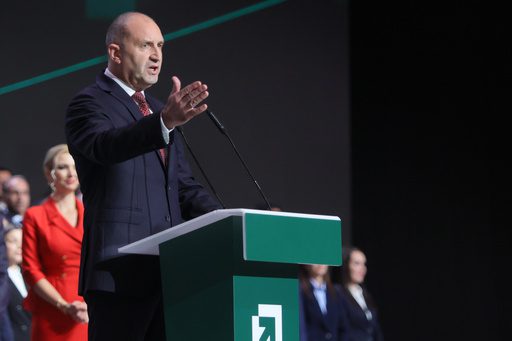
Bulgaria Election: Pro-Russian Ex-President Rumen Radev Poised for Victory Amid Political Turmoil
POLICY WIRE — Sofia, Bulgaria — Citizens of Bulgaria are casting their ballots in another snap parliamentary election, a vote that could bring a pro-Russian former president to power and test the...

POLICY WIRE — Sofia, Bulgaria — Citizens of Bulgaria are casting their ballots in another snap parliamentary election, a vote that could bring a pro-Russian former president to power and test the nation’s fragile political landscape.
The coalition led by ex-president Rumen Radev is widely expected to emerge victorious in the April 19 poll. His potential rise to prime minister presents a complex picture for the nation, as supporters are torn between his anti-corruption stance and his controversial leanings toward Moscow.
A Nation Plagued by Instability
This snap election is the latest chapter in a long story of political upheaval. The previous conservative government collapsed in December 2025 following massive anti-corruption demonstrations that brought hundreds of thousands onto the streets. These developments underscore a period of profound instability that has gripped the country since 2021.
Despite being a member of both the European Union and NATO, and having recently joined the Eurozone and the border-free Schengen Area, Bulgaria has struggled to maintain a stable government. The nation has endured seven inconclusive elections in just five years, a cycle that has eroded public trust in political institutions and suppressed voter turnout.
Compounding these issues, Bulgaria recently sought assistance from the EU’s diplomatic corps to combat a surge in Russian disinformation campaigns aimed at influencing public opinion and creating social division through online networks.
The Radev Factor: Populist Appeal and Shifting Tides
Rumen Radev, a 62-year-old former air force commander, stepped down from his ceremonial presidency in January to spearhead a new political movement, Progressive Bulgaria, and run for prime minister. Widely regarded as the country’s most popular politician, he has pledged a complete overhaul of the state if his coalition wins.
Polls suggest a significant shift in voter engagement, with turnout expected to surge from a recent average of 35% to over 50%. This is attributed both to Radev’s entry into the race and to a government crackdown on vote-buying schemes.
Radev has centered his campaign on being a staunch opponent of the nation’s entrenched oligarchic system and its connections to powerful politicians, vowing to dismantle the “corrupt, oligarchic model of governance.”
📄 POLICY WIRE WHITEPAPER PUBLISHED: PAKISTAN'S NATIONAL SECURITY POLICY PRIORITIES
👉 READ BY CLICKING HERE
Opinion polls place Radev’s coalition in a commanding lead, with projections indicating it could capture over 30% of the vote. This puts him nearly 10 percentage points ahead of his main competitor, the center-right GERB party, led by veteran politician and former prime minister Boyko Borissov.
Coalition Conundrums and Foreign Policy Fears
While Rumen Radev is expected to win the largest share of the vote, he will fall short of an outright majority, forcing him to seek a coalition partner to form a stable government. He has already ruled out partnerships with two major parties: Borissov’s GERB and the Movement for Rights and Freedoms, whose leader is under U.S. and British sanctions for corruption.
A potential, though complicated, alliance could be formed with the pro-Western bloc “We Continue the Change,” which is forecast to finish third with 12-14% of the vote. However, major foreign policy differences present a significant obstacle.
- Radev’s Stance: Has vocally opposed sending military aid to Ukraine and advocates for renewed diplomatic talks with Russia to end the conflict.
- We Continue the Change’s Stance: Firmly pro-Western and supportive of Ukraine’s defense against Russian aggression.
Evelina Slavkova, an analyst with the research center Trend, believes a dramatic pivot toward Russia is unlikely. She notes that Bulgaria’s deep integration into Western institutions provides a strong anchor. “Our country has succeeded… in building a very important set of tools that keeps Bulgaria on the right track,” Slavkova explained, citing membership in NATO, the EU, the Eurozone, and the Schengen Area as crucial safeguards.
Slavkova observed that Radev maintained a level of ambiguity on contentious issues during the campaign. “This might be acceptable during a campaign,” she concluded, “but when you’re running the country, you’ll certainly have to provide clear, definitive answers.”